Adélie Penguins Use Colony Information to Adjust Foraging Strategies
A Japanese research team has found that Adélie penguins in Antarctica use social cues from colony members to locate new foraging sites when their previous trip was unsuccessful. The study, published in Proceedings of the Royal Society B, tracked up to 116 penguins simultaneously using GPS and activity recorders at a colony in Lützow-Holm Bay, analyzing 653 foraging trips. The findings shed light on why colonial living evolved in seabirds and how group behavior helps animals adapt to variable food environments.
Researchers from Japan's Graduate University for Advanced Studies (SOKENDAI) have demonstrated that Adélie penguins employ a 'win-stay, lose-shift' foraging strategy, returning to previously successful sites after a good trip but switching to new areas—guided by colony members—after a poor one. The study tracked approximately one-third of a 135-breeding-pair colony in Lützow-Holm Bay, Antarctica, simultaneously and continuously using biologging GPS devices. Analysis of 653 foraging trips revealed that penguins frequently departed the colony in groups and, in some cases, traveled to foraging sites previously used by their co-departing companions rather than their own prior sites. Box plot data from the study show that penguins relying on social information had the lowest median foraging success on their preceding trip (approximately 3.3 foraging dives per hour), compared to those using personal experience (approximately 5.5 dives per hour), supporting the idea that social information use is triggered by failure. The researchers suggest that group departure and travel from the colony serve as a key mechanism for transferring knowledge about food locations among individuals. Professor Akinori Takahashi noted the findings represent a significant step toward understanding the evolutionary advantages of social living and the potential consequences of population decline on information sharing.
Data: source article
Limitations & open questions
The study is limited to a single, relatively small colony (135 breeding pairs) in one Antarctic location, so it remains unclear whether the same information-transfer mechanisms operate in larger or differently situated colonies. The study does not fully resolve how penguins physically acquire information about where conspecifics foraged on a previous trip—whether through direct observation at the colony, departure timing cues, or en-route following—which the authors acknowledge as a direction for future research.
What different sources said
- Phys.orgCenter
Adélie penguins use colony cues to switch foraging sites if their previous trip was unsuccessful
- The Japan TimesCenter
Penguins use group cues to find foraging grounds, Japan team finds
Related
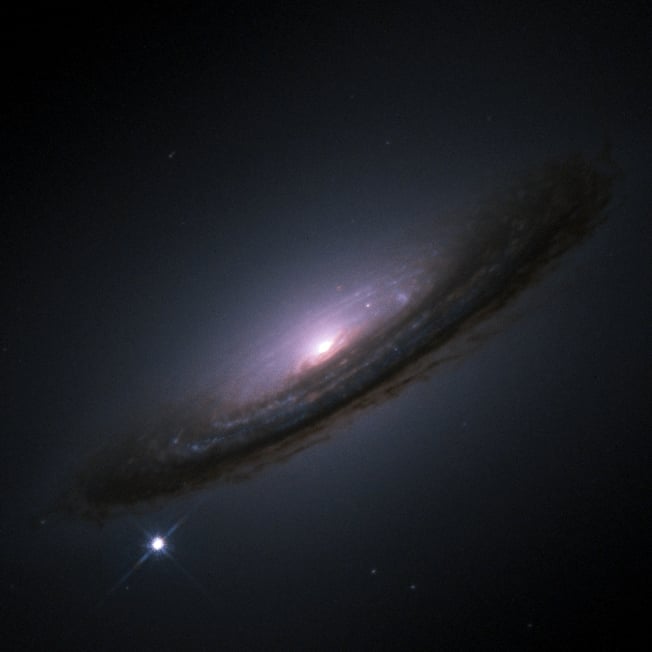
Nobel Laureates Rebut Study Claiming Universe's Expansion Is Slowing, Confirm Acceleration Continues
An international team of astrophysicists, including Nobel laureates Adam Riess and Brian Schmidt, has published a study in the Monthly Notices of the Royal Astronomical Society confirming that the universe's expansion is still accelerating. The rebuttal targets a late-2024 South Korean study that had claimed dark energy was weakening, a finding that would have overturned nearly three decades of cosmological understanding. The new study identifies two specific methodological errors in the earlier work, restoring confidence in the standard model of cosmic acceleration while leaving the deeper mystery of what dark energy actually is unresolved.
Study Finds Trees May Store Less Carbon Than Climate Models Predict
A new study published in Science Advances found that oak trees stop growing months before they stop photosynthesizing, meaning increased carbon uptake does not necessarily translate into more wood growth and long-term carbon storage. Researchers analyzed 137 sites across the US, finding that 26–36% of annual carbon uptake occurred after tree growth had already ceased, with drought and heat identified as key triggers for halting growth. The findings suggest that widely used climate models, which assume photosynthesis and growth are tightly linked, may be overestimating forests' future capacity to sequester carbon.
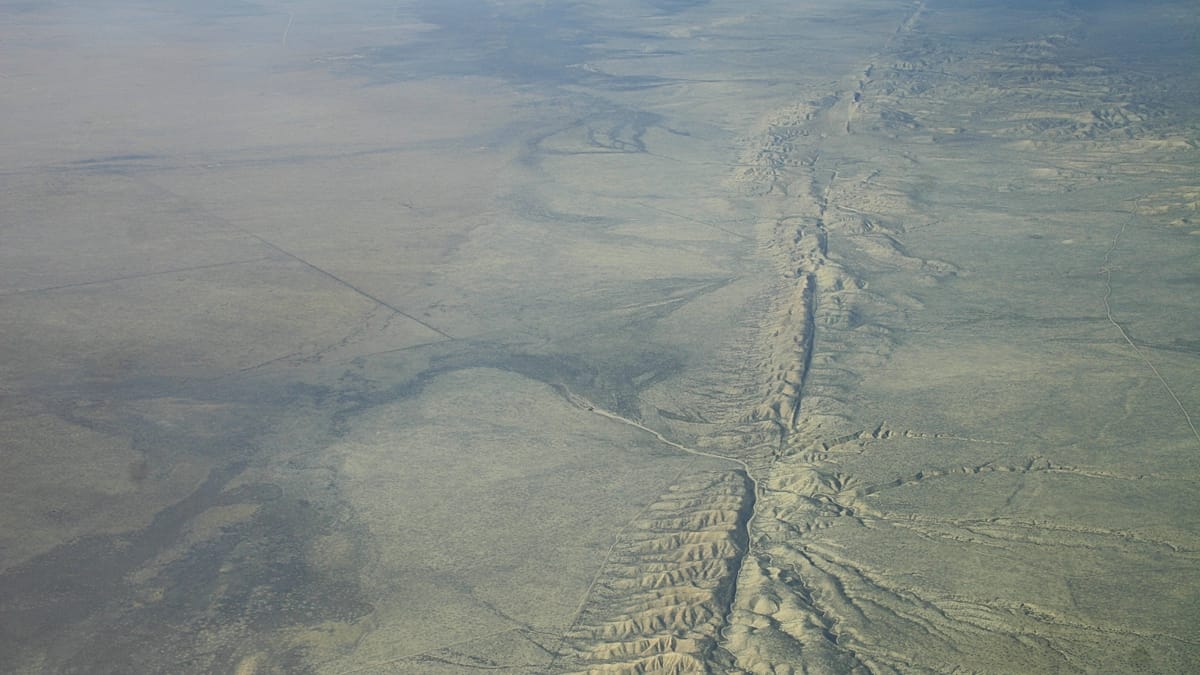
San Andreas Fault Stress Reaches Highest Level in 1,000 Years, Study Finds
A new peer-reviewed study finds that tectonic stress on Southern California's San Andreas and San Jacinto fault systems has reached its highest levels in at least 1,000 years, with the San Jacinto-Bernardino section measuring 3.6 megapascals. The research, led by the University of Hawaiʻi at Mānoa and published in the Journal of Geophysical Research: Solid Earth, used a computer model drawing on geological data including radiocarbon dating and tree-ring records to reconstruct a millennium of earthquake history. The findings cannot predict when a major earthquake will occur but are intended to improve hazard assessments, inform building codes, and guide emergency preparedness in a region home to millions.