Wall Street Recovers from Sell-Off as AI Stocks Bounce Back; Oil Rises on Israel-Iran Tensions

U.S. stock markets recovered Monday from last week's sharp decline, with the S&P 500 gaining 0.3% and the Nasdaq climbing 0.9%, driven by rebounds in AI-related semiconductor stocks. The recovery follows Friday's 2.6% drop in the S&P 500, the worst day since October, amid concerns that AI stock valuations had become overheated. The market's ability to sustain gains depends on whether the correction helps stabilize valuations or signals the beginning of a broader downturn.
Wall Street held steadier on Monday as markets recovered from a significant sell-off the previous Friday. The S&P 500 added 0.3%, the Dow dipped 0.2%, and the Nasdaq composite climbed 0.9%, with semiconductor and AI-related stocks leading the recovery. Micron Technology surged 9.9% after dropping 13.3% on Friday, while Marvell Technology rose 9.6% following its addition to the S&P 500 index. The semiconductor sector had experienced dramatic volatility, with a widely followed semiconductor index up nearly 85% for the year through Thursday. Oil prices also rose 1.2% to $94.25 per barrel following military strikes between Israel and Iran, though prices retreated after both nations appeared to step back from further escalation. Market strategists remain divided on whether Friday's decline represents a healthy correction or the start of a deeper downturn, with Morgan Stanley's Michael Wilson suggesting the pullback could help extend the bull market toward year-end.
What different sources said
- PBS NewsHourLeft
Wall Street holds steadier as AI stocks recover some of last week's sell-off
Related
Higher Oil Prices Boost Russia's Government Revenue but Fail to Accelerate Economic Growth
Rising oil prices are increasing Russia's government revenue and current-account surplus despite Western sanctions, with every $10 increase in oil prices adding roughly $21 billion in budget revenue. However, severe labor shortages from military losses and emigration, combined with weak productivity, are preventing the economy from expanding beyond 0.9% growth in 2026. The oil windfall highlights structural constraints in Russia's economy that money alone cannot overcome.

U.S. Markets Stage Rebounds Following Chip Stock Selloff
U.S. markets have rebounded twice following a dramatic Friday selloff in chip stocks, with gains at Monday's open and Tuesday afternoon. The Nasdaq 100 remains down 4.25% for the month despite the recoveries, and volatility has increased sharply. The pattern reflects the market's traditional 'buy the dip' behavior as investors resist giving up recent gains.
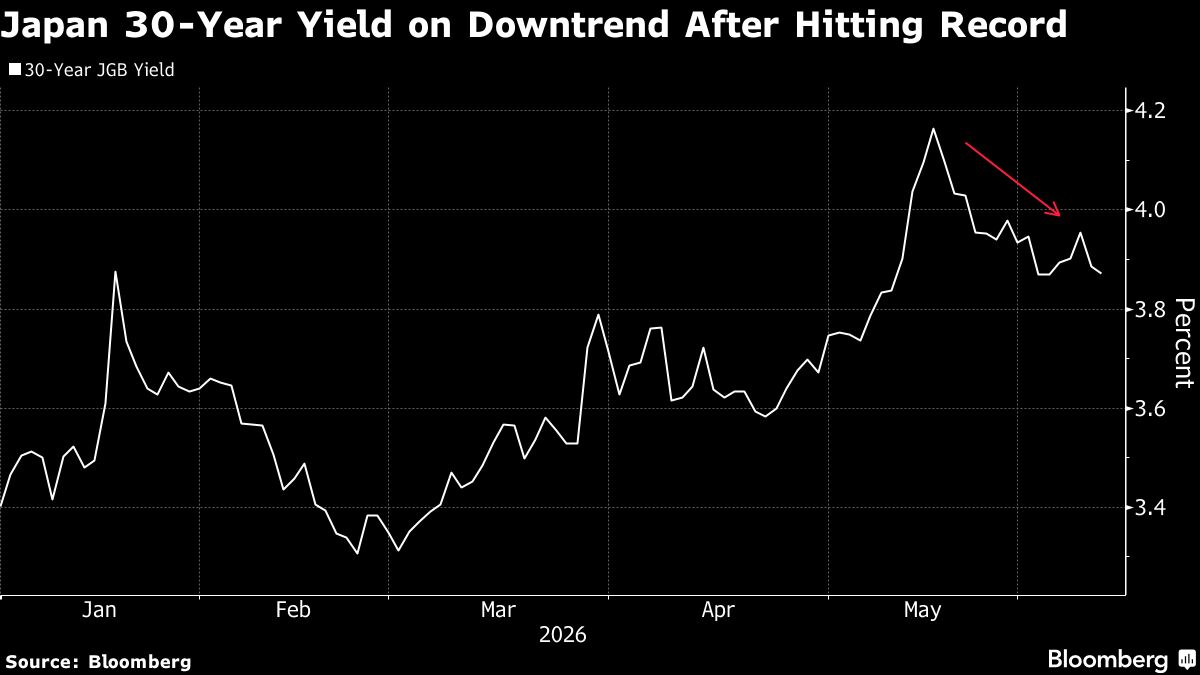
Japan's 30-Year Bond Auction Sees Weakest Demand in Over a Year
Japan's 30-year government bond auction on June 10, 2026 attracted the weakest demand since June 2025, with a bid-to-cover ratio of 2.94 compared to the previous 3.49. The decline reflects investor concerns over inflation and fiscal policy, as well as falling yields reducing appetite for the bonds. Weak bond demand can signal investor anxiety about Japan's economic outlook and fiscal sustainability.