US Mortgage Rates Remain High Despite Fed Rate Cuts, With Limited Federal Reserve Control
The 30-year mortgage rate has climbed to 6.48% as of June 2026, despite the Federal Reserve cutting interest rates in 2024 and 2025, frustrating homebuyers and prompting pressure on the Fed from President Trump. Mortgage rates are primarily driven by financial markets and investor expectations about inflation and government borrowing, not directly by Fed policy decisions. The disconnect matters because Americans may face persistently high borrowing costs regardless of Fed actions, fundamentally limiting the central bank's ability to address the housing affordability crisis.
U.S. mortgage rates have remained stubbornly high, averaging 6.48% in early June 2026, even as the Federal Reserve has kept rates steady following cuts in 2024 and 2025. This disconnect has frustrated homebuyers and prompted President Trump to pressure the Fed and its new chief Kevin Warsh for deeper rate cuts. However, the Fed has limited direct control over mortgage rates, which are primarily determined by financial markets rather than central bank policy. Investors purchasing 30-year mortgages and mortgage-backed securities base their decisions on expectations about long-term inflation, economic growth, government borrowing, and future interest rates. Key factors driving higher mortgage rates include persistent inflation uncertainty—particularly given elevated oil prices and geopolitical tensions—and large federal deficits, which require the Treasury to issue substantial amounts of debt. Because Treasury yields serve as benchmarks for mortgage rates, and mortgage rates track the 10-year Treasury note more closely than the federal funds rate, structural fiscal pressures may keep borrowing costs elevated regardless of Fed decisions.
What's missing
The article notes that mortgage-backed securities investors face risks that Treasury bond investors do not, but the explanation is cut off mid-sentence and does not elaborate on what those specific risks are or how they affect mortgage rate pricing.
What different sources said
- The ConversationCenter
US mortgage rates are staying high – and the Fed can do very little about it
Related
Higher Oil Prices Boost Russia's Government Revenue but Fail to Accelerate Economic Growth
Rising oil prices are increasing Russia's government revenue and current-account surplus despite Western sanctions, with every $10 increase in oil prices adding roughly $21 billion in budget revenue. However, severe labor shortages from military losses and emigration, combined with weak productivity, are preventing the economy from expanding beyond 0.9% growth in 2026. The oil windfall highlights structural constraints in Russia's economy that money alone cannot overcome.

U.S. Markets Stage Rebounds Following Chip Stock Selloff
U.S. markets have rebounded twice following a dramatic Friday selloff in chip stocks, with gains at Monday's open and Tuesday afternoon. The Nasdaq 100 remains down 4.25% for the month despite the recoveries, and volatility has increased sharply. The pattern reflects the market's traditional 'buy the dip' behavior as investors resist giving up recent gains.
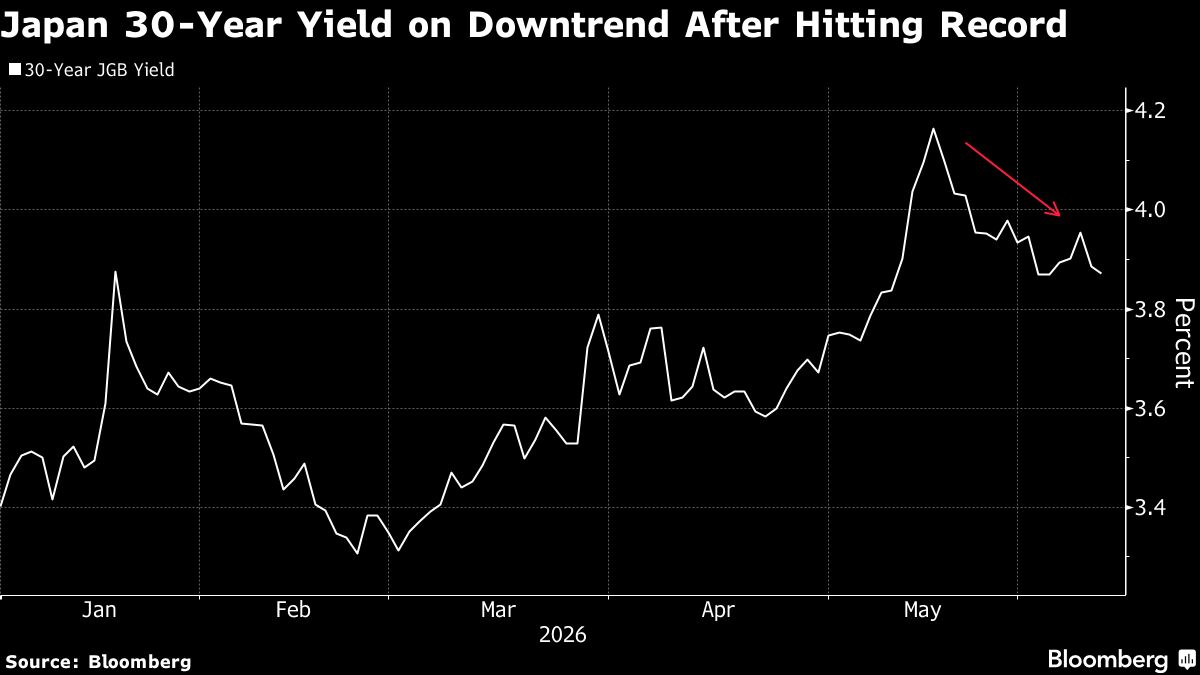
Japan's 30-Year Bond Auction Sees Weakest Demand in Over a Year
Japan's 30-year government bond auction on June 10, 2026 attracted the weakest demand since June 2025, with a bid-to-cover ratio of 2.94 compared to the previous 3.49. The decline reflects investor concerns over inflation and fiscal policy, as well as falling yields reducing appetite for the bonds. Weak bond demand can signal investor anxiety about Japan's economic outlook and fiscal sustainability.