US Consumer Sentiment Rises in June as Gasoline Prices Decline
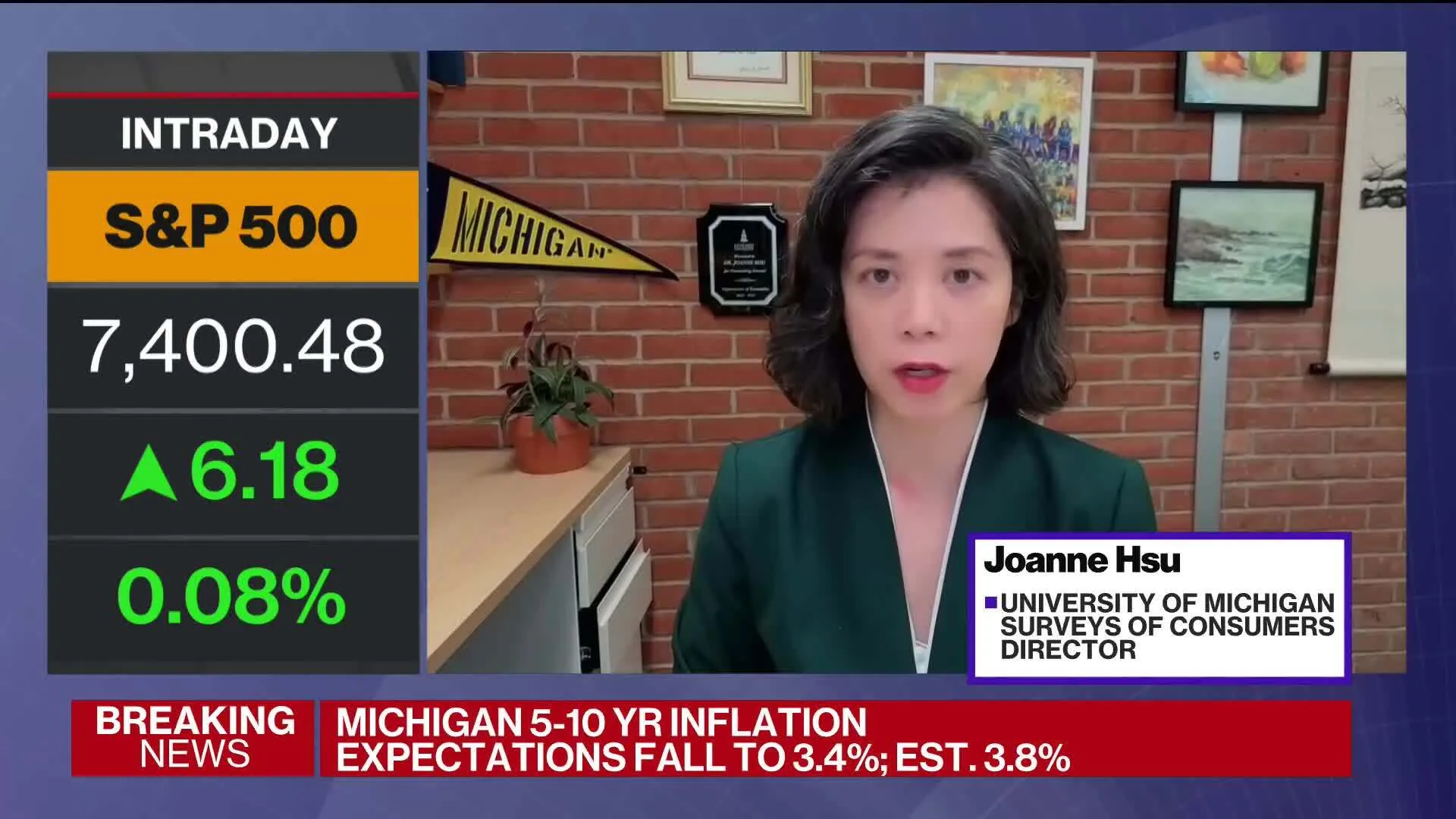
The University of Michigan's preliminary consumer sentiment index rose 9% in early June 2026 to 48.9, up from a record low of 44.8 in May, driven largely by a decline in national average gas prices from $4.50 to $4.10 per gallon. The improvement follows months of price volatility tied to the ongoing US-Iran military conflict, which has disrupted global energy markets since late February. Despite the uptick, sentiment remains below levels recorded during the COVID-19 pandemic, the 2008 financial crisis, and prior inflationary periods, signaling persistent economic anxiety among Americans.
Consumer sentiment in the United States rose for the first time in several months in early June 2026, according to the University of Michigan's latest survey, with the preliminary index climbing to 48.9 from a record low of 44.8 in May — a 9% increase. The rebound was attributed primarily to easing gasoline prices, which fell from a 2026 high of $4.564 per gallon on May 21 to approximately $4.108 by June 12, marking three consecutive weeks of declines. The improvement was broad-based, spanning age groups, education levels, and political affiliations, with lower-income households showing the strongest gains, consistent with gasoline comprising a larger share of their budgets. Survey director Joanne Hsu noted that consumers still feel burdened by recent inflation escalation and worry about persistent price pressures going forward; separately, government data released this week showed core inflation running at 0.2% monthly in May, half April's rate, while year-ahead inflation expectations dipped to 4.6% from 4.8%. Gas price volatility has been driven by the US-Iran conflict and tensions in the Strait of Hormuz, through which roughly one-fifth of global oil passes, and analysts warn that sentiment recovery will remain fragile unless prices continue to fall. Regional gas price disparities remain stark, with Indiana averaging $3.38 per gallon and California averaging $5.79, while GasBuddy analyst Patrick De Haan cautioned that prices this summer could range anywhere from below $4.00 to above $5.00 per gallon.
What's missing
The articles do not detail the specific methodology or margin of error for the University of Michigan's preliminary June sentiment reading.
How coverage differed
The Washington Examiner and Breitbart framed the gas price decline and sentiment rise in relatively neutral-to-positive terms without emphasizing broader economic hardship, while The Guardian and CNN contextualized the data within a longer narrative of compounding economic shocks, the political costs of the Iran war, and the historically unprecedented depth of the sentiment decline — with The Guardian also noting midterm election implications and public opposition to the conflict.
What different sources said
- CNN WorldLeft
Consumer sentiment rises for the first time in three months
- SlateLeft
Aren’t You Just Loving Gas Prices?
US consumer sentiment improves in June due to easing gas prices
- BloombergCenter
US Consumer Sentiment Rises as Gasoline Prices Ease
- BreitbartFar Right
Burgum: We’re Going to See Gas Prices 'Continue to Drop Across the Country'
- Washington ExaminerRight
Gas prices: Decrease at the pumps for third consecutive week
Related

SpaceX IPO Makes Elon Musk World's First Trillionaire as Shares Surge 19% on Debut
SpaceX shares closed up 19% on their first trading day, pushing Elon Musk's net worth to approximately $1.11 trillion and making him the first individual in history to cross the trillion-dollar threshold. The company raised $75 billion at an IPO price of $135 per share, with shares closing near $161, giving SpaceX a market capitalization of roughly $2.1 trillion despite the company reporting a net loss of $4.94 billion in 2025. The milestone has drawn both investor enthusiasm and sharp criticism over Musk's social media conduct and concerns that the IPO's structure exploits passive index fund mechanics to extract wealth from ordinary retirement savers.
Delhi Power Bills to Rise for Some Consumers as Regulator Approves Higher Electricity Surcharge
Delhi's electricity regulator DERC has approved increased Power Purchase Adjustment Charges (PPAC) for distribution companies, raising bills for consumers in south, east, and central Delhi from July 2026. The hike follows a sharp rise in power procurement costs in April 2026, driven by higher summer demand and elevated fuel prices. The change also marks a structural shift from quarterly to monthly PPAC revisions, making electricity bills more responsive to real-time cost fluctuations.

SEC Proposes Repealing Rule 611 and Rule 610(e) of Regulation NMS
The Securities and Exchange Commission proposed on June 11, 2026, to rescind Rule 611 and Rule 610(e) of Regulation NMS, which govern trade-through protections and locking/crossing quotations in equity markets. Rule 611, in place for roughly two decades, requires trades to be executed at the best available price across exchanges. The proposal could reshape equity market structure and has implications for emerging areas such as tokenized stocks.