Trump Administration Faces Critical Decision on Strategic Petroleum Reserve as Drawdown Nears Completion
The US Strategic Petroleum Reserve has fallen to approximately 340–350 million barrels, its lowest level since 1983, as the Trump administration draws down emergency stocks to offset supply disruptions caused by the effective closure of the Strait of Hormuz. The administration has authorized the release of 172 million barrels since March, coordinated with IEA member nations, using swap contracts requiring traders to return 1.25 barrels for every one taken. Analysts and major oil executives warn that global inventories are depleting at a record pace and that a sharp price spike toward $150–$160 per barrel could be imminent if the strait does not reopen soon.
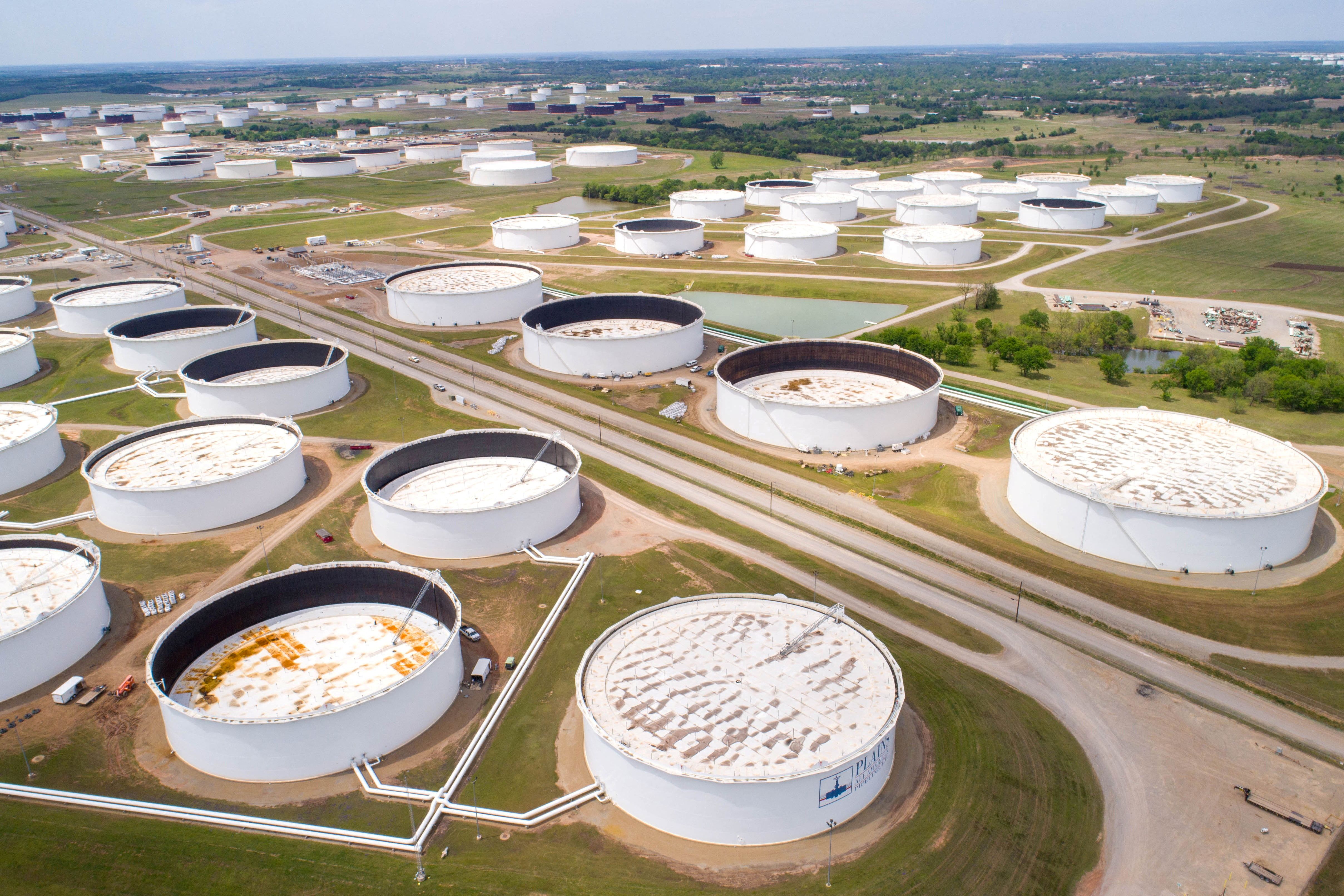
Since the US-Iran conflict effectively closed the Strait of Hormuz in early 2026, cutting roughly 13 million barrels per day from global supply, the Trump administration has drawn down 66 million barrels from the Strategic Petroleum Reserve as of early June, with a total authorized release of 172 million barrels. The SPR, stored in approximately 60 underground salt caverns along the Gulf Coast of Texas and Louisiana, has fallen to around 340–350 million barrels—its lowest level since August 1983, surpassing even the record Biden-era drawdown that followed Russia's invasion of Ukraine. Rather than outright sales, the administration has structured at least 133 million barrels as swap contracts with major traders including Shell, Vitol, and Trafigura, who must return 1.25 barrels for every one taken, beginning early next year. Total US oil reserves including commercial stocks have hit their lowest level since 2004, and the key Cushing, Oklahoma hub holds just 21.6 million barrels—dangerously close to the roughly 20 million barrel operational minimum below which the distribution system effectively fails. Senior executives at ExxonMobil and Chevron have publicly warned that Brent crude could surge to $150–$160 per barrel once inventories reach critically low levels, with some analysts projecting prices could approach $200 per barrel and retail gasoline near $9 per gallon if the strait remains closed through year-end. The administration faces a difficult decision about whether to authorize further SPR releases, which some experts warn could backfire by signaling a loss of confidence in diplomatic efforts and pushing the reserve dangerously close to its legally mandated operational minimum of 150 million barrels.
Data: EIA
What's missing
Sources do not clearly specify what specific conditions Iran is demanding for reopening the Strait of Hormuz beyond a brief mention that Iran wants 'operational control over the Strait.' The precise legal and operational constraints on how quickly the SPR can be replenished once swap contracts come due—and whether the physical infrastructure can accept rapid refilling—is also not addressed.
How coverage differed
The Washington Examiner framed the SPR depletion partly through the lens of past congressional and Biden-era mismanagement, emphasizing Trump's swap contract strategy as a learned improvement, while left-leaning outlets like CNN and The Independent placed greater emphasis on the immediacy of the crisis and the risks of the current administration's approach, with CNN providing the most detailed warnings about systemic market failure.
What different sources said
- BloombergCenter
Ziemba: US Strategic Reserves Lowest in Over 40 Years
- FortuneCenter
America’s emergency oil reserve is about to hit its lowest level since Reagan was in office
- The IndependentLeft
America’s emergency oil reserve is about to hit lowest level since Reagan era
- SemaforCenter
One of Trump’s key oil market fixes is about to break
Disconnected Oil Futures Market Could See Price Spike within Weeks
- Scientific AmericanCenter
The U.S. stockpiles oil in huge underground salt caverns. Here’s why
- Investing.comCenter
Oil up as Trump vows more attacks on Iran; crude in SPR hits lowest since Aug 2023
- CNN WorldCenter
The tanks in Cushing, Oklahoma, are hitting bottom. The oil market is about to hit a tipping point
- Washington ExaminerRight
Trump faces uphill battle to replenish oil stockpiles headed to record lows
Related

SpaceX IPO Makes Elon Musk World's First Trillionaire as Shares Surge 19% on Debut
SpaceX shares closed up 19% on their first trading day, pushing Elon Musk's net worth to approximately $1.11 trillion and making him the first individual in history to cross the trillion-dollar threshold. The company raised $75 billion at an IPO price of $135 per share, with shares closing near $161, giving SpaceX a market capitalization of roughly $2.1 trillion despite the company reporting a net loss of $4.94 billion in 2025. The milestone has drawn both investor enthusiasm and sharp criticism over Musk's social media conduct and concerns that the IPO's structure exploits passive index fund mechanics to extract wealth from ordinary retirement savers.

Delhi Power Bills to Rise for Some Consumers as Regulator Approves Higher Electricity Surcharge
Delhi's electricity regulator DERC has approved increased Power Purchase Adjustment Charges (PPAC) for distribution companies, raising bills for consumers in south, east, and central Delhi from July 2026. The hike follows a sharp rise in power procurement costs in April 2026, driven by higher summer demand and elevated fuel prices. The change also marks a structural shift from quarterly to monthly PPAC revisions, making electricity bills more responsive to real-time cost fluctuations.

SEC Proposes Repealing Rule 611 and Rule 610(e) of Regulation NMS
The Securities and Exchange Commission proposed on June 11, 2026, to rescind Rule 611 and Rule 610(e) of Regulation NMS, which govern trade-through protections and locking/crossing quotations in equity markets. Rule 611, in place for roughly two decades, requires trades to be executed at the best available price across exchanges. The proposal could reshape equity market structure and has implications for emerging areas such as tokenized stocks.