The Physics Behind Why Cells Are Small
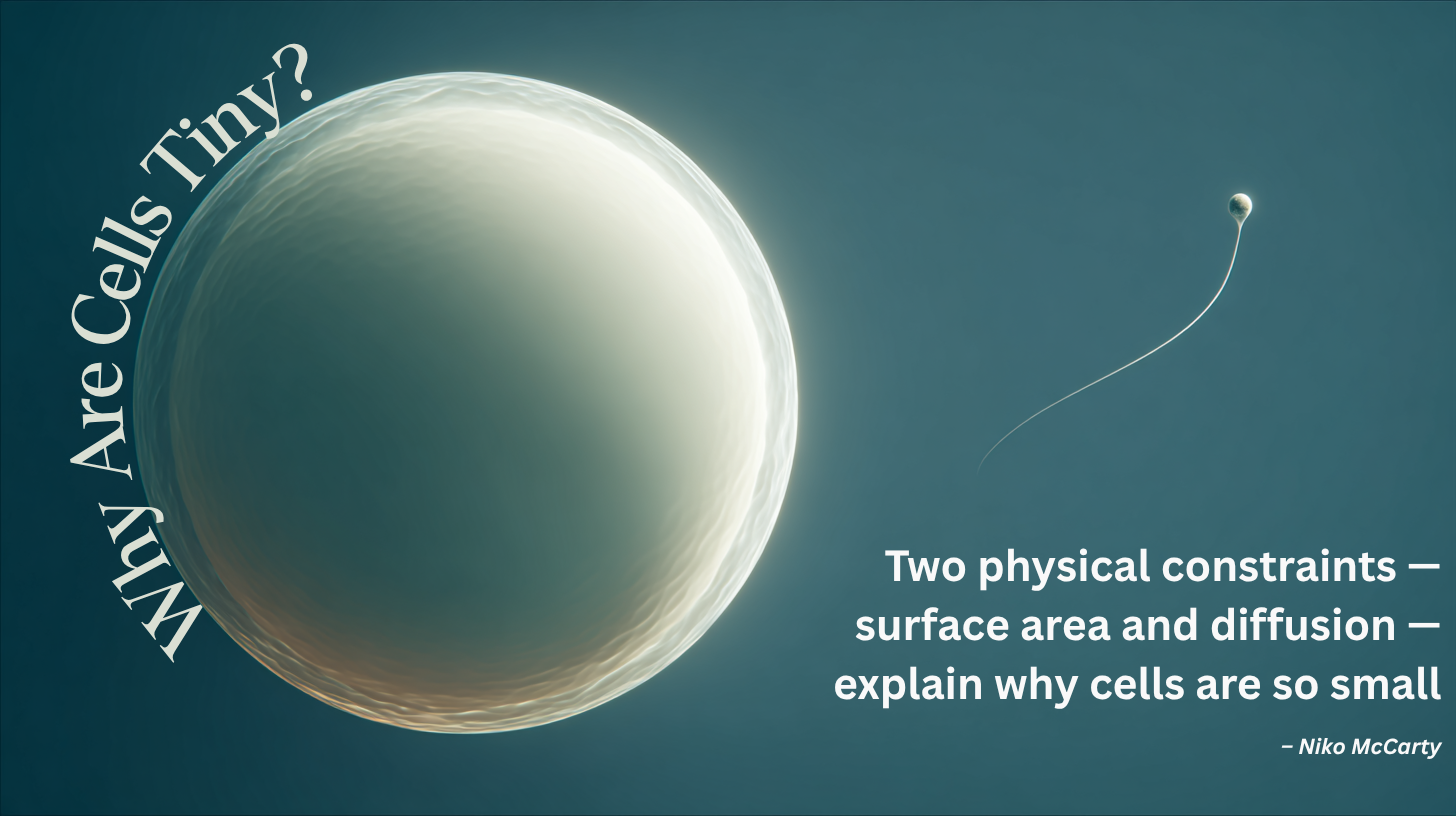
A Hacker News article explains that cells range dramatically in size—from 30 µm³ sperm to 4-million µm³ oocytes—but physics constrains most cells to remain small. Two key physical limits are the surface area-to-volume ratio, which determines how efficiently a cell can exchange nutrients and waste, and diffusion, which slows molecular interactions as cell volume increases. Understanding these constraints reveals why evolution has shaped different cell types to their optimal sizes for their specific functions.
The human body contains roughly 30 trillion cells of vastly different sizes, spanning five orders of magnitude in volume. While evolutionary explanations suggest cells are sized for their function—sperm are small to conserve energy, oocytes are large to store nutrients for embryos—physics provides deeper insight. The surface area-to-volume ratio fundamentally limits cell size: as a sphere's radius increases, volume grows with the cube while surface area grows with the square, meaning large cells struggle to exchange nutrients and waste through their membrane fast enough. Diffusion compounds this problem; as cells grow larger, molecules take exponentially longer to traverse the interior, slowing the chance encounters that drive cellular processes. A protein that crosses a bacterium in 0.01 seconds would take over six hours to travel one centimeter. These constraints explain why red blood cells evolved their biconcave disc shape to maximize surface area, and why oocytes can be exceptions only because they are metabolically less demanding.
What different sources said
- Hacker NewsCenter
Why are cells small?
Related
New AI Framework Improves Evidence-Based Analysis for Muon Collider Research
Researchers have developed an AI system called agentic hybrid RAG that combines retrieval and reasoning techniques to help scientists find and verify evidence in muon collider research literature. The framework integrates both keyword-based and semantic search methods with AI reasoning to decompose complex queries and synthesize answers. This work addresses a growing need in high-energy physics for AI-assisted tools that can reliably navigate rapidly expanding scientific literature.
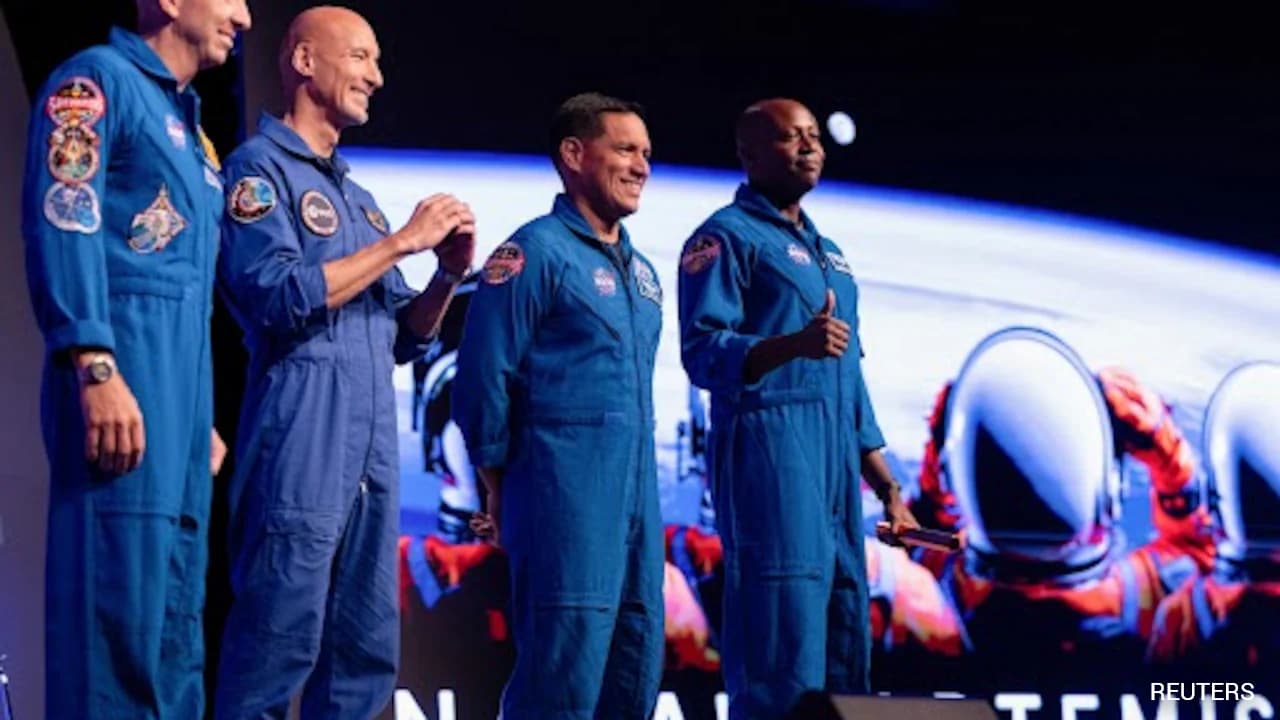
NASA Announces Four-Astronaut Crew for Artemis III Moon Mission
NASA named three U.S. astronauts and one Italian astronaut from the European Space Agency as the crew for Artemis III, scheduled to launch in 2027. The mission will conduct a docking demonstration in Earth's orbit and test moon landers from SpaceX and Blue Origin. The crew includes a veteran test pilot, a record-holder for longest U.S. spaceflight, and a first-time space flyer.
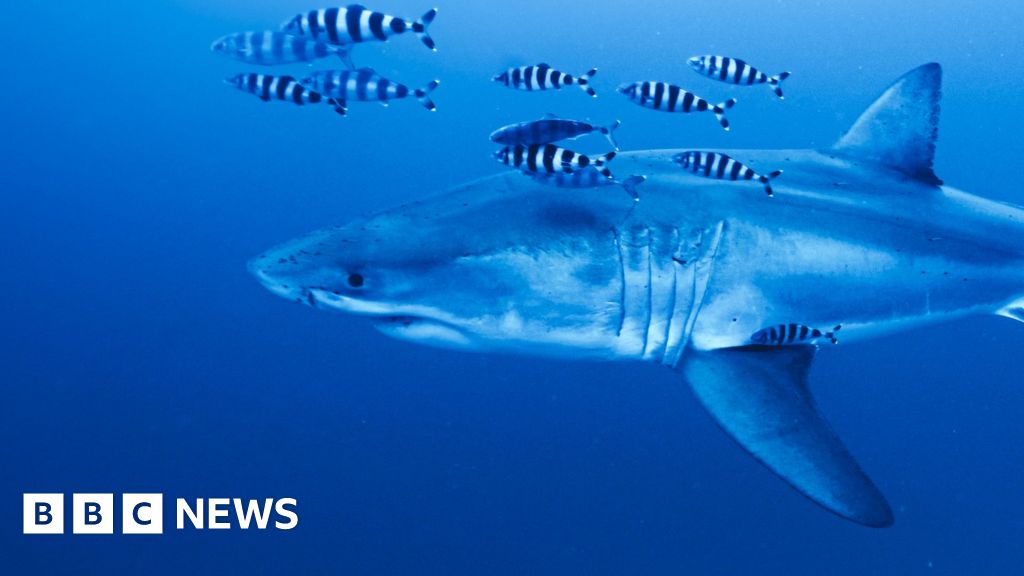
Rare Great White shark filmed in Mediterranean Sea between Tunisia and Sicily
A volunteer diver captured rare footage of a Great White shark in the Mediterranean Sea in May while working to document ghost fishing nets. The sighting is significant because Great Whites are thought to be near extinction in the Mediterranean due to overfishing. Conservationists hope the discovery will prompt governments to establish marine protected areas in the region.