S&P 500 Index Excludes SpaceX from Inclusion, Creating Divergence with Nasdaq and Russell Indexes

The S&P 500 index committee has decided to maintain its standard 12-month waiting period before considering SpaceX for inclusion following the company's IPO, meaning investors in S&P 500 funds like VOO, IVV, and SPY will not gain SpaceX exposure until at least mid-2027. Unlike the S&P 500, the Nasdaq and Russell index committees announced they would update their rules to allow faster inclusion of large new listings. The decision sets a precedent that could also delay or block inclusion of upcoming mega-cap IPOs like OpenAI and Anthropic, potentially creating performance divergence between major U.S. benchmark indexes.
SpaceX began trading on the Nasdaq with a valuation of approximately $1.77 trillion, making it the largest IPO in market history, but the S&P 500 index committee declined to fast-track its inclusion, keeping the standard 12-month waiting period in place. This means investors in the most widely held passive funds — including Vanguard's VOO, BlackRock's IVV, and State Street's SPY, which together manage nearly $2 trillion in assets — will not automatically gain SpaceX exposure until mid-2027 at the earliest. Complicating matters further, SpaceX reported a net loss of $4.28 billion in its most recent quarter, meaning it may also fail the S&P 500's profitability requirement, potentially delaying inclusion well beyond a year. The Nasdaq and Russell indexes, by contrast, said they would revise their rules to accommodate large new listings more quickly, raising the prospect of an 'index war' and meaningful performance dispersions between the benchmarks. Analysts noted the decision also sets a precedent for how the S&P 500 will treat anticipated mega-cap IPOs from OpenAI and Anthropic, both of which are currently unprofitable. Investors seeking SpaceX exposure can turn to thematic space ETFs — some of which held pre-IPO stakes — or to newly launching leveraged ETFs, though experts caution these carry significant risk and are designed for short-term trading rather than long-term portfolio building.
What's missing
The articles do not specify the exact financial thresholds of the S&P 500's profitability test, nor do they detail what rule changes the Nasdaq and Russell committees are implementing or their timelines for doing so.
What different sources said
- CNBCCenter
The S&P 500 already made a big call on SpaceX stock and index fund investors need to know it
- Yahoo FinanceCenter
VOO vs. VTI: Should You Own the S&P 500 or the Entire Market?
Related
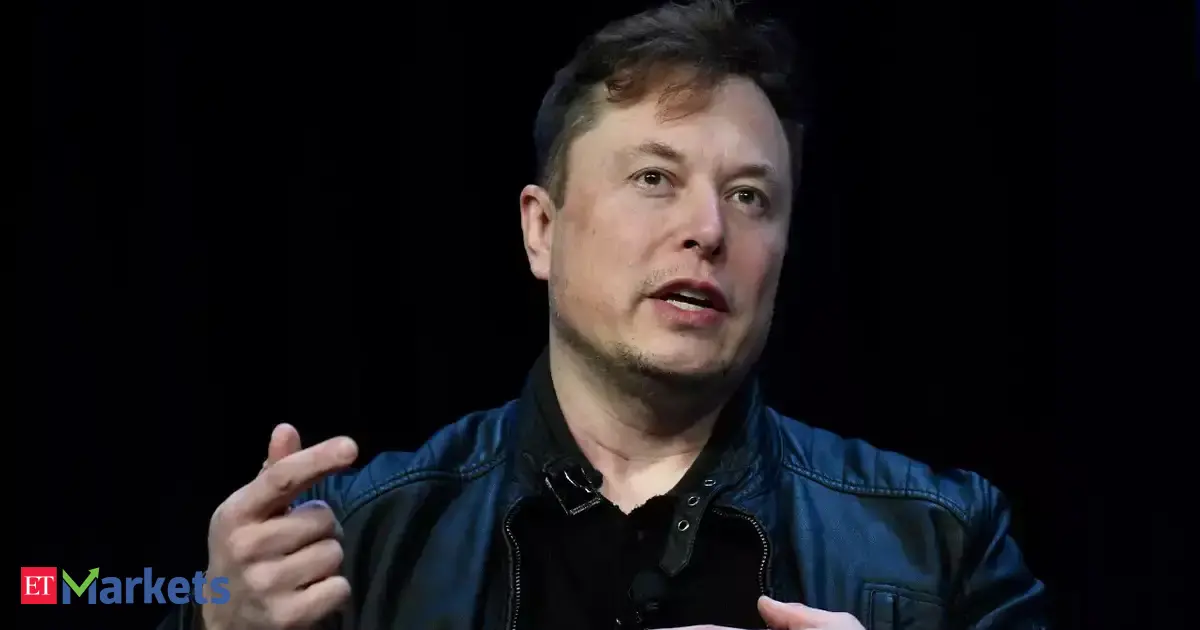
SpaceX IPO Makes Elon Musk World's First Trillionaire as Shares Surge 19% on Debut
SpaceX shares closed up 19% on their first trading day, pushing Elon Musk's net worth to approximately $1.11 trillion and making him the first individual in history to cross the trillion-dollar threshold. The company raised $75 billion at an IPO price of $135 per share, with shares closing near $161, giving SpaceX a market capitalization of roughly $2.1 trillion despite the company reporting a net loss of $4.94 billion in 2025. The milestone has drawn both investor enthusiasm and sharp criticism over Musk's social media conduct and concerns that the IPO's structure exploits passive index fund mechanics to extract wealth from ordinary retirement savers.

Delhi Power Bills to Rise for Some Consumers as Regulator Approves Higher Electricity Surcharge
Delhi's electricity regulator DERC has approved increased Power Purchase Adjustment Charges (PPAC) for distribution companies, raising bills for consumers in south, east, and central Delhi from July 2026. The hike follows a sharp rise in power procurement costs in April 2026, driven by higher summer demand and elevated fuel prices. The change also marks a structural shift from quarterly to monthly PPAC revisions, making electricity bills more responsive to real-time cost fluctuations.

SEC Proposes Repealing Rule 611 and Rule 610(e) of Regulation NMS
The Securities and Exchange Commission proposed on June 11, 2026, to rescind Rule 611 and Rule 610(e) of Regulation NMS, which govern trade-through protections and locking/crossing quotations in equity markets. Rule 611, in place for roughly two decades, requires trades to be executed at the best available price across exchanges. The proposal could reshape equity market structure and has implications for emerging areas such as tokenized stocks.