South Africa launches lenacapavir, highly effective twice-yearly HIV prevention drug
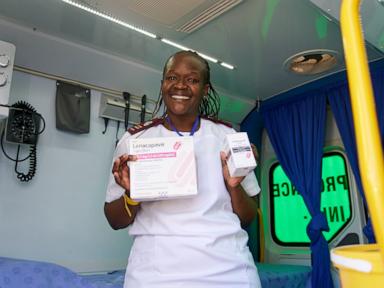
South Africa this month became one of the world's first countries to introduce lenacapavir, a twice-yearly injectable HIV prevention drug that showed 100% effectiveness in clinical trials. The country, which carries the world's highest HIV burden with over 8 million people living with the virus, has secured doses to cover 456,000 people for one year through a $29 million Global Fund grant. Health advocates argue the initial rollout is insufficient and call for at least 2 million doses annually to meaningfully reduce new infections, which currently range from 140,000 to 170,000 per year.
South Africa has launched lenacapavir, a breakthrough HIV prevention medication developed by Gilead Sciences that requires only two injections per year, addressing limitations of daily oral prevention pills. Clinical trials conducted in South Africa and Uganda demonstrated 100% effectiveness, with a crucial Johannesburg study showing a six-month injection provided complete protection against HIV. The government has acquired initial doses sufficient to cover 456,000 people annually, funded by a $29 million Global Fund grant, with plans to eventually fund the program independently. The rollout will initially target high-risk groups including sex workers, transgender people, injectable drug users, and adolescent women aged 15 to 24. However, civil society organizations argue the current plan is inadequate, asserting that at least 2 million doses per year are necessary to significantly impact new infection rates in a country with over 8 million people living with HIV. President Ramaphosa has pledged to reach 3 million South Africans over three years, and the health minister indicated Gilead has committed to granting a voluntary manufacturing license to a South African company to produce cheaper generics at $40 per person annually.
What's missing
The article does not provide details on the specific side effects experienced by trial participants beyond the mention of night sweats, nor does it explain the mechanism of action of lenacapavir or how it compares pharmacologically to existing prevention methods. Additionally, the timeline for when South Africa's domestic manufacturing of generics would begin is not specified.
What different sources said
- ABC News InternationalCenter
Highly effective prevention drug arrives in South Africa, which has high HIV burden
Related
Multi-Cancer Blood Test Galleri Fails Primary Trial Endpoint
A major clinical trial of Galleri, a blood test designed to detect multiple cancers early, failed to meet its primary goal of reducing late-stage cancer diagnoses when results were announced in February. Multi-cancer early detection (MCED) tests aim to improve survival rates by identifying disease at earlier, more treatable stages. The failure raises questions about the effectiveness of this promising diagnostic approach despite initial scientific enthusiasm.
Study Uses CPAP Data to Measure Social Jet Lag in Sleep Apnea Patients
Researchers analyzed CPAP adherence records from nearly 3,000 obstructive sleep apnea patients to measure social jet lag—the circadian misalignment between work and free days. About 16-21% of patients showed moderate to severe social jet lag, with prevalence highest in younger and middle-aged adults and declining after age 65. The findings suggest CPAP devices could routinely screen for circadian misalignment, potentially identifying patients who need additional behavioral or activity-based interventions.

FDA Updates Alli Label to Warn of Rare but Potentially Fatal Kidney Problems
The FDA has approved updated labeling for Alli, an over-the-counter weight loss pill, to warn of rare risks including acute kidney injury, kidney stones, and oxalate nephropathy. The agency now instructs people with kidney disease history to consult a doctor before use and directs all users to stop taking the drug if they experience symptoms like back pain, blood in urine, or leg swelling. This warning is significant because Alli is the only OTC weight loss medication available in the U.S., and approximately 40 million people have used orlistat (Alli's generic form) since its approval in 1999.