Senate Control Hinges on Narrow Margins in 2026 Midterms, New Forecast Shows
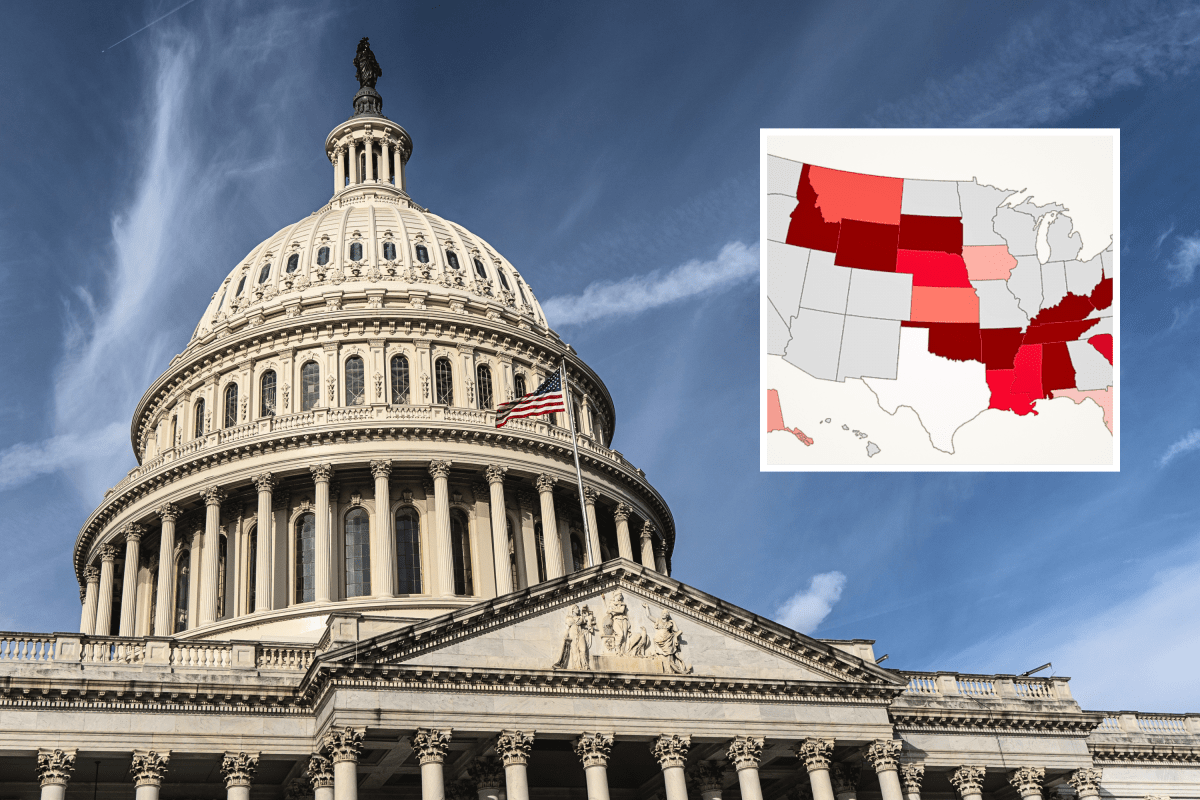
A new Economist forecast model projects Republicans have a 52% chance of maintaining Senate control in the 2026 midterms, with a median outcome of a 50-50 split. The race is effectively tied nationally, with most seats safe for one party or the other, leaving roughly a dozen competitive races to determine the outcome. Control of the Senate will significantly impact President Trump's ability to advance his legislative agenda in his final two years.
The Economist's simulation model, which ran 25,001 projected election outcomes using polling, fundraising, and historical voting data, indicates the 2026 Senate battle is finely balanced heading into November. Republicans currently hold a narrow majority and are favored in 52% of simulations, while Democrats have a 48% chance, with the median outcome showing a 50-50 split that would give Vice President JD Vance tie-breaking power. Most of the 35 races are not competitive, but a cluster of battleground states—particularly North Carolina, Ohio, and Texas—are likely to determine which party controls the chamber. Democrats appear well-positioned to defend vulnerable seats in New Hampshire, Minnesota, Michigan, and Georgia, while Republicans maintain advantages in Texas, Iowa, Alaska, and Nebraska. Several traditionally Republican seats are trending Democratic, including North Carolina, where former Governor Roy Cooper is favored, and Maine, where Senator Susan Collins faces a difficult reelection bid.
What's missing
The article references a 'June 2026 Economist simulation' but the current date context is unclear; if this article was published before June 2026, the timing of the forecast should be clarified. Additionally, the article does not explain the specific methodologies or weighting used by The Economist model beyond mentioning polling, fundraising, and historical voting data.
What different sources said
- NewsweekCenter
Republican and Democrat Chances of Winning Every Senate Race Across US
Related

Nigel Farage Returns to Public View After Seven Weeks of Limited Appearances Following £5m Donation Controversy
Nigel Farage, leader of Reform UK, re-emerged publicly on Wednesday after seven weeks of largely avoiding media scrutiny following revelations that he received a £5 million personal gift from a crypto billionaire. The donation has been explained differently in various interviews—as payment for security, a Brexit reward, and other justifications—while Farage has cancelled events and limited public appearances. His return comes as Reform UK loses political ground to the further-right Restore Britain party, and observers suggest his absence has been an attempt to dodge accountability on the donation's origins and propriety.

Meta Employee Detained by Immigration Authorities Following Company Layoffs
A former Meta employee who was laid off on May 20 was recently detained by US immigration authorities, according to internal company communications reviewed by WIRED. The employee, whose nationality and visa status remain unconfirmed, was believed to be detained in El Paso, Texas, near the US-Mexico border. The incident highlights vulnerabilities for international workers on visa sponsorships who lose employment and the broader context of intensified immigration enforcement under the Trump administration.

EPA Replaces Desk Phones with Laptop Calling Software; Union Raises 911 Safety Concerns
The EPA replaced employee desk phones with calling software on laptops, prompting the largest EPA employee union to raise safety concerns about 911 geolocation functionality. The union claims the software does not reliably transmit location data to emergency responders, creating potential risks during medical emergencies. The issue highlights broader workplace safety and emergency response reliability questions in federal agency modernization efforts.