Russia's Oil Exports Hit Wartime High Despite Production Decline

Russia's crude oil exports reached 3.46 million barrels per day last month, the highest level since the 2022 invasion of Ukraine, driven by surging global prices. Ukrainian drone strikes on refineries and export terminals have disrupted refined fuel exports but increased crude shipments to global markets. While export revenues are at their highest since 2022, Russian upstream production is falling and the government must compensate refinery owners for fuel export losses, limiting actual revenue gains to the Kremlin.
Russia's crude oil exports have reached their highest volume since the full-scale invasion of Ukraine, averaging 3.46 million barrels per day last month amid elevated global oil prices. Ukrainian long-range drone strikes targeting Russian refineries and export terminals have disrupted Moscow's ability to export gasoline and jet fuel, forcing the country to redirect more crude oil to international markets instead. This shift has paradoxically boosted crude export revenues to their highest levels since 2022. However, Russian officials acknowledged this week that upstream oil production is declining, and the financial benefits are being substantially offset by billions of dollars in government compensation payments to refinery owners affected by the fuel export restrictions.
What different sources said
- SemaforCenter
Russia’s oil exports hit wartime high
Related
Higher Oil Prices Boost Russia's Government Revenue but Fail to Accelerate Economic Growth
Rising oil prices are increasing Russia's government revenue and current-account surplus despite Western sanctions, with every $10 increase in oil prices adding roughly $21 billion in budget revenue. However, severe labor shortages from military losses and emigration, combined with weak productivity, are preventing the economy from expanding beyond 0.9% growth in 2026. The oil windfall highlights structural constraints in Russia's economy that money alone cannot overcome.

U.S. Markets Stage Rebounds Following Chip Stock Selloff
U.S. markets have rebounded twice following a dramatic Friday selloff in chip stocks, with gains at Monday's open and Tuesday afternoon. The Nasdaq 100 remains down 4.25% for the month despite the recoveries, and volatility has increased sharply. The pattern reflects the market's traditional 'buy the dip' behavior as investors resist giving up recent gains.
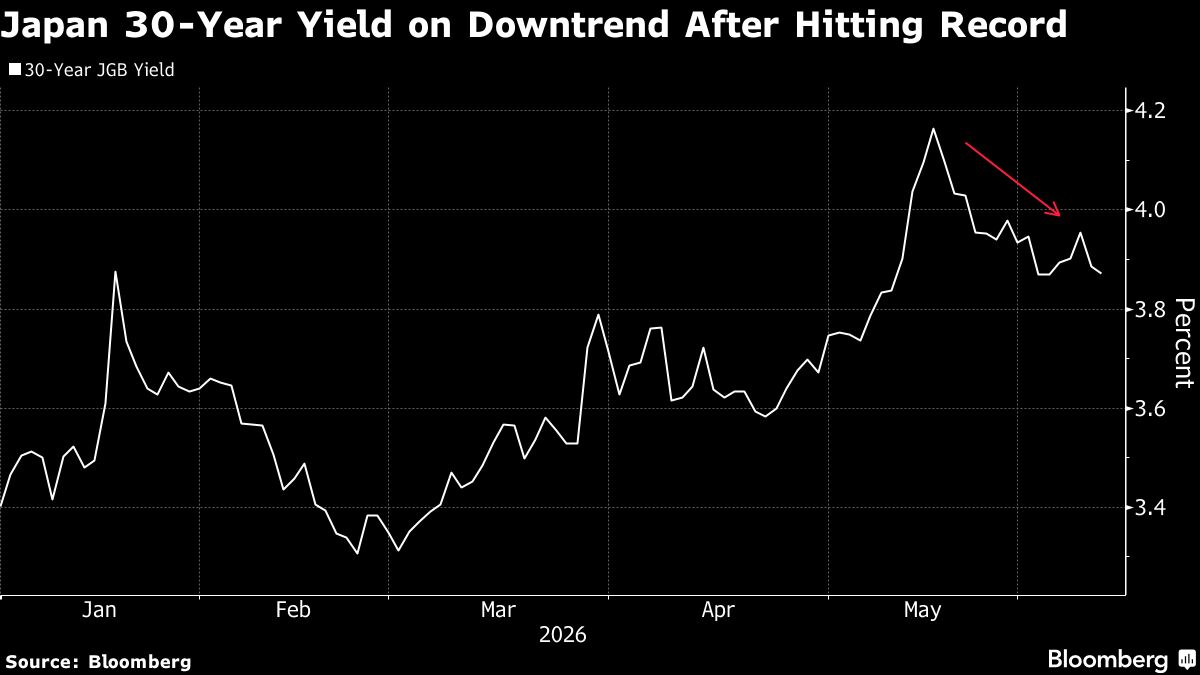
Japan's 30-Year Bond Auction Sees Weakest Demand in Over a Year
Japan's 30-year government bond auction on June 10, 2026 attracted the weakest demand since June 2025, with a bid-to-cover ratio of 2.94 compared to the previous 3.49. The decline reflects investor concerns over inflation and fiscal policy, as well as falling yields reducing appetite for the bonds. Weak bond demand can signal investor anxiety about Japan's economic outlook and fiscal sustainability.