Pakistan's Trout Population Faces 50% Decline from Climate Change and Overfishing
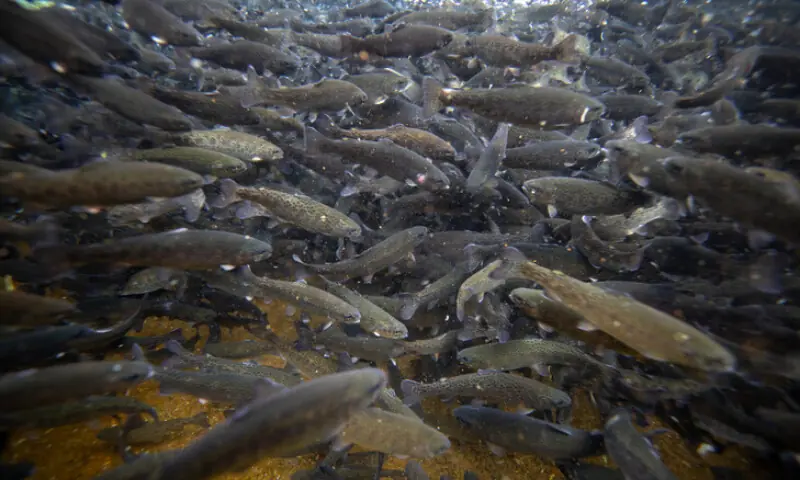
Gilgit-Baltistan's prized trout population has declined by approximately 50% over the past two decades due to climate change, habitat loss, and overfishing. The region's glacier-fed waters were historically ideal for trout breeding, but flash floods, glacial lake outburst floods, hydropower construction, and illegal fishing methods have severely damaged spawning habitats and fish migration routes. The decline threatens both the ecological balance of the region and the livelihoods of local communities dependent on trout fishing and farming.
Pakistan's Gilgit-Baltistan region, renowned for its pristine lakes and glacier-fed rivers, is experiencing a sharp decline in its trout population, with experts estimating a 50% reduction over the past two decades. Multiple factors contribute to this decline: climate change-induced flash floods and glacial lake outburst floods destroy spawning habitats by altering sediment and gravel composition; hydropower projects lack fish ladders or bypass systems, blocking natural upstream migration for breeding; and overfishing using dynamite, nets, and electric shocks depletes populations faster than they can reproduce. The average size of caught trout has also diminished significantly, from 2 kilograms or more a decade ago to 500-600 grams currently. Improved road infrastructure has exacerbated the problem by enabling commercial fishing access to previously remote areas. Paradoxically, while wild trout populations decline, demand has spurred a booming trout farming industry across the region.
What's missing
The article notes that 'there have been no official surveys or statistics about trout population,' meaning the 50% decline figure is based on conservative estimates rather than rigorous scientific data. The study's limitations include reliance on expert assessments and anecdotal evidence rather than comprehensive population surveys. Additionally, the long-term ecological consequences of trout (an introduced species) decline on native fish species and broader ecosystem dynamics are not explored.
What different sources said
- DawnCenter
Pakistan’s prized trout under threat as climate change, overfishing take toll
Related

Chevron and Argentine Shale Producers to Supply $3 Billion Natural Gas Liquids Project
Chevron and two other major Argentine shale producers are signing contracts this week to supply a natural gas liquids (NGL) project worth $3 billion. The supply agreements effectively guarantee the project will proceed, according to sources familiar with the matter. This development is significant for Argentina's energy sector and Chevron's operations in one of the world's largest shale reserves.

Sweden Donates Gripen Fighter Jets to Ukraine in Major Air Power Upgrade
Sweden has agreed to donate 16 Saab JAS 39 Gripen C/D fighter jets to Ukraine, with Kyiv purchasing 20 additional advanced Gripen E/F models, as part of a deal that could eventually reach 150 aircraft. The Gripen was designed during the Cold War to operate from austere locations and requires minimal ground crew, making it well-suited to Ukraine's operational environment. The acquisition represents a significant enhancement to Ukraine's air combat capabilities against Russian forces.

Military analysts assess potential challenges and risks of U.S. military intervention in Cuba
Military experts and Pentagon insiders are analyzing the potential difficulties and consequences of a possible U.S. military operation against Cuba under the Trump administration's pressure campaign. Cuba's cohesive communist government structure and loyal military differ significantly from Venezuela's fractured system, making regime change more complicated. The analysis highlights risks including humanitarian crises, migration surges, regional geopolitical shifts, and the absence of viable successor leadership.