Pakistan Launches Six Earth Observation Satellites in 16 Months, Raising Indian Security Concerns
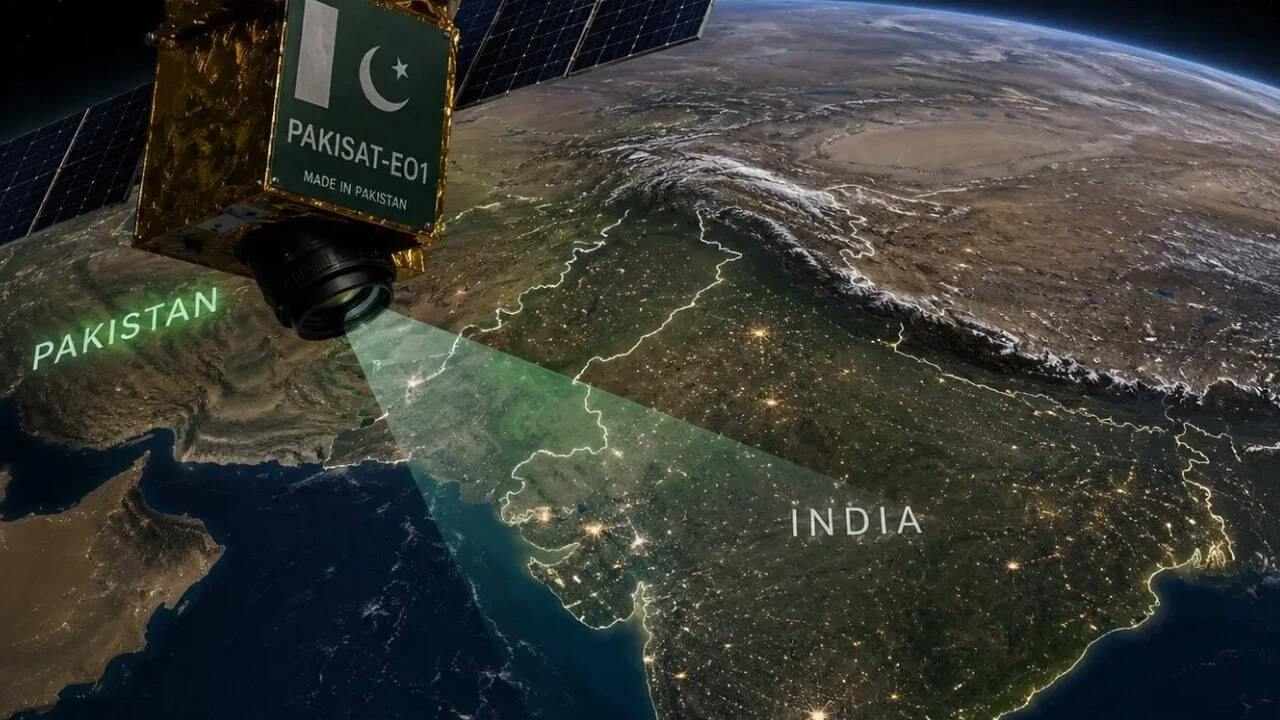
Pakistan launched six earth observation satellites between January 2025 and April 2026, primarily using Chinese rockets, marking a significant acceleration in its space surveillance capabilities. Indian defence analysts warn these satellites could be used for monitoring India's borders, troop movements, and military assets, while highlighting gaps in India's own surveillance satellite program. The development underscores growing space-based military competition in South Asia amid delays in India's satellite deployment plans.
Pakistan's Space and Upper Atmosphere Research Commission (SUPARCO) has launched six earth observation satellites over approximately 16 months—PAUSAT-1, PRSC-EO1, PRSS-2 EO, HS-1, PRSC-EO2, and PRSC-EO3—representing a dramatic acceleration from its historical pace of satellite launches. The satellites were launched primarily via Chinese rockets (Long March and Smart Dragon variants), with one using SpaceX's Falcon 9. Indian defence analysts, including retired Group Captain Ajay Ahlawat and Rear Admiral Sudhir Pillai, contend these satellites enhance Pakistan's surveillance capabilities over Indian territory and note that some operate in complementary modes—optical satellites during daylight and synthetic aperture radar (SAR) satellites at night—enabling near-continuous monitoring. The analysts also highlight India's current vulnerabilities: no surveillance satellite launches in the past year despite ready payloads, only three of four required NavIC navigation satellites operational, and delays in the Space-Based Surveillance Phase-III program, which aims to deploy 52 surveillance satellites by 2029 but is not expected to begin launches until 2026.
What's missing
The article relies on Indian defence analysts' assessments without including official Pakistani government statements or technical details about the satellites' actual capabilities, resolution, or intended civilian versus military applications. No independent verification of the satellites' specifications or operational status is provided. Additionally, the article does not contextualize Pakistan's satellite program within broader international space norms or discuss whether these launches violate any treaties or agreements.
What different sources said
- Times of IndiaCenter
Pak launched 6 satellites in a year; may be used to spy on India, warns expert
Related

Analysis of Satellite Images and Videos Suggests U.S. Precision Strikes on Iranian Water Facility
Satellite imagery and videos analyzed by The New York Times indicate that U.S. precision strikes destroyed water storage facilities in southern Iran near the Strait of Hormuz on June 9, cutting water access to over 20,000 people. The U.S. Central Command confirmed conducting precision strikes in the area, though it remains unclear whether the U.S. intentionally targeted the water infrastructure or was aware of its purpose. Deliberately targeting civilian water infrastructure could constitute a war crime under international law, raising questions about the strike's legality and intent.

A.J. Minter Says Velocity Drop Won't Affect His Pitching Effectiveness
Mets reliever A.J. Minter's fastball velocity has decreased to 92.5 mph in 2026, down from 94.4 mph in 2025 and 96.6 mph in 2022, following his return from a torn lat injury. The left-handed pitcher acknowledged the drop but expressed confidence in his ability to remain effective despite the decline. Minter's comments come as he adjusts to his second season with the Mets after missing a year due to injury.
Solomon Islands PM Says China Security Pact Must Remain Secret Due to Non-Disclosure Clause
Solomon Islands Prime Minister Matthew Wale announced he cannot legally release the 2022 security agreement with China because it contains a binding non-disclosure clause signed by the previous government. Wale had previously promised to publish the agreement while in opposition but now says legal restrictions prevent disclosure. The revelation highlights tensions in the region and comes as Solomon Islands begins negotiating a new security treaty with Australia.