Japan's Small Firms Face Wage Growth Pressure as Iran Conflict Drives Up Costs

More than 80% of unions in Japan's Federation of Energy and Chemistry Workers report that the Iran war will likely affect future wage negotiations, with 84% already experiencing impacts through higher energy and raw materials costs. Small firms, which employ the majority of Japan's workforce, may struggle to sustain wage growth as profit margins tighten amid Middle East tensions. This threatens a key economic pillar—the virtuous cycle of wage growth supporting consumption and prices that Japan has been building.
According to a survey by the Japanese Federation of Energy and Chemistry Workers' Unions conducted last week, more than 80% of affiliated unions expect the Iran war to impact future wage talks, with 84% already reporting effects primarily through elevated energy and raw materials costs. The pharmaceutical industry is cited as particularly strained, with profits squeezed by drug price cuts and rising costs amid Middle East tensions. Japan's corporate goods prices rose 0.9% in May from the previous month—one of the strongest paces in recent years—following April data that climbed at the fastest rate in 12 years. Small firms, which employ the bulk of Japan's company employees, may have difficulty maintaining wage growth as input costs rise and profit margins compress. This development poses a risk to Japan's nascent economic recovery, which has relied on sustained wage growth to support consumption and price stability.
What different sources said
- The Japan TimesCenter
Wage gains at Japan’s smaller firms at risk as Iran war drags on
Related
Higher Oil Prices Boost Russia's Government Revenue but Fail to Accelerate Economic Growth
Rising oil prices are increasing Russia's government revenue and current-account surplus despite Western sanctions, with every $10 increase in oil prices adding roughly $21 billion in budget revenue. However, severe labor shortages from military losses and emigration, combined with weak productivity, are preventing the economy from expanding beyond 0.9% growth in 2026. The oil windfall highlights structural constraints in Russia's economy that money alone cannot overcome.

U.S. Markets Stage Rebounds Following Chip Stock Selloff
U.S. markets have rebounded twice following a dramatic Friday selloff in chip stocks, with gains at Monday's open and Tuesday afternoon. The Nasdaq 100 remains down 4.25% for the month despite the recoveries, and volatility has increased sharply. The pattern reflects the market's traditional 'buy the dip' behavior as investors resist giving up recent gains.
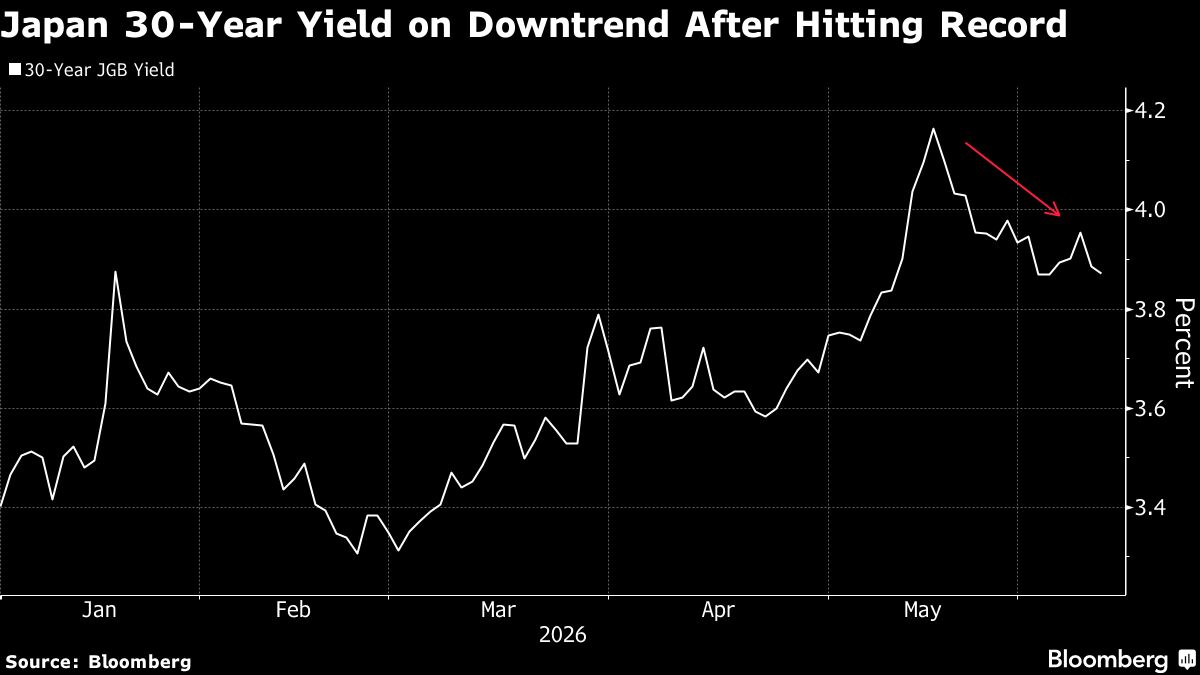
Japan's 30-Year Bond Auction Sees Weakest Demand in Over a Year
Japan's 30-year government bond auction on June 10, 2026 attracted the weakest demand since June 2025, with a bid-to-cover ratio of 2.94 compared to the previous 3.49. The decline reflects investor concerns over inflation and fiscal policy, as well as falling yields reducing appetite for the bonds. Weak bond demand can signal investor anxiety about Japan's economic outlook and fiscal sustainability.