India Waives Excise Duty on Ethanol-Blended Petrol to Expand Alternative Fuel Use
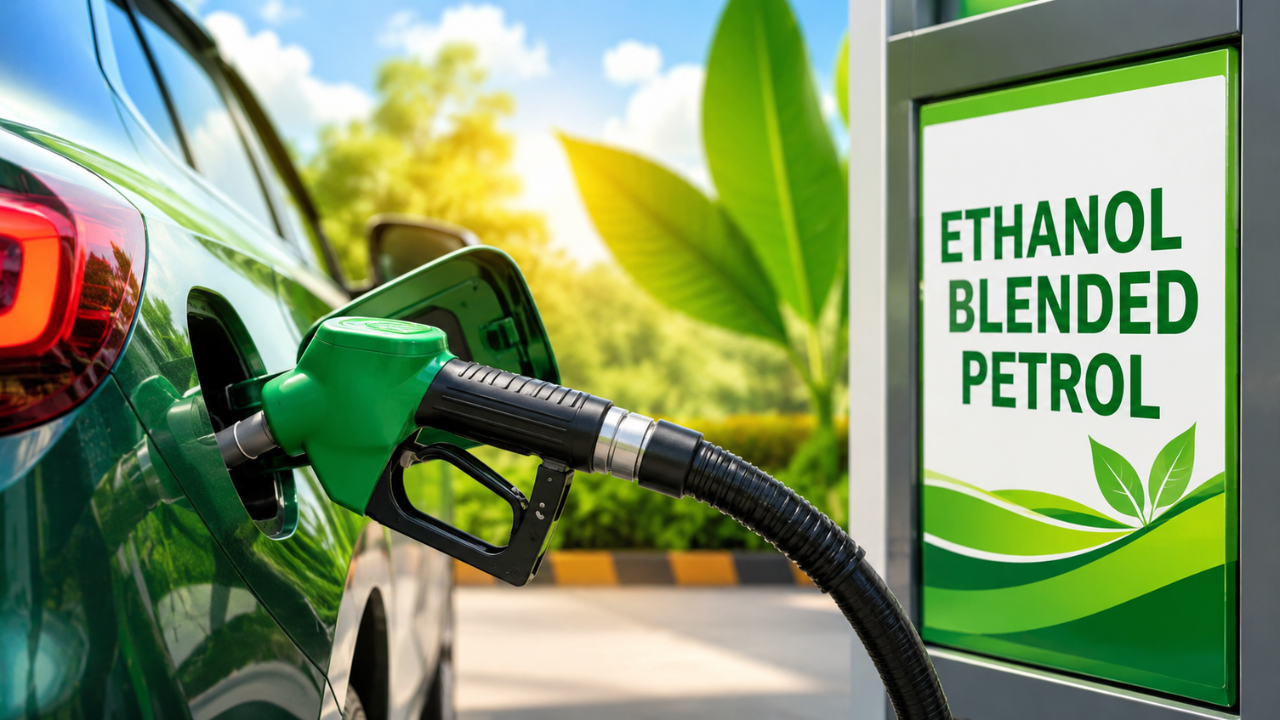
India's central government has exempted petrol blended with 22% to 30% ethanol (E22, E25, E27, and E30) from central excise duty, extending fiscal support beyond the existing E20 standard. The move follows the Bureau of Indian Standards' notification of fuel-quality specifications for these higher blends in May 2026 and comes days after the formal launch of E85 fuel for flex-fuel vehicles. The decision signals India's intent to build the regulatory and financial groundwork for higher ethanol adoption as the country seeks to reduce dependence on imported crude oil amid rising global energy prices.
The Indian government issued a gazette notification on June 10, 2026, granting nil central excise duty on petrol blended with 22%, 25%, 27%, and 30% ethanol by volume, covering blends known as E22, E25, E27, and E30. The exemption is designed to prevent double taxation, since petrol already bears excise duty and ethanol bears GST at their respective production stages; blending the two could otherwise trigger a fresh excise levy on the combined product. The government clarified that the exemption does not signal an imminent commercial rollout of these higher blends, stating that wider adoption will only follow extensive testing and consultation. The move builds on the Bureau of Indian Standards' May 2026 notification of technical standards for these blends under IS 19850:2026, which established parameters including ethanol content, octane ratings, sulphur limits, and safety requirements. It also coincides with the June 5 launch of E85 fuel — an 85% ethanol, 15% petrol blend — at 48 public-sector fuel stations, priced approximately ₹20 per litre below E20 petrol to offset ethanol's lower energy content. India, the world's third-largest oil importer, has rapidly expanded its ethanol blending programme, reaching 17.98% blending in ESY 2024-25 and approaching its E20 target ahead of schedule. Industry bodies including the Grain Ethanol Manufacturers Association and the All-India Distillers Association welcomed the excise exemption as a signal of policy stability and a catalyst for investment across the ethanol supply chain.
What's missing
The sources do not specify a concrete timeline or formal roadmap for the commercial rollout of E22–E30 blends, nor do they detail what vehicle compatibility testing or engine certification requirements manufacturers will need to meet before these fuels can be sold at retail pumps.
How coverage differed
Most outlets reported the policy facts consistently, but Times of India placed heavier emphasis on the ongoing Middle East conflict and rising fuel prices as the primary driver, while The Hindu and NDTV gave more weight to the government's clarification that the exemption does not mean an imminent rollout of higher blends and provided more detail on the technical and regulatory framework underpinning the decision.
What different sources said
- The HinduCenter
Higher ethanol blended petrol between 22-30% exempted from central excise duty
- Times of IndiaCenter
India slashes excise duty on ethanol-blended petrol: Key details
- Team-BHPCenter
Govt may delay E25 rollout; waives excise duty on blended petrol
- Moneycontrol.comCenter
E20 was just the start? India waives excise duty on higher ethanol-blended petrol
- MintCenter
Centre exempts E22, E25, E27 and E30 fuels from excise duty after approving higher ethanol-blend standards
- NDTVCenter
Centre Removes Excise Duty On Higher Ethanol Fuel. What It Means For You
- Hindustan TimesCenter
Petrol blended with 22%, 25% and 30% ethanol to now be excise duty-free | India News
Related
SpaceX IPO Makes Elon Musk World's First Trillionaire as Shares Surge 19% on Debut
SpaceX shares closed up 19% on their first trading day, pushing Elon Musk's net worth to approximately $1.11 trillion and making him the first individual in history to cross the trillion-dollar threshold. The company raised $75 billion at an IPO price of $135 per share, with shares closing near $161, giving SpaceX a market capitalization of roughly $2.1 trillion despite the company reporting a net loss of $4.94 billion in 2025. The milestone has drawn both investor enthusiasm and sharp criticism over Musk's social media conduct and concerns that the IPO's structure exploits passive index fund mechanics to extract wealth from ordinary retirement savers.
Delhi Power Bills to Rise for Some Consumers as Regulator Approves Higher Electricity Surcharge
Delhi's electricity regulator DERC has approved increased Power Purchase Adjustment Charges (PPAC) for distribution companies, raising bills for consumers in south, east, and central Delhi from July 2026. The hike follows a sharp rise in power procurement costs in April 2026, driven by higher summer demand and elevated fuel prices. The change also marks a structural shift from quarterly to monthly PPAC revisions, making electricity bills more responsive to real-time cost fluctuations.

SEC Proposes Repealing Rule 611 and Rule 610(e) of Regulation NMS
The Securities and Exchange Commission proposed on June 11, 2026, to rescind Rule 611 and Rule 610(e) of Regulation NMS, which govern trade-through protections and locking/crossing quotations in equity markets. Rule 611, in place for roughly two decades, requires trades to be executed at the best available price across exchanges. The proposal could reshape equity market structure and has implications for emerging areas such as tokenized stocks.