Hybrid chemical-biological process converts lignin into nylon precursor at high yields
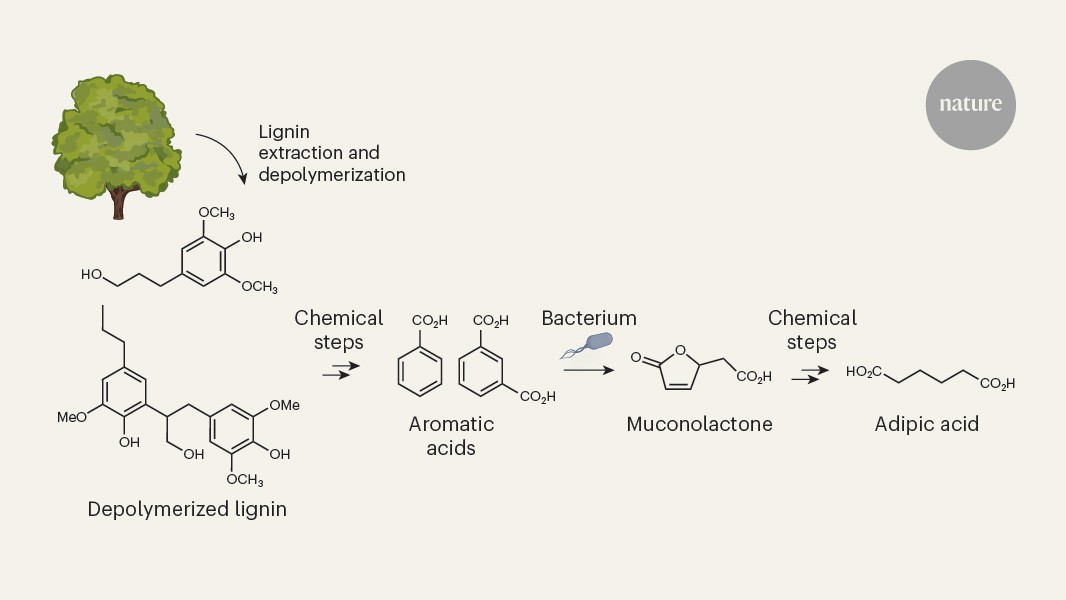
Researchers have developed a multi-step process that converts lignin, a major plant biopolymer component, into adipic acid—a key ingredient for nylon production—at yields exceeding previous methods. Lignin is abundant and renewable but has been difficult to process into defined industrial chemicals due to the complex mixtures it produces. This breakthrough demonstrates a general strategy for transforming lignin waste into valuable commercial products rather than simply breaking it apart.
A new hybrid approach combining chemical and biological steps has successfully converted lignin into adipic acid, a precursor chemical essential for nylon manufacturing, achieving higher yields than previously reported lignin conversion routes. Lignin, one of the main components of plant biomass, represents an abundant renewable resource that has long been underutilized because processing it typically produces messy mixtures of compounds with limited commercial value. The research, reported in Nature by Mains et al., reveals a carefully orchestrated sequence of transformations that moves beyond simply fragmenting lignin's polymeric structure toward strategically converting resulting mixtures into specific, industrially useful products. This approach suggests a broader framework for valorizing lignin waste streams from wood processing and other biomass industries. The findings address a significant challenge in green chemistry: developing practical methods to convert complex natural polymers into defined chemicals with the precision achieved in conventional petrochemical refining.
Limitations & open questions
The specific chemical and biological steps in the process are not detailed in this commentary; readers would need to consult the primary research article (Mains et al., Nature 2026) for methodological specifics. The economic viability and scalability of the process compared to conventional adipic acid production are not discussed.
What different sources said
- Nature NewsCenter
Hybrid refinery process turns plant material into industrially important chemical
Related

Research Reveals Nocturnal and Territorial Behavior of Adult Whitebait Species
A University of Canterbury researcher has conducted new studies on kōkopu, adult whitebait species that can live for over a decade, revealing they are nocturnal, territorial, and competitive. Whitebait refers to juveniles of six freshwater fish species, with kōkopu species having received significantly less research attention than īnanga, which dominate commercial catches. This research helps fill knowledge gaps about lesser-studied whitebait species and their adult life cycles.
Antarctic Fish Show Widespread Gene Loss Adapted to Extreme Cold
Researchers analyzing Antarctic notothenioid fish genomes identified 30 genes that have been lost across the entire clade and 12 additional genes lost specifically in icefishes, representing a natural experiment in gene loss under extreme environmental conditions. These losses affect genes involved in lipid metabolism, oxygen transport, skeletal mineralization, and other functions, yet the fish remain viable in their stable polar environment. The findings suggest that Antarctic notothenioids serve as a natural model for understanding how loss-of-function genetic variants can persist in wild populations and how organisms adapt to chronic cold.
Study identifies hemoglobin C oxidative damage as key driver of HbSC sickle cell disease severity
Researchers found that hemoglobin C is highly prone to oxidative denaturation in HbSC sickle cell disease, causing red blood cell membrane damage and reduced flexibility more severely than in other sickle cell variants. The study used mouse models and patient samples to show that HbC's oxidative damage contributes substantially to disease pathophysiology, independent of sickling potential. These findings suggest that targeting oxidative membrane injury—rather than only sickling—could improve treatment outcomes for HbSC patients.