Humpback whales recorded traveling record distances between Southern Hemisphere breeding grounds
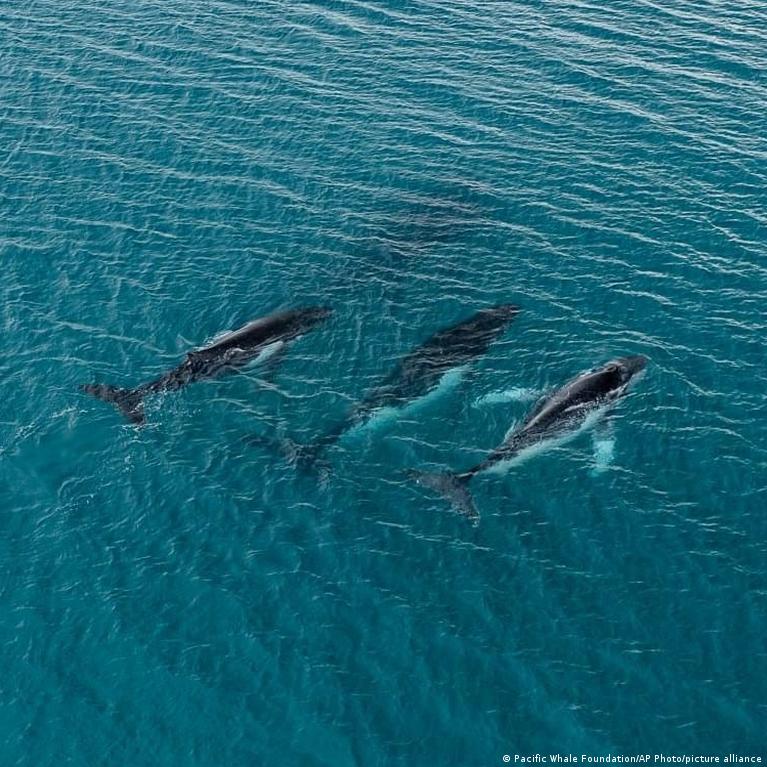
Two humpback whales have been documented traveling unprecedented distances between breeding grounds in Australia and Brazil, separated by roughly 14,200 and 15,100 kilometers respectively. The findings, published in Royal Society Open Science, were made possible through photo-identification of unique tail markings across thousands of images collected over decades. The discovery supports the Southern Ocean Exchange hypothesis and suggests climate change may increase such rare crossings in the future.
Researchers have identified two humpback whales that traveled exceptionally long distances across the Southern Ocean between separate breeding grounds—one whale sighted in Queensland, Australia in 2007 and 2013, then near São Paulo, Brazil in 2019; the other observed off Bahia, Brazil in 2003 and Hervey Bay, Queensland in 2025. The study, published in Royal Society Open Science, used photo-identification techniques based on unique fluke markings to track individual whales across decades. Of thousands of identified whales studied, only 0.01% completed such journeys, suggesting these are rare, possibly single-lifetime events. The findings support the Southern Ocean Exchange hypothesis, which proposes that humpbacks can meet on shared Antarctic feeding grounds and then follow different routes to breeding areas. Researchers note that climate-driven changes to the Southern Ocean, including shifts in sea ice and Antarctic krill distribution, may make such crossings more common over time, and that occasional individuals moving between distant populations help maintain genetic diversity and may introduce new songs to different pods.
Limitations & open questions
The study acknowledges that recorded distances reflect separation between sighting locations rather than actual distances traveled, as photo-identification only captures endpoints of journeys. The researchers note uncertainty about how common such exchanges truly are and call for continued global collaboration on photo-ID platforms to better understand the phenomenon's frequency.
What different sources said
- Deutsche WelleCenter
Researchers spot humpback whales off Australia and Brazil — longest lifetime journey on record
Related
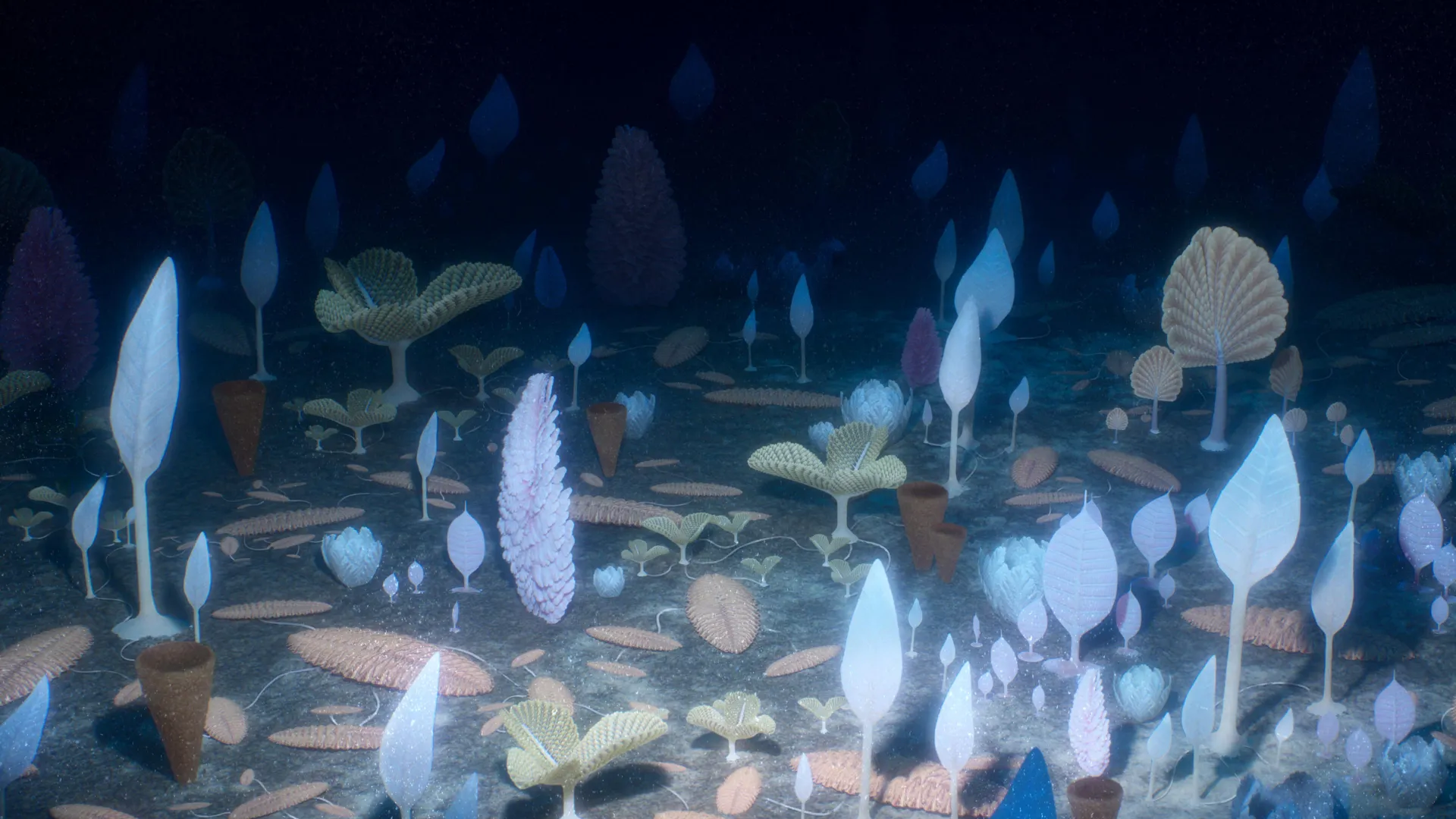
Study suggests asexual reproduction slowed early animal evolution during Ediacaran period
Researchers from the University of Cambridge found that early animals during the Ediacaran period (635-539 million years ago) reproduced asexually through runners, which limited competition and slowed evolutionary diversity. The study used fossil analysis, spatial modeling, and artificial intelligence to examine ancient ecosystems at Mistaken Point in Newfoundland. The findings help explain why animal diversity remained limited for millions of years before a dramatic burst of innovation in the Cambrian period.

UK Science Facilities Face £162m Funding Crisis With Potential Closures
Britain's world-leading science facilities, including the Diamond Light Source and ISIS Neutron and Muon Source, face potential closure or significant cuts due to a £162m funding crisis at the Science and Technology Facilities Council caused by rising electricity costs, staff expenses, and foreign exchange pressures. These facilities serve hundreds of companies and thousands of scientists domestically and internationally, with Diamond producing light 10 billion times brighter than the sun for materials research. Scientists and research leaders warn that short-term funding cuts could cause decades-long damage to the UK's scientific capability and international competitiveness.
Mitochondrial ROS Signaling Drives Avoidance Learning in C. elegans
Researchers discovered that reactive oxygen species (ROS) produced by mitochondria in postsynaptic neurons are necessary and sufficient to drive avoidance learning in C. elegans, using optogenetic stimulation of nociceptive neurons. The study demonstrates that activity-dependent mitochondrial ROS production increases glutamate receptors at synapses and strengthens neural circuits controlling avoidance behavior. This finding reveals a novel molecular mechanism linking neuronal activity to synaptic plasticity and behavioral learning.