Study suggests asexual reproduction slowed early animal evolution during Ediacaran period
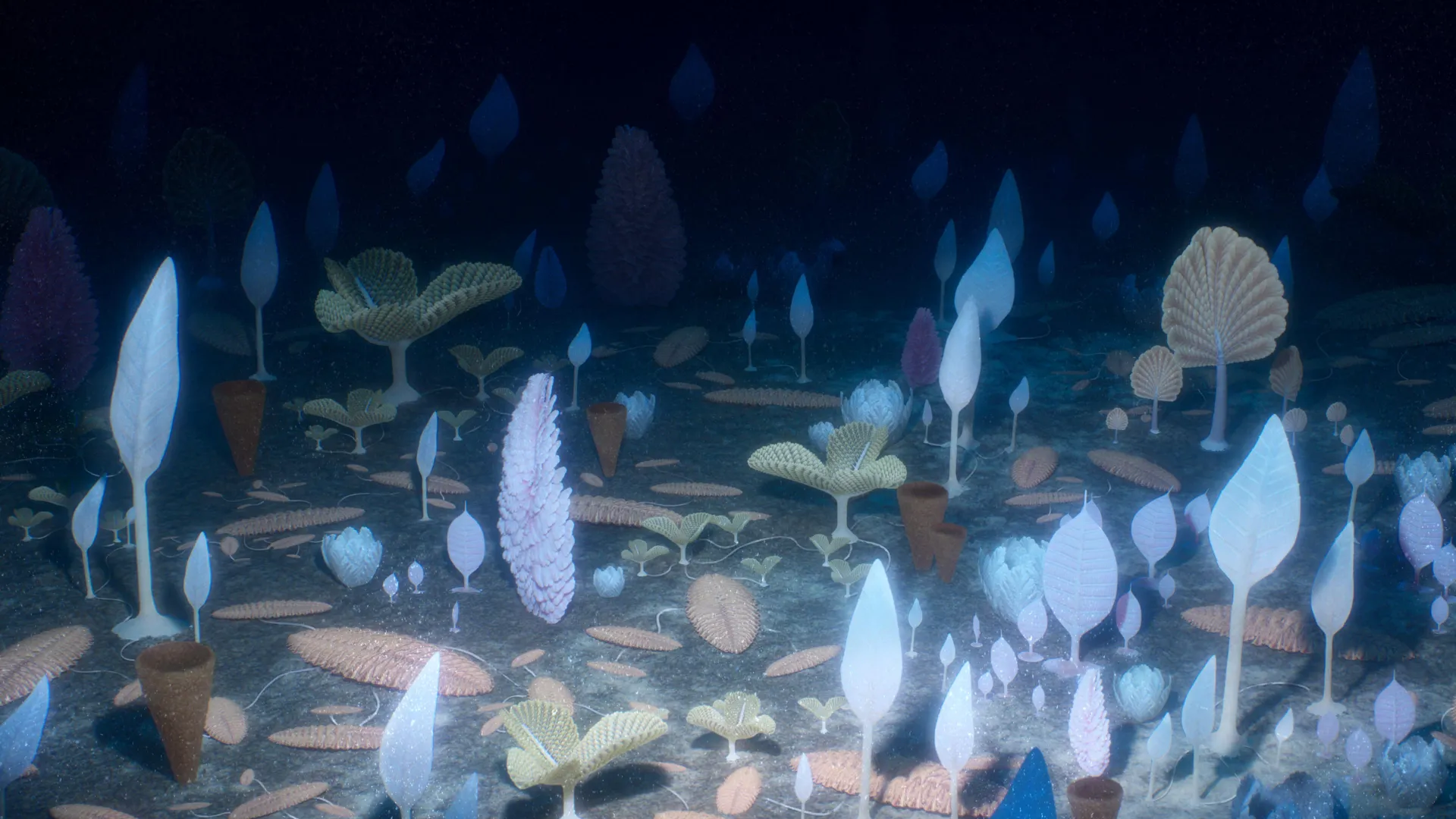
Researchers from the University of Cambridge found that early animals during the Ediacaran period (635-539 million years ago) reproduced asexually through runners, which limited competition and slowed evolutionary diversity. The study used fossil analysis, spatial modeling, and artificial intelligence to examine ancient ecosystems at Mistaken Point in Newfoundland. The findings help explain why animal diversity remained limited for millions of years before a dramatic burst of innovation in the Cambrian period.
A new study published in Nature Ecology and Evolution suggests that the earliest animals on Earth may have inadvertently slowed biodiversity expansion through their reproductive strategy. Researchers from the University of Cambridge analyzed fossils from the Ediacaran period, when the first animals emerged, and found that many reproduced asexually by producing genetically identical offspring connected by runners, similar to modern strawberry plants. Using laser scanning, spatial analysis, and artificial intelligence on fossils from Mistaken Point in Newfoundland, the team created computer simulations to test how different reproductive strategies affected early animal communities. The results indicated that asexual reproduction limited dispersal and reduced competition among neighboring organisms, which decreased evolutionary pressure for change. As organisms later began reproducing sexually and spreading to shallower, more challenging marine environments with greater competition for resources, animal diversity increased dramatically, explaining the transition from the slow-evolving Ediacaran to the rapid diversification of the Cambrian period.
What different sources said
- Science DailyCenter
Earth's first animals barely evolved until sex changed everything
Related
Researchers Identify D-Retro-Inverso Peptide Candidates for Treating Cardiac Amyloidosis
Researchers have designed and computationally evaluated four peptide candidates made from D-amino acids that may inhibit the formation of Serum Amyloid A (SAA) fibrils associated with cardiac complications following heart attacks. The study builds on mouse model evidence suggesting SAA aggregates contribute to long-term myocardial infarction complications and may operate similarly in humans. Two candidates, DRI-R5S and DRI-H6A, were identified as particularly promising for potential drug development.
Study Identifies D-Retro-Inverso Peptides as Potential Treatments for Cardiac Amyloidosis
Researchers designed four peptide candidates using D-amino acids to inhibit Serum Amyloid A (SAA) fibril formation, which may contribute to complications following heart attacks. The study, conducted using molecular dynamics simulations in a mouse model, identified two peptides—DRI-R5S and DRI-H6A—as promising drug candidates. This work could lead to new therapeutic approaches for cardiac amyloidosis, a serious post-infarction complication.
Scientists Discover Previously Unknown Branch of Tryptophan Metabolism in Humans
Researchers identified a new enzymatic step in human tryptophan catabolism, showing that the protein ASPDH acts as a 2-aminomuconate reductase to produce a previously unknown amino acid. This discovery fills a gap in the kynurenine pathway, one of the body's major metabolic routes for processing the amino acid tryptophan. The finding expands understanding of human metabolism and may have implications for understanding NAD cofactor production and related metabolic diseases.