German Economy Faces Stagnation With No Recovery in Sight, Council of Economic Experts Warns
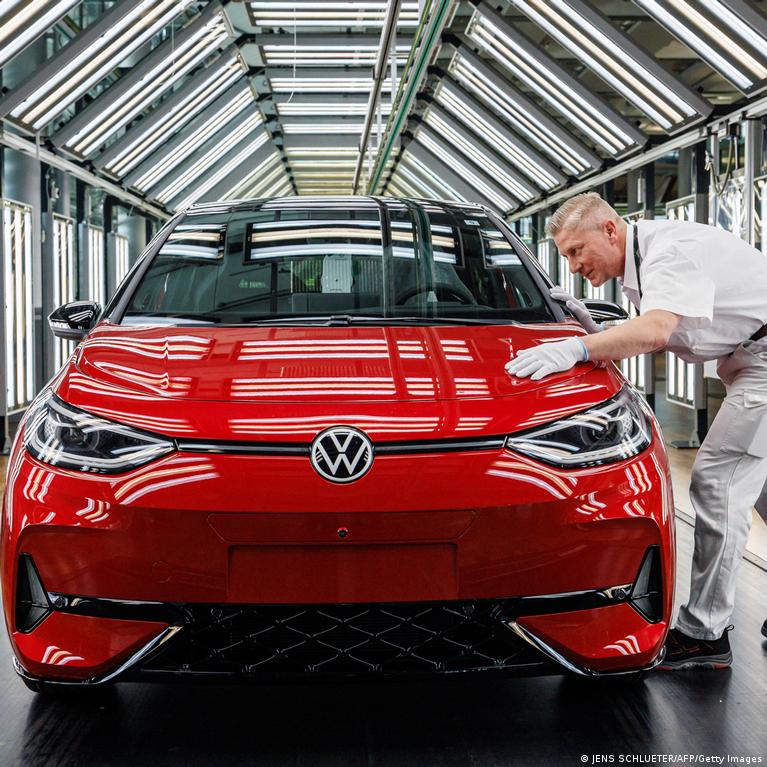
Multiple German economic institutions have slashed their 2025 growth forecasts to just 0.5%, citing the Iran war's energy price shock, US tariffs, and deep structural problems. Public spending on defense and infrastructure is the primary driver of what little growth exists, while household demand and business investment remain weak. The outlook underscores a prolonged competitive decline for Europe's largest economy, with no rapid recovery in sight.
Germany's leading economic advisory bodies — including the German Council of Economic Experts, the DIW, the Kiel Institute, and the Bundesbank — have converged on a 2025 GDP growth forecast of just 0.5%, with only modest improvement to around 0.8% expected in 2026. The Iran war has triggered a significant energy price shock, with heating oil up 40% and gas and electricity prices continuing to climb, hitting Germany especially hard as both a major goods exporter and a fossil fuel importer. US tariff policy compounds the pressure, while rising Chinese exports into European markets are squeezing German industry at home and in third-party markets. Public spending — particularly on defense and a special infrastructure fund — is the sole meaningful growth driver, as household consumption weakens and businesses grow more cautious. Structural problems including an aging population, declining birth rates, falling immigration, and a loss of industrial competitiveness, especially in the automotive sector, are limiting Germany's long-term growth potential. The budget deficit is projected to reach 3.7% of GDP this year and 4.3% next year, both exceeding the EU's 3% stability threshold. Experts warn that without significant reforms to social insurance, labor markets, and industrial investment priorities, Germany's competitive position will continue to erode.
What's missing
The articles do not specify the timeline or severity of the Iran war's disruption to Strait of Hormuz shipping, nor do they detail what specific policy reforms the German government is actively considering beyond broad references to social insurance contribution changes and infrastructure spending. The ECB's actual interest rate decision, referenced as pending, is not reported.
How coverage differed
DW and Euronews both report the 0.5% growth figure but differ in emphasis: DW focuses on the political dimension, highlighting Chancellor Merz's unmet promises and the coalition's difficulty implementing reforms, while Euronews centers on the economic mechanics, stressing that public spending is the sole growth driver and offering a more detailed comparison of Germany's position relative to the US and broader euro area. Bloomberg's framing is notably more optimistic, leading with the Bundesbank's view that fiscal stimulus will eventually support a recovery.
What different sources said
- Deutsche WelleCenter
Germany: No recovery in sight for the economy
- EuronewsCenter
Germany: growth halves as state drives investment
- BloombergCenter
Germany to Grow in 2026 as Spending Offsets War, Bundesbank Says
Related
SpaceX IPO Makes Elon Musk World's First Trillionaire as Shares Surge 19% on Debut
SpaceX shares closed up 19% on their first trading day, pushing Elon Musk's net worth to approximately $1.11 trillion and making him the first individual in history to cross the trillion-dollar threshold. The company raised $75 billion at an IPO price of $135 per share, with shares closing near $161, giving SpaceX a market capitalization of roughly $2.1 trillion despite the company reporting a net loss of $4.94 billion in 2025. The milestone has drawn both investor enthusiasm and sharp criticism over Musk's social media conduct and concerns that the IPO's structure exploits passive index fund mechanics to extract wealth from ordinary retirement savers.
Delhi Power Bills to Rise for Some Consumers as Regulator Approves Higher Electricity Surcharge
Delhi's electricity regulator DERC has approved increased Power Purchase Adjustment Charges (PPAC) for distribution companies, raising bills for consumers in south, east, and central Delhi from July 2026. The hike follows a sharp rise in power procurement costs in April 2026, driven by higher summer demand and elevated fuel prices. The change also marks a structural shift from quarterly to monthly PPAC revisions, making electricity bills more responsive to real-time cost fluctuations.

SEC Proposes Repealing Rule 611 and Rule 610(e) of Regulation NMS
The Securities and Exchange Commission proposed on June 11, 2026, to rescind Rule 611 and Rule 610(e) of Regulation NMS, which govern trade-through protections and locking/crossing quotations in equity markets. Rule 611, in place for roughly two decades, requires trades to be executed at the best available price across exchanges. The proposal could reshape equity market structure and has implications for emerging areas such as tokenized stocks.