Expanding Solar Energy in New York Requires Difficult Land-Use Tradeoffs Between Agriculture, Conservation, and Renewable Energy
New York can meet its goal of 46 gigawatts of large-scale solar by midcentury, but doing so requires resolving competing demands for land currently used for agriculture, forests, and conservation. Solar energy requires significantly more land than fossil fuel plants to generate equivalent electricity, forcing policymakers to choose which existing land uses to displace. The outcome will determine who benefits from renewable energy expansion and who bears the ecological and social costs.
A geographic analysis of New York's renewable energy goals reveals a fundamental challenge: achieving the state's 46-gigawatt solar target requires vast land repurposing that will inevitably displace agricultural, forest, or conservation areas. Solar's lower power density compared to fossil fuel plants means a 100-megawatt project requires approximately 417 acres. The 70 gigawatts of solar expected to come online nationally in 2026-2027 alone will require over 320,000 acres, with about 53% expected to displace farmland, plus roughly 22,000 acres of forest and 10,000 acres of wetlands. Rather than treating energy, agriculture, and conservation as mutually exclusive, emerging approaches like agrivoltaics (growing crops under raised solar panels) and ecovoltaics (designing projects to support ecosystem services) offer potential solutions, though these won't work universally.
Limitations & open questions
The article does not provide specific details on the economic costs or benefits of different land-use scenarios, nor does it quantify the relative carbon reduction benefits of solar development versus the carbon sequestration value of forests that might be displaced. The feasibility and scalability of dual-use alternatives like agrivoltaics and floating solar panels in New York's specific climate and geography are not discussed in detail.
What different sources said
- The ConversationCenter
Building more renewable energy sources means rethinking land use for agriculture and conservation
Related
New AI Framework Improves Evidence-Based Analysis for Muon Collider Research
Researchers have developed an AI system called agentic hybrid RAG that combines retrieval and reasoning techniques to help scientists find and verify evidence in muon collider research literature. The framework integrates both keyword-based and semantic search methods with AI reasoning to decompose complex queries and synthesize answers. This work addresses a growing need in high-energy physics for AI-assisted tools that can reliably navigate rapidly expanding scientific literature.
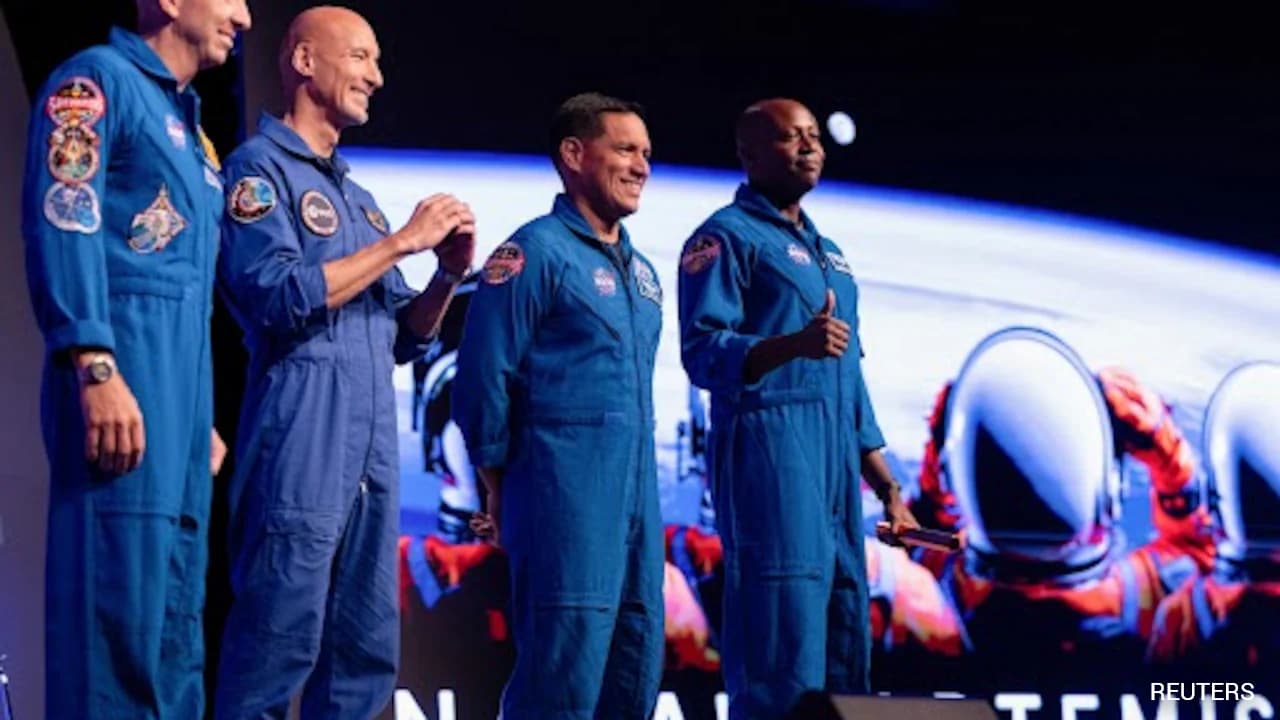
NASA Announces Four-Astronaut Crew for Artemis III Moon Mission
NASA named three U.S. astronauts and one Italian astronaut from the European Space Agency as the crew for Artemis III, scheduled to launch in 2027. The mission will conduct a docking demonstration in Earth's orbit and test moon landers from SpaceX and Blue Origin. The crew includes a veteran test pilot, a record-holder for longest U.S. spaceflight, and a first-time space flyer.
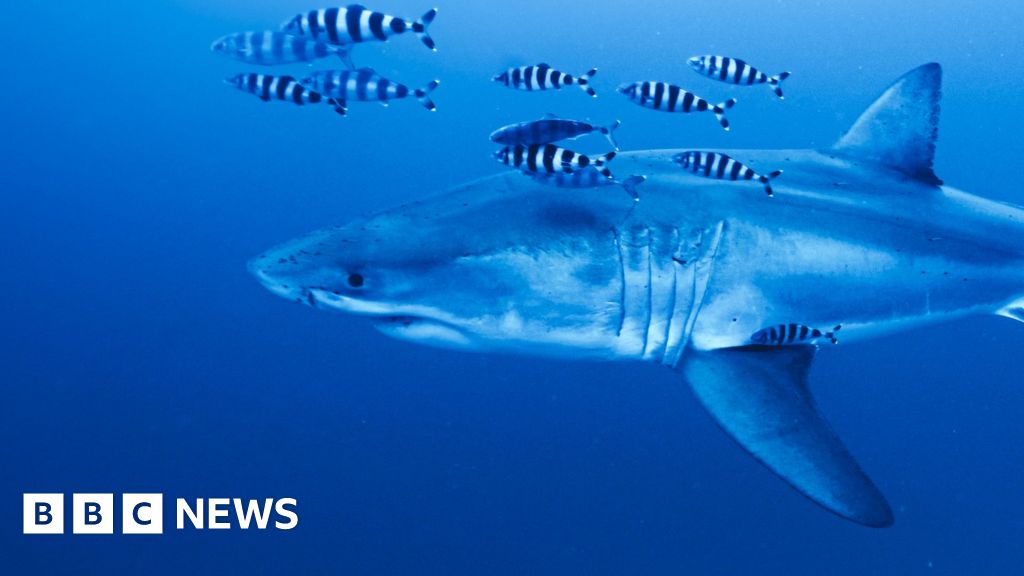
Rare Great White shark filmed in Mediterranean Sea between Tunisia and Sicily
A volunteer diver captured rare footage of a Great White shark in the Mediterranean Sea in May while working to document ghost fishing nets. The sighting is significant because Great Whites are thought to be near extinction in the Mediterranean due to overfishing. Conservationists hope the discovery will prompt governments to establish marine protected areas in the region.