European Development Finance Institutions Lead African Private Capital Investment
European development finance institutions were the most active investors in African private capital funds during the first quarter of this year, according to research from Nigerian financial data platform Stears. Africa faces a $400 billion development financing gap, with the continent remaining dependent on foreign capital for private investment. The growing secondaries market is emerging as a potential solution to address investor concerns about exit strategies and capital recovery.
Research from Stears, a Nigerian financial data platform, reveals that European development finance institutions (DFIs) led investment activity in African private capital funds during the first three months of the year. This finding underscores Africa's continued reliance on foreign capital sources for private investment, a dependency highlighted at the African Development Bank's recent annual meeting. Attendees at the meeting emphasized the need for greater capital mobilization from within the continent to address a substantial $400 billion development financing gap. Historically, investor concerns about exit pathways and the ability to recoup capital have constrained private capital flows into Africa, but a developing market for secondaries—the buying and selling of existing fund stakes—is positioning itself as a mechanism to encourage increased investment.
What's missing
The specific dollar amounts or percentage of total African private capital fund investments represented by European DFIs in Q1 are not provided. Additionally, details on which European DFIs were most active, the types of African sectors or countries receiving investment, and the timeline for closing the $400 billion financing gap are absent.
What different sources said
- SemaforCenter
European DFIs lead Africa's private capital funds
Related
Higher Oil Prices Boost Russia's Government Revenue but Fail to Accelerate Economic Growth
Rising oil prices are increasing Russia's government revenue and current-account surplus despite Western sanctions, with every $10 increase in oil prices adding roughly $21 billion in budget revenue. However, severe labor shortages from military losses and emigration, combined with weak productivity, are preventing the economy from expanding beyond 0.9% growth in 2026. The oil windfall highlights structural constraints in Russia's economy that money alone cannot overcome.

U.S. Markets Stage Rebounds Following Chip Stock Selloff
U.S. markets have rebounded twice following a dramatic Friday selloff in chip stocks, with gains at Monday's open and Tuesday afternoon. The Nasdaq 100 remains down 4.25% for the month despite the recoveries, and volatility has increased sharply. The pattern reflects the market's traditional 'buy the dip' behavior as investors resist giving up recent gains.
Japan's 30-Year Bond Auction Sees Weakest Demand in Over a Year
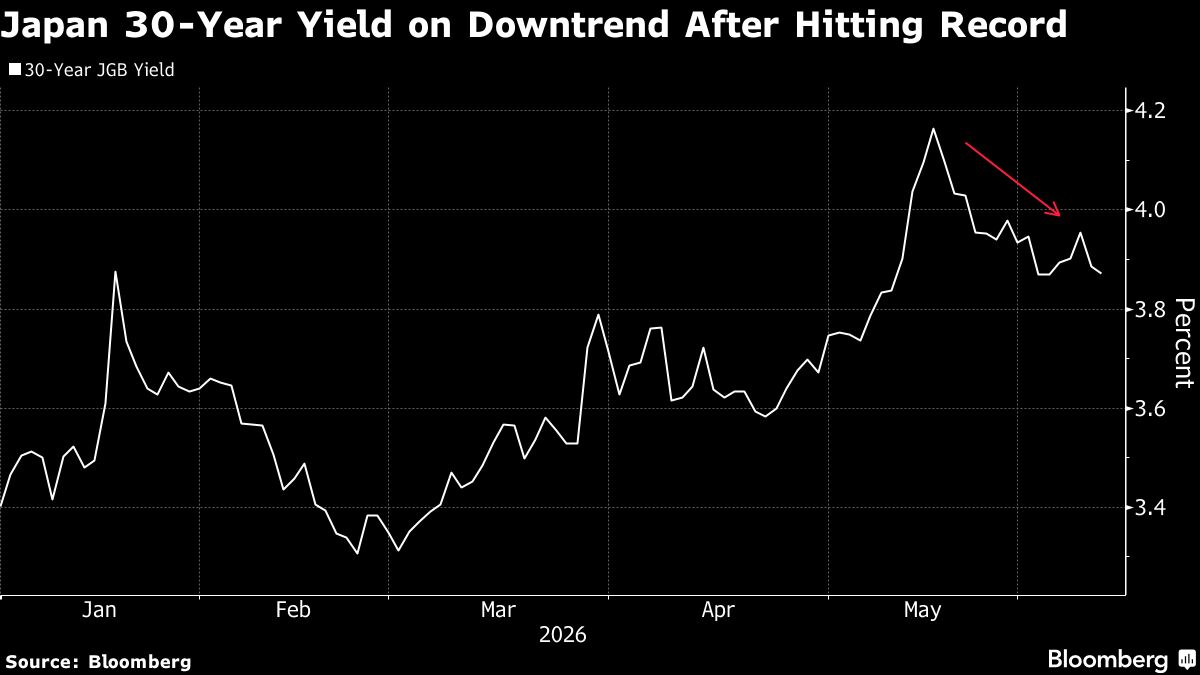
Japan's 30-year government bond auction on June 10, 2026 attracted the weakest demand since June 2025, with a bid-to-cover ratio of 2.94 compared to the previous 3.49. The decline reflects investor concerns over inflation and fiscal policy, as well as falling yields reducing appetite for the bonds. Weak bond demand can signal investor anxiety about Japan's economic outlook and fiscal sustainability.