Energy Tech Companies Capitalize on AI IPO Boom to Raise Capital

SpaceX is set to debut on the Nasdaq in what is anticipated to be the largest IPO in history, with a newly listed closed-end fund already disclosing a $117 million position in the company as its top holding. The listing arrives alongside a broader wave of energy tech IPOs from companies like Fervo, X-energy, Innio, and ERock, all targeting data center power demand. The SpaceX debut, combined with upcoming Anthropic and OpenAI offerings, is seen as expanding investor appetite for AI infrastructure broadly, though it also raises concerns about crowding out smaller capital raises.
SpaceX's anticipated Nasdaq IPO is expected to set a record as the largest public offering in history, drawing significant pre-market institutional interest — including a $117 million position disclosed by a newly listed closed-end fund. The listing is occurring alongside a surge in energy tech IPOs, with geothermal firm Fervo raising $1.9 billion, small nuclear manufacturer X-energy raising over $1 billion, gas generator maker Innio raising $2.4 billion, and ERock raising $600 million, all targeting the booming data center power market. According to Cantor Fitzgerald's global co-head of equity capital markets, mega AI IPOs 'expand overall appetite for the infrastructure thesis more broadly,' suggesting the rising tide may lift energy tech as well. This marks a sharp contrast to the failed climate tech SPAC boom of 2021, when transportation and battery companies dominated deal flow before collapsing under rising costs and absent customers; chart data confirms transportation deals peaked near 35 per month in early 2021 before cratering, while energy deals have rebounded to roughly 13 per month by mid-2026. However, early results for recent energy tech IPOs are mixed — Fervo's stock is down 10% and X-energy's is down 38% since their respective debuts — and analysts caution that companies with novel, unproven technology may struggle to demonstrate the commercial traction needed to sustain valuations. The primary risk identified by market participants is not competition from the AI mega-IPOs themselves, but rather a potential softening of overall AI demand narratives.
Data: Sightline Climate / Semafor
What's missing
The articles do not specify SpaceX's projected valuation or price range for the IPO, nor do they detail the financial metrics (revenue, profitability) that would underpin its record-breaking valuation claim.
What different sources said
- SemaforCenter
SpaceX breathes life into energy tech IPOs
- Yahoo FinanceCenter
This Newly Listed Closed-End Fund Just Revealed SpaceX as Its Top Holding at $117 Million.
- Yahoo FinanceCenter
The First Trillion-Dollar ETF Becomes The 'Elon Musk' Of Funds
Related
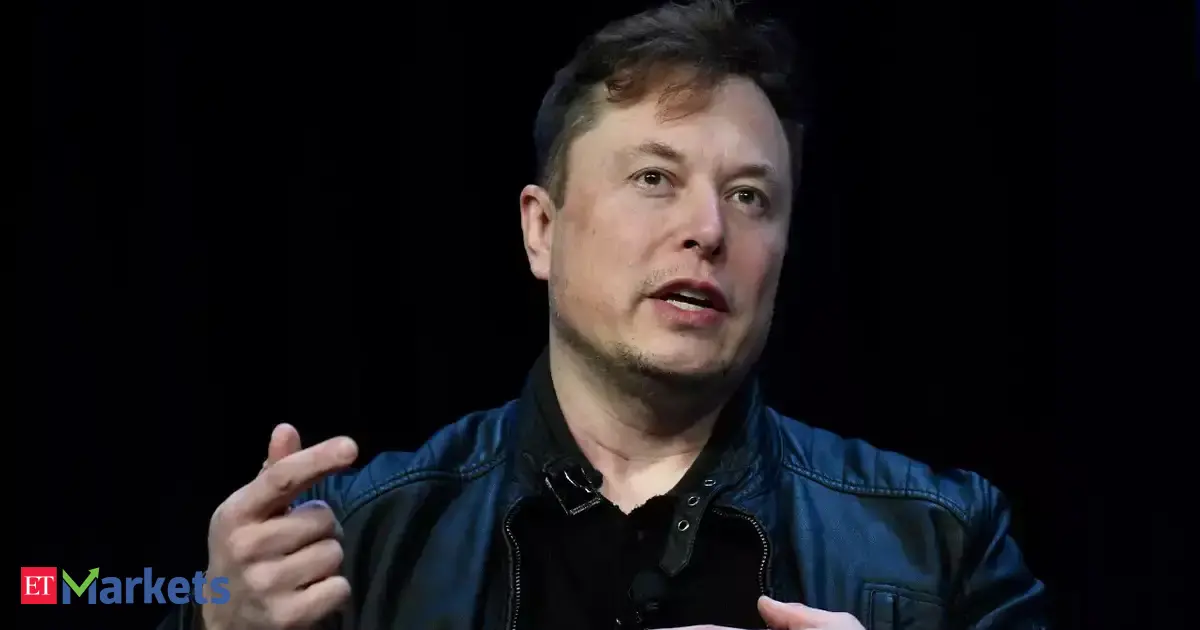
SpaceX IPO Makes Elon Musk World's First Trillionaire as Shares Surge 19% on Debut
SpaceX shares closed up 19% on their first trading day, pushing Elon Musk's net worth to approximately $1.11 trillion and making him the first individual in history to cross the trillion-dollar threshold. The company raised $75 billion at an IPO price of $135 per share, with shares closing near $161, giving SpaceX a market capitalization of roughly $2.1 trillion despite the company reporting a net loss of $4.94 billion in 2025. The milestone has drawn both investor enthusiasm and sharp criticism over Musk's social media conduct and concerns that the IPO's structure exploits passive index fund mechanics to extract wealth from ordinary retirement savers.

Delhi Power Bills to Rise for Some Consumers as Regulator Approves Higher Electricity Surcharge
Delhi's electricity regulator DERC has approved increased Power Purchase Adjustment Charges (PPAC) for distribution companies, raising bills for consumers in south, east, and central Delhi from July 2026. The hike follows a sharp rise in power procurement costs in April 2026, driven by higher summer demand and elevated fuel prices. The change also marks a structural shift from quarterly to monthly PPAC revisions, making electricity bills more responsive to real-time cost fluctuations.

SEC Proposes Repealing Rule 611 and Rule 610(e) of Regulation NMS
The Securities and Exchange Commission proposed on June 11, 2026, to rescind Rule 611 and Rule 610(e) of Regulation NMS, which govern trade-through protections and locking/crossing quotations in equity markets. Rule 611, in place for roughly two decades, requires trades to be executed at the best available price across exchanges. The proposal could reshape equity market structure and has implications for emerging areas such as tokenized stocks.