CSIR-CFTRI in Mysuru Integrates AI Technologies for Food Safety and Post-Harvest Management

Scientists at CSIR-CFTRI in Mysuru are developing AI-driven technologies to address food safety challenges, including fungal contamination in stored grains and onion sorting. The institute has created an ozone-based technology for preventing fungal infestations and is developing AI algorithms for quality assessment and product grading. These innovations aim to reduce post-harvest losses and improve food security at scale.
The Council of Scientific and Industrial Research–Central Food Technological Research Institute (CSIR-CFTRI) in Mysuru is integrating artificial intelligence into food processing, safety, and post-harvest management to address longstanding sector challenges. A primary focus is tackling fungal contamination in stored food grains and commodities, which causes significant spoilage in silos and warehouses. CFTRI has developed an ozone-based technology currently capable of treating 50-100 kg batches, with scientists now scaling it for large-scale warehouse use. The institute is also deploying AI-enabled systems to identify and separate fungal-infected onions from healthy ones, and developing algorithms for automated grading and quality assessment of food products. According to CFTRI Director Giridhar Parvatam, data collection is complete and the institute is progressing on logistics aspects, with additional research underway in space foods and sports nutrition.
What different sources said
- The HinduCenter
CFTRI-Mysuru leverages AI for food safety, post-harvest management
Related
New AI Framework Improves Evidence-Based Analysis for Muon Collider Research
Researchers have developed an AI system called agentic hybrid RAG that combines retrieval and reasoning techniques to help scientists find and verify evidence in muon collider research literature. The framework integrates both keyword-based and semantic search methods with AI reasoning to decompose complex queries and synthesize answers. This work addresses a growing need in high-energy physics for AI-assisted tools that can reliably navigate rapidly expanding scientific literature.

NASA Announces Four-Astronaut Crew for Artemis III Moon Mission
NASA named three U.S. astronauts and one Italian astronaut from the European Space Agency as the crew for Artemis III, scheduled to launch in 2027. The mission will conduct a docking demonstration in Earth's orbit and test moon landers from SpaceX and Blue Origin. The crew includes a veteran test pilot, a record-holder for longest U.S. spaceflight, and a first-time space flyer.
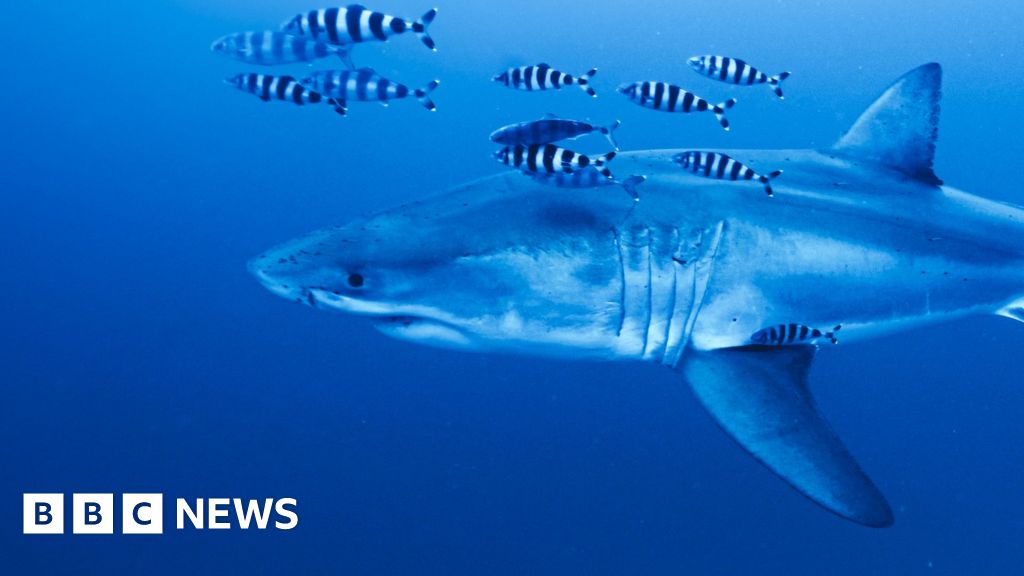
Rare Great White shark filmed in Mediterranean Sea between Tunisia and Sicily
A volunteer diver captured rare footage of a Great White shark in the Mediterranean Sea in May while working to document ghost fishing nets. The sighting is significant because Great Whites are thought to be near extinction in the Mediterranean due to overfishing. Conservationists hope the discovery will prompt governments to establish marine protected areas in the region.