Big Tech's Role as Financial Guarantor for AI Companies Like Anthropic

Anthropic is borrowing $36 billion to purchase AI chips, with Broadcom and Google providing credit backing that allows the unprofitable startup to access debt markets at favorable rates. This arrangement, called "credit enhancement," mirrors financial structures where established companies lend their creditworthiness to riskier borrowers. The setup raises questions about systemic risk, as historical precedent shows how such arrangements can amplify financial crises when the backing company faces difficulties.
Anthropic, one of the world's most prominent AI companies, is securing $36 billion in loans for chip purchases through an arrangement where Broadcom and Google effectively guarantee much of the debt. Because Anthropic is unprofitable and privately held with no credit rating, it cannot access favorable borrowing terms on its own; the $31 billion backed by Broadcom's A-rating carries interest rates of 4.75-5%, while the remaining $4.6 billion on Anthropic's creditworthiness alone would cost 8.75-9%. This financial structure—known as credit enhancement—transfers risk from the borrower to the guarantor, similar to how Fannie Mae guarantees mortgages or bond insurers wrapped risky debt before 2008. Google has similarly backstopped debt for AI infrastructure companies TeraWulf and Cipher. While such arrangements are common in finance, the article notes historical warnings: bond insurers Ambac and MBIA were devastated during the 2008 crisis when their guaranteed assets declined, and General Electric nearly collapsed due to losses in its finance subsidiary.
What's missing
The article does not provide Anthropic's or Google's official statements on these arrangements, nor does it include perspective from the lending institutions (Apollo, Blackstone) on their risk assessment or from financial regulators on whether such concentrated guarantees pose systemic concerns.
What different sources said
- SemaforCenter
Anthropic needs a co-signer
Related
Higher Oil Prices Boost Russia's Government Revenue but Fail to Accelerate Economic Growth
Rising oil prices are increasing Russia's government revenue and current-account surplus despite Western sanctions, with every $10 increase in oil prices adding roughly $21 billion in budget revenue. However, severe labor shortages from military losses and emigration, combined with weak productivity, are preventing the economy from expanding beyond 0.9% growth in 2026. The oil windfall highlights structural constraints in Russia's economy that money alone cannot overcome.

U.S. Markets Stage Rebounds Following Chip Stock Selloff
U.S. markets have rebounded twice following a dramatic Friday selloff in chip stocks, with gains at Monday's open and Tuesday afternoon. The Nasdaq 100 remains down 4.25% for the month despite the recoveries, and volatility has increased sharply. The pattern reflects the market's traditional 'buy the dip' behavior as investors resist giving up recent gains.
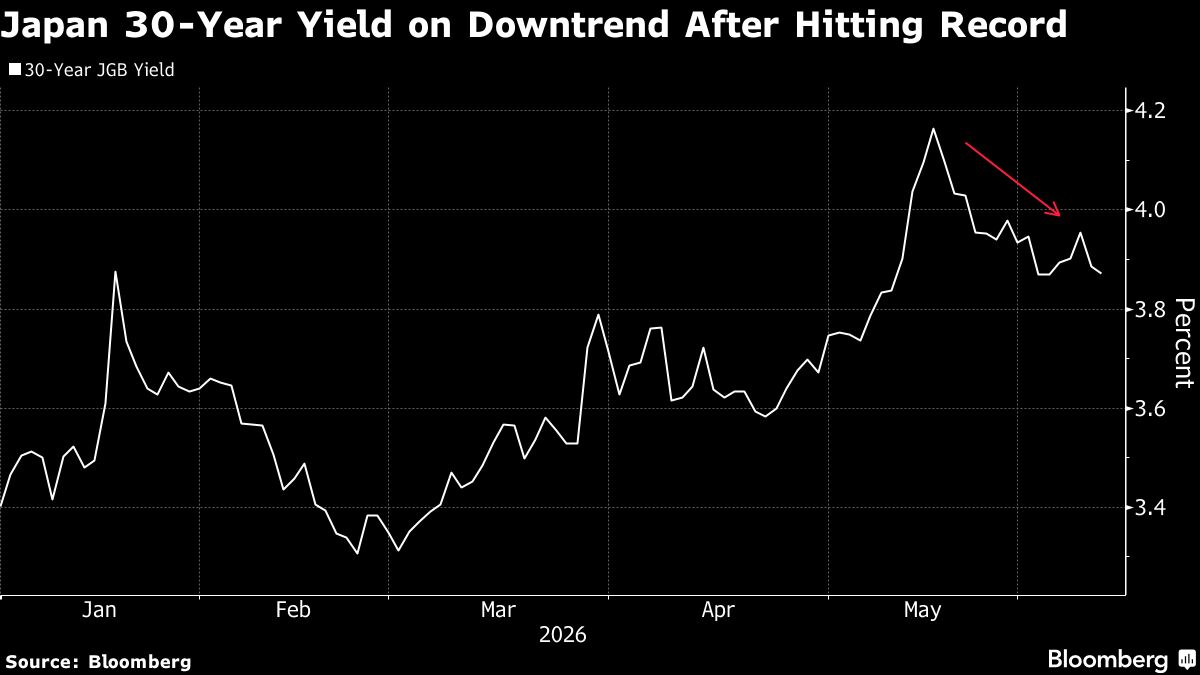
Japan's 30-Year Bond Auction Sees Weakest Demand in Over a Year
Japan's 30-year government bond auction on June 10, 2026 attracted the weakest demand since June 2025, with a bid-to-cover ratio of 2.94 compared to the previous 3.49. The decline reflects investor concerns over inflation and fiscal policy, as well as falling yields reducing appetite for the bonds. Weak bond demand can signal investor anxiety about Japan's economic outlook and fiscal sustainability.