Berkshire Hathaway to Invest $10 Billion in Alphabet as Part of $80 Billion Share Sale
Alphabet announced plans to raise up to $85 billion in new equity — its first stock offering since 2005 — to fund AI infrastructure, including a $10 billion anchor investment from Berkshire Hathaway. The raise comes as the company halted share buybacks entirely in Q1 2025 after averaging $14 billion per quarter in repurchases over the prior five years. The move signals that even the most cash-generative tech giants are stretching their balance sheets to keep pace with AI capital demands.
Alphabet's equity raise is structured across three tranches: $30 billion in underwritten public offerings of convertible preferred stock and common stock, $40 billion through an at-the-market program expected to begin in Q3, and $10 billion from Berkshire Hathaway via a private placement. The offering marks a significant strategic shift — Alphabet had not issued equity since 2005 and had been one of the most aggressive share repurchasers among large-cap US companies. The dilution, estimated at 1–3% depending on final terms, was absorbed relatively calmly by markets, partly due to Berkshire's participation as an anchor investor. The raise is part of a broader pattern among major hyperscalers: Meta, Microsoft, Alphabet, and Amazon together doubled combined capital expenditures to $450 billion in 2025, with analysts projecting spending could exceed $700 billion this year and potentially reach $4 trillion by 2030 according to Morgan Stanley. Companies have progressively exhausted cheaper financing options — first using operating cash flow, then corporate debt (Alphabet notably issued a 100-year bond), then off-balance-sheet arrangements — before now turning to equity issuance, which finance professionals typically treat as a last resort due to profit dilution. Oracle has similarly announced plans to raise up to $25 billion in equity this year, and Amazon has signaled it may follow suit.
What's missing
Neither source specifies what financial return thresholds or timelines Alphabet has set to justify the equity raise, nor do they detail what specific AI infrastructure projects the capital will fund beyond general compute scaling. The long-term revenue projections that underpin the investment case for shareholders are not disclosed.
How coverage differed
Axios framed the raise as a strategic necessity driven by competitive AI pressures, emphasizing CEO Sundar Pichai's quote that under-investing is riskier than over-investing. Semafor took a more skeptical tone, highlighting that equity issuance is the most expensive and last-resort financing option, and framing shareholders as the ultimate risk-bearers subsidizing an uncertain AI buildout.
What different sources said
Related

SpaceX IPO Makes Elon Musk World's First Trillionaire as Shares Surge 19% on Debut
SpaceX shares closed up 19% on their first trading day, pushing Elon Musk's net worth to approximately $1.11 trillion and making him the first individual in history to cross the trillion-dollar threshold. The company raised $75 billion at an IPO price of $135 per share, with shares closing near $161, giving SpaceX a market capitalization of roughly $2.1 trillion despite the company reporting a net loss of $4.94 billion in 2025. The milestone has drawn both investor enthusiasm and sharp criticism over Musk's social media conduct and concerns that the IPO's structure exploits passive index fund mechanics to extract wealth from ordinary retirement savers.
Delhi Power Bills to Rise for Some Consumers as Regulator Approves Higher Electricity Surcharge
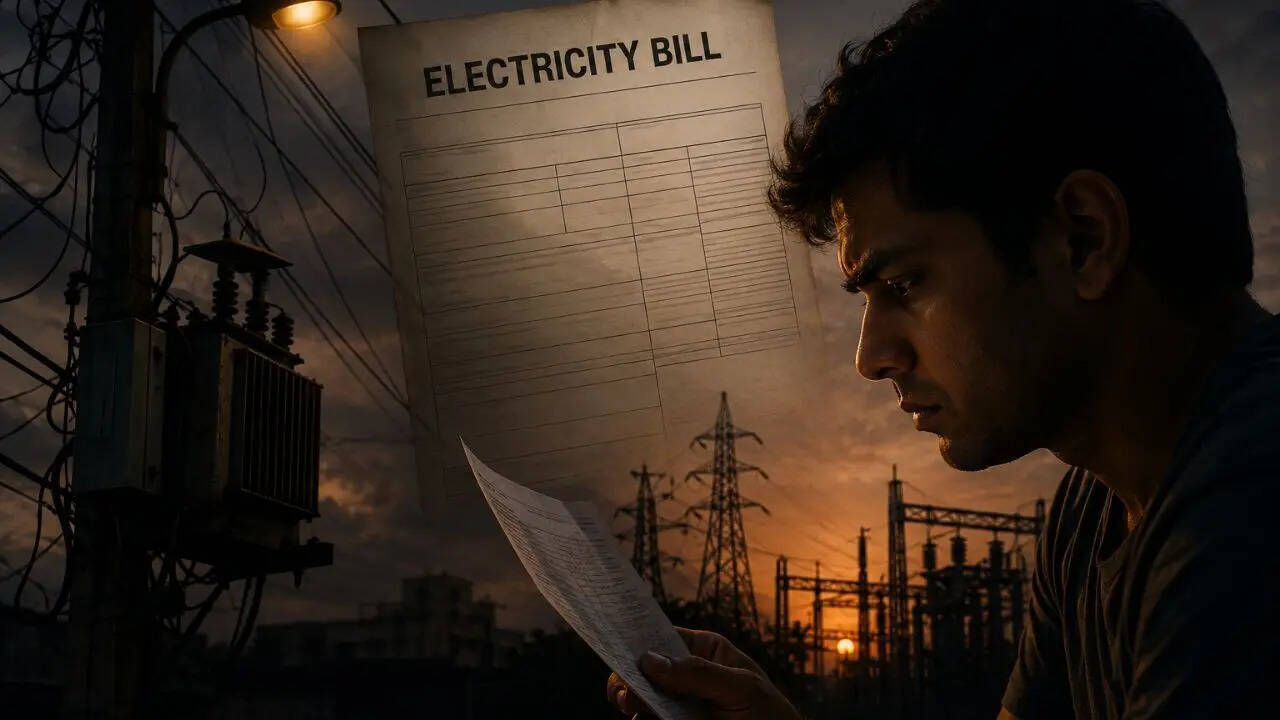
Delhi's electricity regulator DERC has approved increased Power Purchase Adjustment Charges (PPAC) for distribution companies, raising bills for consumers in south, east, and central Delhi from July 2026. The hike follows a sharp rise in power procurement costs in April 2026, driven by higher summer demand and elevated fuel prices. The change also marks a structural shift from quarterly to monthly PPAC revisions, making electricity bills more responsive to real-time cost fluctuations.

SEC Proposes Repealing Rule 611 and Rule 610(e) of Regulation NMS
The Securities and Exchange Commission proposed on June 11, 2026, to rescind Rule 611 and Rule 610(e) of Regulation NMS, which govern trade-through protections and locking/crossing quotations in equity markets. Rule 611, in place for roughly two decades, requires trades to be executed at the best available price across exchanges. The proposal could reshape equity market structure and has implications for emerging areas such as tokenized stocks.