Australia Announces $105 Million Bailout for Nyrstar Smelters in Tasmania and South Australia
The Australian federal government and state governments in Tasmania and South Australia have announced a $105 million funding package for Nyrstar smelters in Hobart and Port Pirie. This follows a previous $135 million bailout announced in August 2025 that expired on May 1, 2026. The new funding will support operations through the end of 2026 and enable feasibility studies for expanding critical and strategic minerals production.
A joint federal and state announcement on Wednesday morning in Hobart revealed a $105 million funding package to keep Nyrstar's smelters operating. The previous funding arrangement—comprising $57.5 million federal, $55 million from South Australia, and $22.5 million from Tasmania—expired on May 1, 2026. The new package will sustain operations at both the Hobart and Port Pirie facilities through the end of 2026 while allowing Nyrstar to complete a pre-feasibility study and progress further feasibility work on expanding production of critical and strategic minerals such as antimony. South Australian Premier Peter Malinauskas described the opportunity to produce these materials in Port Pirie as unique, while Tasmanian Premier Jeremy Rockliff emphasized the package would secure approximately 600 direct jobs and 1,000 indirect jobs in Tasmania, with the Port Pirie smelter employing about 800 people directly.
What different sources said
- ABC AustraliaCenter
Breaking: Further $105m federal-state bailout announced for Nyrstar smelters
Related
Higher Oil Prices Boost Russia's Government Revenue but Fail to Accelerate Economic Growth
Rising oil prices are increasing Russia's government revenue and current-account surplus despite Western sanctions, with every $10 increase in oil prices adding roughly $21 billion in budget revenue. However, severe labor shortages from military losses and emigration, combined with weak productivity, are preventing the economy from expanding beyond 0.9% growth in 2026. The oil windfall highlights structural constraints in Russia's economy that money alone cannot overcome.

U.S. Markets Stage Rebounds Following Chip Stock Selloff
U.S. markets have rebounded twice following a dramatic Friday selloff in chip stocks, with gains at Monday's open and Tuesday afternoon. The Nasdaq 100 remains down 4.25% for the month despite the recoveries, and volatility has increased sharply. The pattern reflects the market's traditional 'buy the dip' behavior as investors resist giving up recent gains.
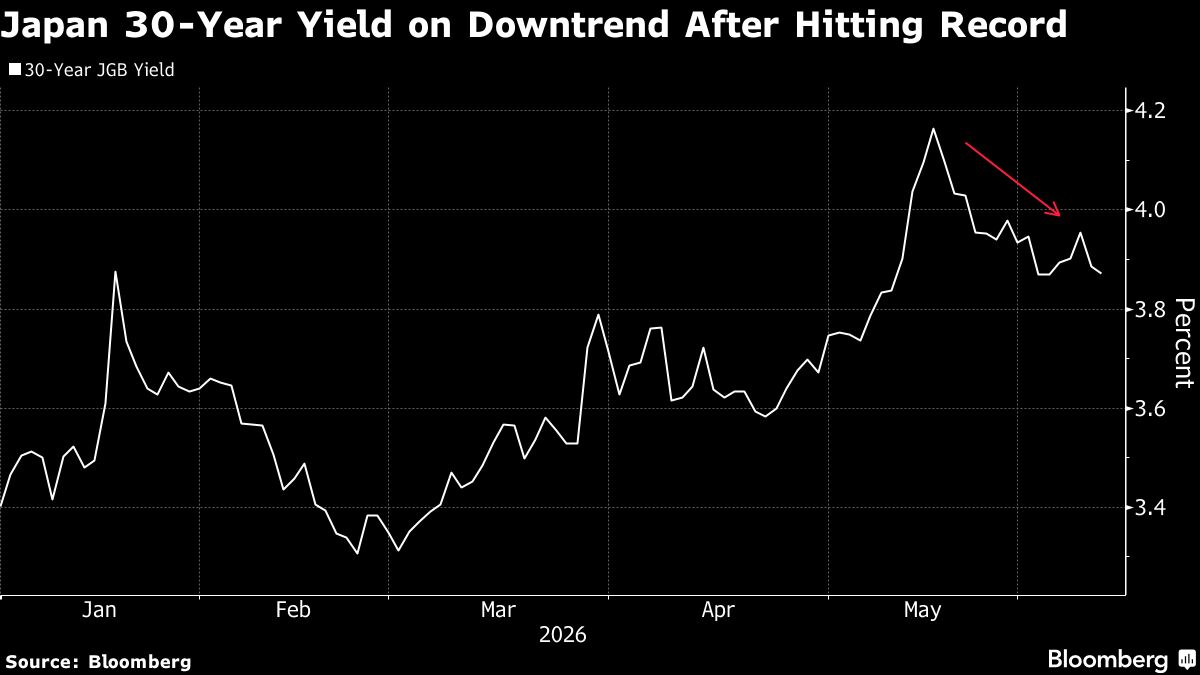
Japan's 30-Year Bond Auction Sees Weakest Demand in Over a Year
Japan's 30-year government bond auction on June 10, 2026 attracted the weakest demand since June 2025, with a bid-to-cover ratio of 2.94 compared to the previous 3.49. The decline reflects investor concerns over inflation and fiscal policy, as well as falling yields reducing appetite for the bonds. Weak bond demand can signal investor anxiety about Japan's economic outlook and fiscal sustainability.