ASX Rises 0.7% as Retailers Advance; Sigma Healthcare Slumps on Boots Acquisition Talks

The Australian sharemarket gained 64 points (0.7%) to 8668.20 on Wednesday, driven by strength in consumer and retail stocks amid Middle East tensions and a US-Iran military escalation. Sigma Healthcare shares fell 4.3% after confirming preliminary discussions to acquire UK chemist chain Boots for approximately £7.5 billion ($14.3 billion). The market movement reflects investor flight to defensive consumer staples and discretionary retailers despite geopolitical uncertainty and weakness in technology stocks.
The ASX 200 closed higher on Wednesday despite a volatile global environment, with seven of 11 industry sectors in positive territory. Consumer-related stocks led gains, including supermarket chains Woolworths (up 1.3%) and Coles (up 2.1%), discretionary retailers like Harvey Norman (up 2.1%) and JB Hi-Fi (up 1.8%), and shopping centre property trusts. The Australian dollar traded at US70.26¢. Geopolitical tensions escalated after US forces conducted strikes against Iran described as self-defence operations following the downing of an American helicopter, with Iran's Foreign Minister warning of retaliation. Oil prices rose modestly, with Brent crude climbing 1.3% to near US$93 per barrel, though local energy stocks were mixed. Technology stocks declined, reflecting overnight weakness on Wall Street where the S&P 500 fell 0.3% amid another sell-off in artificial intelligence-related shares. Gold prices softened 2.2%, weighing on mining stocks, while Sigma Healthcare's 4.3% share price decline followed confirmation of preliminary acquisition talks for Boots.
What different sources said
- Sydney Morning HeraldCenter
ASX trades higher as retailers advance; Sigma slumps on Boots talks
Related
Higher Oil Prices Boost Russia's Government Revenue but Fail to Accelerate Economic Growth
Rising oil prices are increasing Russia's government revenue and current-account surplus despite Western sanctions, with every $10 increase in oil prices adding roughly $21 billion in budget revenue. However, severe labor shortages from military losses and emigration, combined with weak productivity, are preventing the economy from expanding beyond 0.9% growth in 2026. The oil windfall highlights structural constraints in Russia's economy that money alone cannot overcome.

U.S. Markets Stage Rebounds Following Chip Stock Selloff
U.S. markets have rebounded twice following a dramatic Friday selloff in chip stocks, with gains at Monday's open and Tuesday afternoon. The Nasdaq 100 remains down 4.25% for the month despite the recoveries, and volatility has increased sharply. The pattern reflects the market's traditional 'buy the dip' behavior as investors resist giving up recent gains.
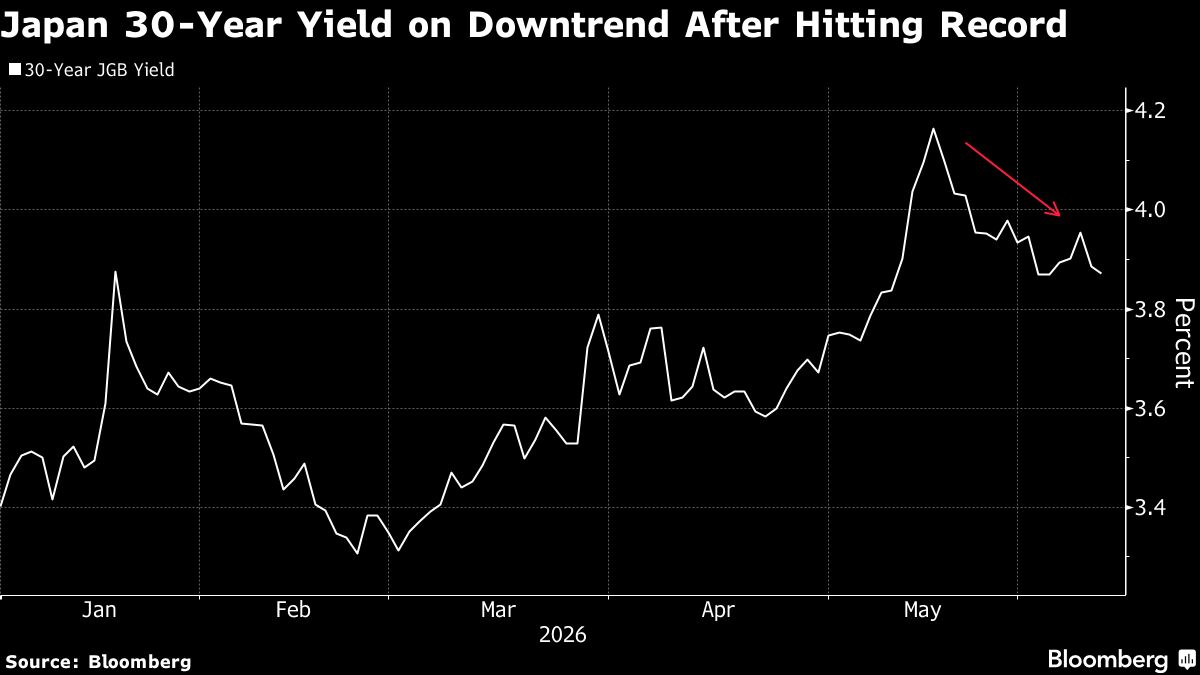
Japan's 30-Year Bond Auction Sees Weakest Demand in Over a Year
Japan's 30-year government bond auction on June 10, 2026 attracted the weakest demand since June 2025, with a bid-to-cover ratio of 2.94 compared to the previous 3.49. The decline reflects investor concerns over inflation and fiscal policy, as well as falling yields reducing appetite for the bonds. Weak bond demand can signal investor anxiety about Japan's economic outlook and fiscal sustainability.