Arctic Iceberg Traffic Intensifies, Reshaping Deep-Sea Ecosystems
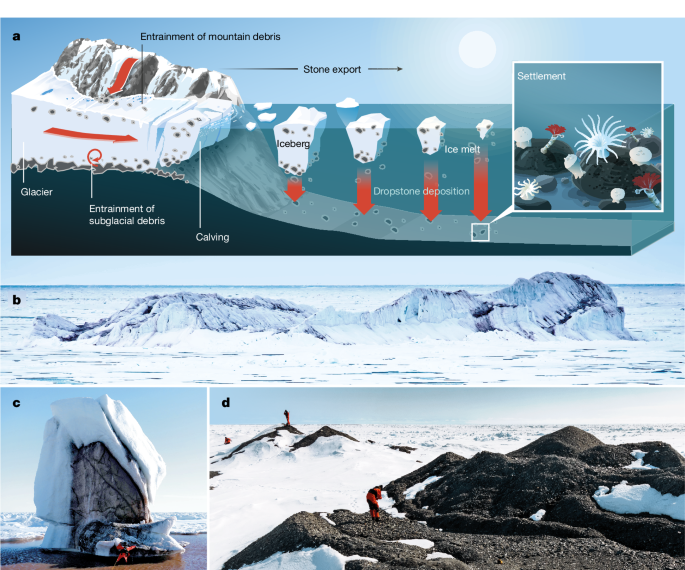
A long-term monitoring study in the Arctic's Fram Strait reveals increasing numbers of icebergs delivering glacial debris to the deep seafloor, altering benthic biodiversity patterns. The research combines 40 years of ship observations, satellite tracking, and direct seafloor monitoring to document this shift. Understanding these changes is critical as Arctic warming accelerates glacial melt and human activity in previously inaccessible regions.
Researchers at the Alfred Wegener Institute's HAUSGARTEN observatory have documented rising iceberg traffic in the Fram Strait between Greenland and Svalbard, with implications for deep-sea life. Using a multi-pronged approach—including seafloor imagery analysis, direct iceberg sampling, 40 years of ship visual logs, and satellite-derived ice-motion data—the team found increasing densities of dropstones (coarse glacial debris) in the abyssal zone. These dropstones serve as hard substrates that colonizing organisms use, fundamentally reshaping benthic communities. The study distinguishes between natural drivers (iceberg-delivered debris) and anthropogenic pressures (bottom trawling, plastic pollution) that are simultaneously transforming Arctic deep-sea habitats. While the long-term trend suggests sustained increases in iceberg frequency linked to accelerating glacial melt, the researchers note uncertainty about whether current patterns represent a brief pulse or a sustained shift.
Limitations & open questions
The article does not specify the quantitative magnitude of the observed increase in dropstone density or iceberg frequency, nor does it provide specific timelines for when the acceleration began or projections for future changes. Additionally, while the study mentions impacts on benthic biodiversity, specific species or community composition changes are not detailed in the provided excerpt.
What different sources said
- Nature NewsCenter
Amplified Arctic iceberg traffic reshapes benthic biodiversity
Related

Research Reveals Nocturnal and Territorial Behavior of Adult Whitebait Species
A University of Canterbury researcher has conducted new studies on kōkopu, adult whitebait species that can live for over a decade, revealing they are nocturnal, territorial, and competitive. Whitebait refers to juveniles of six freshwater fish species, with kōkopu species having received significantly less research attention than īnanga, which dominate commercial catches. This research helps fill knowledge gaps about lesser-studied whitebait species and their adult life cycles.
Antarctic Fish Show Widespread Gene Loss Adapted to Extreme Cold
Researchers analyzing Antarctic notothenioid fish genomes identified 30 genes that have been lost across the entire clade and 12 additional genes lost specifically in icefishes, representing a natural experiment in gene loss under extreme environmental conditions. These losses affect genes involved in lipid metabolism, oxygen transport, skeletal mineralization, and other functions, yet the fish remain viable in their stable polar environment. The findings suggest that Antarctic notothenioids serve as a natural model for understanding how loss-of-function genetic variants can persist in wild populations and how organisms adapt to chronic cold.
Study identifies hemoglobin C oxidative damage as key driver of HbSC sickle cell disease severity
Researchers found that hemoglobin C is highly prone to oxidative denaturation in HbSC sickle cell disease, causing red blood cell membrane damage and reduced flexibility more severely than in other sickle cell variants. The study used mouse models and patient samples to show that HbC's oxidative damage contributes substantially to disease pathophysiology, independent of sickling potential. These findings suggest that targeting oxidative membrane injury—rather than only sickling—could improve treatment outcomes for HbSC patients.