2026 FIFA World Cup Expected to Generate Billions in Economic Impact, With Portugal Earning Up to €945 Million Despite Not Hosting
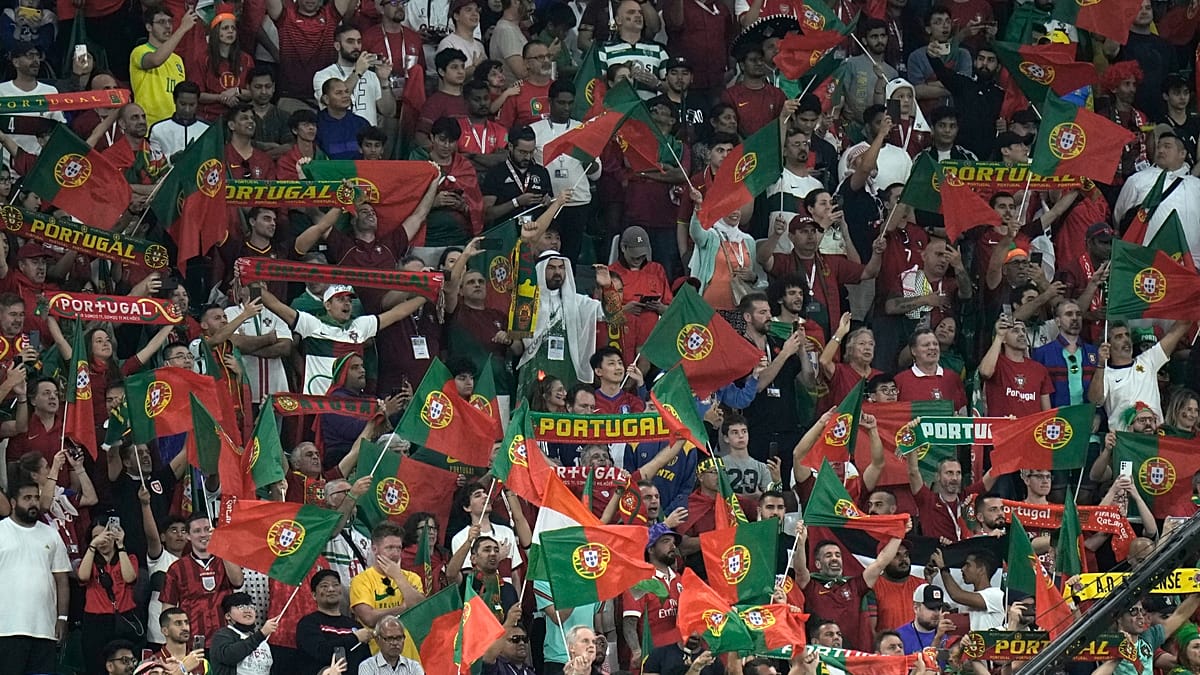
The 2026 FIFA World Cup, which kicked off in Mexico on June 12, is projected to add $40.9 billion to global GDP and support 824,000 jobs, while FIFA itself is forecast to earn a record $11 billion in revenues. A separate study by Portugal's IPAM institute estimates the tournament could generate between €378 million and €945 million for Portugal alone, despite the country not being a host nation. The findings highlight a structural shift in football's economic model, where value is increasingly created through digital engagement, media, and fan consumption rather than physical attendance.
According to FIFA projections, the 2026 World Cup — hosted across the United States, Canada, and Mexico — is expected to contribute $40.9 billion to global GDP and generate approximately 824,000 jobs tied to the event, with FIFA itself on track for a record $11 billion in revenues. Separately, Portugal's IPAM Sports Marketing Research Unit estimates that Portugal could see an economic impact ranging from €378 million (group-stage elimination) to €945 million (if Portugal wins the tournament), surpassing the €609 million generated when Portugal won Euro 2016. The study attributes this potential to four key drivers: increased consumer purchasing power, the tournament's location in economically strong North American markets, the expanded 48-team and 104-match format, and the growing digital economy. Traditional consumption still accounts for roughly 77% of the projected Portuguese impact, but digital channels — including streaming platforms, social media, and user-generated content — now represent 23%. Household consumption is the largest single category at 26%, followed by restaurants and catering at 15%, and advertising and media at 14%. IPAM argues the findings carry strategic lessons for Portugal's co-hosting of the 2030 World Cup, emphasizing that hosting alone does not guarantee economic returns — effective activation before, during, and after the event is what drives value.
What's missing
Neither source addresses the distribution of the $40.9 billion global GDP impact among the three host nations specifically, nor do they discuss potential economic downsides such as public infrastructure costs borne by host governments or displacement effects on local economies. The IPAM study's methodology for estimating digital and fan-driven consumption is not independently verified.
How coverage differed
Euronews focused narrowly on Portugal's potential domestic economic gains and the IPAM study's methodology, framing the story around fan behavior and digital consumption. France 24 took a broader global perspective, emphasizing FIFA's record revenues and macroeconomic output figures, while also noting unrelated market stories in the same segment.
What different sources said
Related

SpaceX IPO Makes Elon Musk World's First Trillionaire as Shares Surge 19% on Debut
SpaceX shares closed up 19% on their first trading day, pushing Elon Musk's net worth to approximately $1.11 trillion and making him the first individual in history to cross the trillion-dollar threshold. The company raised $75 billion at an IPO price of $135 per share, with shares closing near $161, giving SpaceX a market capitalization of roughly $2.1 trillion despite the company reporting a net loss of $4.94 billion in 2025. The milestone has drawn both investor enthusiasm and sharp criticism over Musk's social media conduct and concerns that the IPO's structure exploits passive index fund mechanics to extract wealth from ordinary retirement savers.

Delhi Power Bills to Rise for Some Consumers as Regulator Approves Higher Electricity Surcharge
Delhi's electricity regulator DERC has approved increased Power Purchase Adjustment Charges (PPAC) for distribution companies, raising bills for consumers in south, east, and central Delhi from July 2026. The hike follows a sharp rise in power procurement costs in April 2026, driven by higher summer demand and elevated fuel prices. The change also marks a structural shift from quarterly to monthly PPAC revisions, making electricity bills more responsive to real-time cost fluctuations.

SEC Proposes Repealing Rule 611 and Rule 610(e) of Regulation NMS
The Securities and Exchange Commission proposed on June 11, 2026, to rescind Rule 611 and Rule 610(e) of Regulation NMS, which govern trade-through protections and locking/crossing quotations in equity markets. Rule 611, in place for roughly two decades, requires trades to be executed at the best available price across exchanges. The proposal could reshape equity market structure and has implications for emerging areas such as tokenized stocks.