WHO warns of 'blind spots' in Congo Ebola outbreak as cases spread to displacement camps
A WHO epidemiologist warned Friday that surveillance gaps mean the Ebola outbreak in the Democratic Republic of Congo is likely far larger than the officially reported 676 confirmed cases and 136 deaths. The outbreak, caused by the rare Bundibugyo strain with no approved treatment or vaccine, has spread to three new health zones and neighboring Uganda, while two deaths have been confirmed in a 30,000-person displacement camp. The situation is alarming because overcrowded refugee camps, a shortage of only 250 isolation beds across three provinces, and high population mobility could accelerate transmission well beyond current detection capacity.
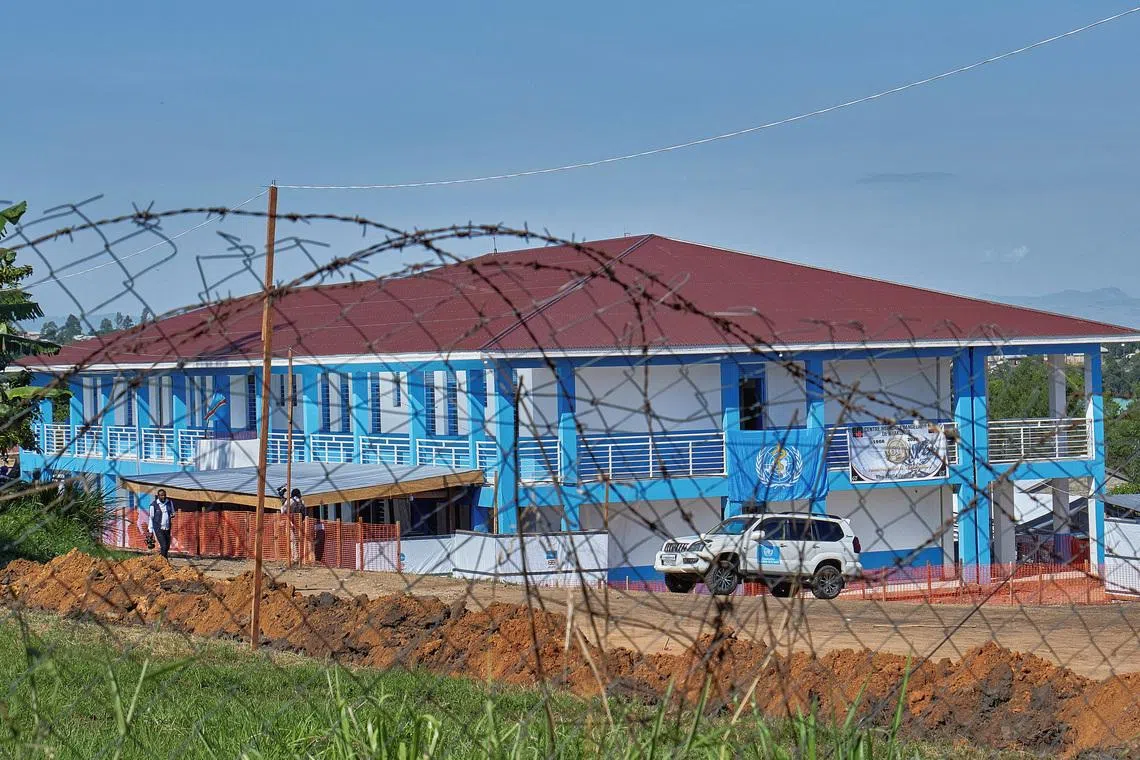
Olivier le Polain, a WHO epidemiologist based in Beni, eastern Congo, said Friday that the Ebola outbreak in the DRC is expanding both in case numbers and geographic spread, with new cases appearing in different health zones of North Kivu, South Kivu, and Ituri provinces almost daily. Official figures stand at 676 confirmed cases and 136 deaths, but le Polain cautioned that the true scale is 'much bigger than what is being detected' due to significant surveillance blind spots in high-risk areas. The outbreak involves the Bundibugyo strain of Ebola, for which no approved vaccine or treatment exists, and the disease went undetected for weeks before response efforts began. The UN refugee agency UNHCR confirmed two Ebola-related deaths at the Kpangba displacement camp, which houses approximately 30,000 people, raising fears of rapid spread in densely packed settings with poor sanitation. Aid workers have flagged that only around 250 isolation beds exist across the three affected provinces, and community resistance to safe burial practices has complicated containment efforts. The US CDC has suggested the outbreak could reach the scale of the 2014–2016 West Africa epidemic, which killed more than 11,000 people, though WHO has not yet issued its own projections. Response teams, depicted in images showing PPE training, decontamination operations, and UNICEF-supported treatment facilities, are working to scale up infrastructure and community awareness.
What's missing
No source specifies the current number of contact tracers deployed relative to the scale of the outbreak, nor do any sources detail what additional resources WHO or international partners have committed to close the surveillance gaps and bed shortages identified by le Polain.
How coverage differed
Most outlets reported the same core Reuters wire copy with minimal editorial divergence; Breitbart provided additional granular detail — including the identities and timeline of the two camp fatalities, community attacks on body-recovery workers, and direct quotes from refugee camp residents — lending the story a more visceral, on-the-ground tone compared to the more clinical framing of other sources.
What different sources said
- The Jerusalem PostRight
Two Ebola-related deaths confirmed in eastern Congo displacement camp - UN refugee agency
- The Straits TimesCenter
'Blind spots' could hide full spread of Congo's Ebola outbreak, WHO suggests
- New York PostRight
The many ‘blind spots’ that could be hiding the full spread of Congo’s Ebola outbreak: WHO
- BreitbartFar Right
W.H.O. Warns ‘Blind Spots’ Could Obscure Full Extent of Ebola Outbreak
Related

Chicago Woman's Five-Year Symptom Journey Leads to Rare Brain Tumor Diagnosis
Melony Aponte, 26, was diagnosed with a 4.5-centimeter acoustic neuroma after five years of symptoms she attributed to stress, COVID-19, and aging. The rare, noncancerous tumor—affecting roughly one in 100,000 people—had grown large enough to compress her hearing and balance nerve before it was identified via MRI in March 2025. Her case highlights how acoustic neuroma symptoms can mimic common conditions, potentially delaying diagnosis for years.

Study Finds Aging Shifts Walking Strategy Toward Stability at the Cost of Efficiency
A new study from Flinders University and the University of Canberra found that as people age, their bodies adopt a 'safety-first' walking pattern that prioritizes balance over efficient movement. Researchers analyzed gait data from 107 healthy adults aged 26 to 86, identifying increased ankle muscle co-contraction and reduced push-off power as key age-related changes. The findings suggest that fall prevention programs should target balance and coordination, not just muscle strength.

Tick Populations Surge in Urban Areas Across Northeast
Experts across the northeastern United States and Canada are warning of an unusually early and widespread tick season, with disease-carrying ticks increasingly found in urban parks and green spaces. Lyme disease cases in Canada reached a record 7,105 in 2025, up from 5,809 the previous year, while U.S. cities including Philadelphia, Pittsburgh, Washington D.C., and New York are reporting rising tick activity. The expansion poses a public health challenge because urban residents are less likely to take tick-bite precautions than those in rural areas.