User-Driven Climate Adaptation Products: Bridging Science and Decision-Making
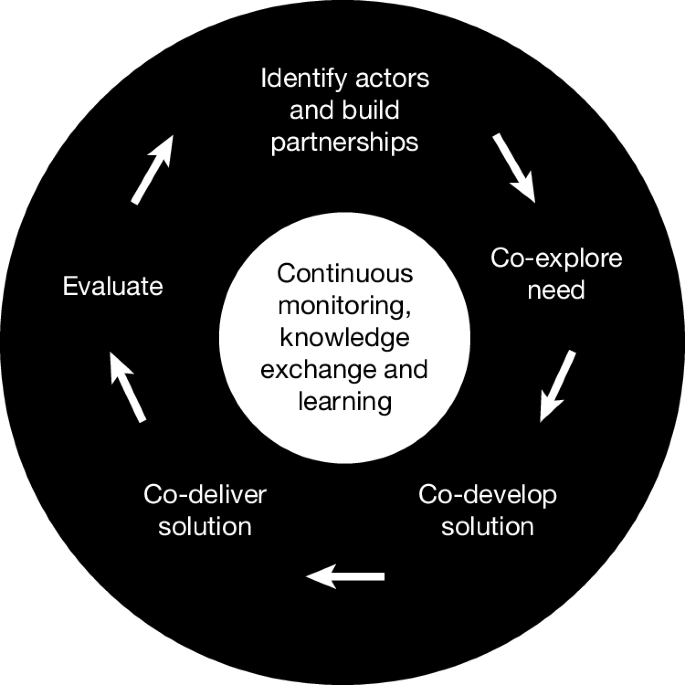
Climate services are increasingly being designed with direct input from end-users to improve their practical application in adaptation and decision-making. This shift reflects growing recognition that climate information alone is insufficient without understanding how communities and organizations actually use such data. The approach matters because it can help translate scientific climate knowledge into actionable tools that address real-world adaptation needs.
Climate services—tools and information designed to help societies adapt to climate change—are undergoing a fundamental shift toward user-centered design and co-production models. Rather than scientists simply producing climate data and expecting adoption, the emerging approach involves engaging stakeholders from the outset to understand their specific needs, constraints, and decision-making processes. Research cited in the Nature News article demonstrates that effective climate services require collaboration across disciplines, including human-computer interaction and participatory design. Key challenges include narrowing the gap between climate information availability and actual usability, ensuring inclusive engagement across diverse user groups, and developing common frameworks for evaluating service effectiveness. Examples range from wine sector decision support to water management and conservation planning, showing the breadth of potential applications.
What different sources said
- Nature NewsCenter
Building user-driven climate adaptation products
Related
Study reveals IDH1 enzyme's role in cardiac metabolic adaptation during cancer-related stress
Researchers discovered that isocitrate dehydrogenase 1 (IDH1) helps the heart adapt to metabolic stress caused by cancer-related mutations through a previously unknown reductive metabolic pathway. The study used stable isotope tracing and genetic knockout models in rat and mouse heart tissue to show that when mitochondrial metabolism is impaired, IDH1 redirects carbon flux toward glutamine-derived citrate formation. This finding expands understanding of how cardiac metabolism responds to oncometabolic stress and may have implications for managing cardiovascular complications in cancer patients.
AI Framework Reveals How β-Arrestin 1 Protein Changes Shape During Activation
Researchers used a transformer-based artificial intelligence model to analyze how the β-arrestin 1 protein's tail region reorganizes when activated by cell surface receptors. The study examined molecular dynamics simulations comparing the protein in resting and active states, uncovering previously unknown conformational changes. This work could improve understanding of how cells regulate signaling pathways involved in numerous physiological and disease processes.
Study Links Pancreatic Cancer Tissue Stiffness to Tumor Progression and Patient Survival
Researchers combined imaging scans and laboratory tissue analysis to show that pancreatic cancer tumors with greater stiffness—driven by dense collagen buildup—correlate with worse patient survival outcomes. The study of nine patients found that magnetic resonance elastography, a non-invasive imaging technique, can detect mechanical properties that reflect underlying tumor biology. These findings suggest that measuring tissue stiffness through imaging could help doctors better characterize pancreatic cancer and guide treatment decisions.