UK Workers Spend Nearly Six Hours Weekly on 'Botsitting' AI Tools, Study Finds

A survey of 1,500 UK digital workers by the Work AI Institute found that employees spend an average of 5.8 hours per week maintaining and correcting AI tools—a phenomenon termed "botsitting"—which negates much of the productivity gains from AI adoption. While AI saves workers roughly 12 hours weekly and 90 percent of UK workers now use AI in their roles, only 18 percent report significant organizational performance improvements due to time lost on context-loading, error-checking, and fixing AI mistakes. The findings highlight a critical gap between AI's theoretical productivity benefits and its practical implementation challenges in the workplace.
According to a report by the Work AI Institute, a research division of AI company Glean Technologies, UK workers are spending nearly six hours per week on "botsitting"—the unglamorous work of maintaining, correcting, and supervising AI tools. The survey of 1,500 digital workers found that 90 percent are required to use AI, with 80 percent using multiple tools weekly. While AI automation saves workers approximately 12 hours per week, this benefit is largely offset by the time spent on botsitting tasks such as loading context windows, reviewing outputs for errors and hallucinations, and re-prompting when results are inadequate. The report identifies a 36 percent AI session failure rate as a major contributor to wasted time. Additionally, the research reveals that 70 percent of UK workers admit to passing on AI outputs that merely look "good enough" rather than thoroughly verifying them, potentially creating downstream problems for colleagues. The study also notes that UK organizations are increasingly deploying AI in high-stakes, regulated areas including HR decisions, performance reviews, and hiring—areas where errors carry significant legal and professional consequences.
What's missing
The report's methodology details are limited—specifically, the sampling method, demographic breakdown of the 1,500 surveyed workers, and whether results are weighted to represent the broader UK workforce are not disclosed. Additionally, the study does not provide comparative data on botsitting time across different industries, company sizes, or types of AI tools, which would help contextualize whether the 5.8-hour figure is uniform or varies significantly. The report also lacks information on whether organizations have implemented or plan to implement technical solutions (beyond APIs and MCP) to reduce botsitting burden.
What different sources said
- The RegisterCenter
Brit workers waste nearly six hours a week 'botsitting'
Related
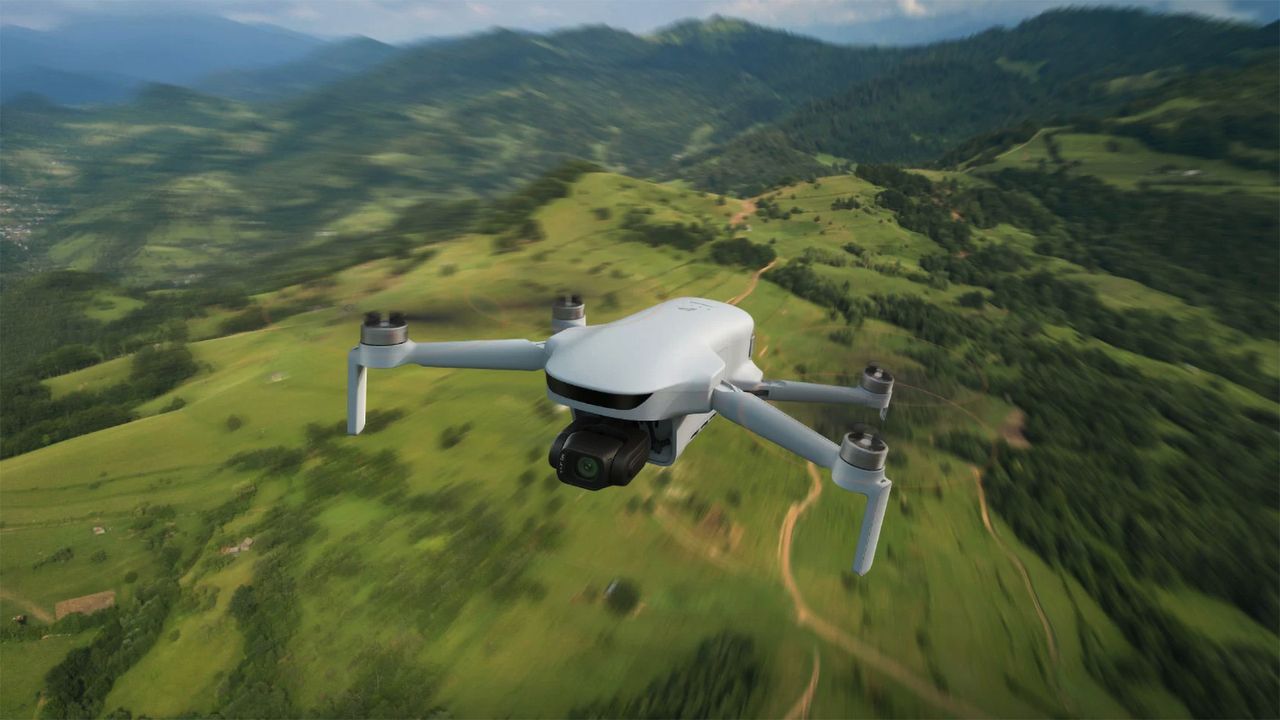
Potensic Atom 3 Drone Offers DJI Alternative for Global Markets, But Faces US Import Ban
Potensic has released the Atom 3, an upgraded beginner drone featuring a larger sensor, 4K 60fps video, improved battery life, and AI tracking capabilities at competitive pricing ($429.99-$549.99). The drone competes directly with DJI's Lito X1 but faces the same regulatory barriers as DJI in the US market due to a ban on foreign-made drones. The availability restrictions highlight ongoing US trade restrictions on Chinese drone manufacturers and limit consumer choice in the American market.

Wing and Walmart Expand Drone Delivery to Seven Additional U.S. Cities
Alphabet-owned Wing and Walmart are expanding their drone delivery partnership to seven new U.S. cities including Memphis, New Orleans, Philadelphia, Phoenix, San Diego, the San Francisco Bay Area, and Salt Lake City. The expansion is part of a plan to reach over 270 Walmart locations by next year, building on successful deployments in Atlanta, Dallas-Fort Worth, and Houston. The move signals that drone delivery is transitioning from a novelty service to a mainstream logistics option, with Wing having completed over 1 million commercial deliveries.

Anthropic CEO Calls for FAA-Style Regulation of Powerful AI Models
Anthropic CEO Dario Amodei published an essay calling for government regulation of powerful AI models, comparing the approach to FAA oversight of commercial aviation. The proposal includes mandatory third-party testing for frontier models and potential government authority to block or delay their deployment if they pose safety risks. The call comes as Anthropic released Claude Fable 5 and an updated Claude Mythos 5 model with advanced cybersecurity capabilities.