UK Government Proposes Law Requiring Smartphones to Block Children from Sending Nude Images

UK Prime Minister Keir Starmer announced at London Tech Week that Apple and Google have until September to implement device-level controls blocking children from taking, sharing, or viewing explicit images, or face legislation. The proposal builds on existing but limited nudity-detection features already present in iOS and Android, which the government wants extended to cameras, third-party apps, and messaging services. The announcement has drawn strong support from child safety advocates but fierce opposition from privacy groups and encrypted messaging services, who warn it could create infrastructure for mass surveillance.
Speaking at London Tech Week on June 8, Prime Minister Keir Starmer issued a three-month ultimatum to major tech companies — primarily Apple and Google — to block children from creating, sending, or receiving explicit images on their devices, warning that the government would legislate if they refused. Both companies already have partial nudity-detection systems: Apple's Sensitive Content Warning and Google's equivalent both use on-device machine learning to blur nudity in first-party messaging apps for child accounts, but neither currently covers cameras or third-party applications like WhatsApp, Instagram, or Signal. The government wants these systems extended across entire devices, with adults able to opt out only through age verification. Former safeguarding minister Jess Phillips argued the measure could 'basically eliminate' online child sexual abuse in the UK, citing figures that 91% of online child sexual abuse reports involve self-generated content. However, Signal, Big Brother Watch, and other privacy advocates warned the proposal would require population-wide identity checks and create scanning infrastructure that could be repurposed for state surveillance or censorship. Technical experts also raised concerns about the reliability of age verification systems, the difficulty of extending controls to third-party apps, and the fact that roughly 10% of iOS devices and 5% of Android devices worldwide run software versions too old to support the existing features. The announcement sits alongside a separate but related controversy involving the UK's Investigatory Powers Act, under which US lawmakers have raised concerns about alleged secret demands for encryption backdoors in Apple's systems.
What's missing
No source provides detail on what specific legislative mechanism the UK government intends to use if Apple and Google do not comply voluntarily, nor what penalties or enforcement powers would be available.
How coverage differed
The Guardian's live-blog framing was broadly sympathetic to the government's child safety goals, prominently featuring supportive voices such as Jess Phillips and charities, while noting political criticism mainly from the Liberal Democrats for not legislating sooner. The Register and TechRadar foregrounded the privacy and civil liberties backlash — particularly Signal's response — and gave more weight to critics arguing the measure amounts to mass surveillance infrastructure, reflecting a more sceptical framing of government tech mandates.
What different sources said
- The GuardianLeft
Child phone nudity law could largely end online child sexual abuse if widely adopted, Jess Phillips claims - UK politics live
- New York PostRight
UK spy powers draw US scrutiny over alleged Apple encryption backdoor demand
- The RegisterCenter
Signal says UK plan to scan devices for nude images 'endangers us all'
- TechRadarCenter
‘Surveillance is not safety’ — UK’s device scanning order faces privacy backlash
- New ScientistCenter
Can Apple and Google stop children from sharing explicit images?
Related
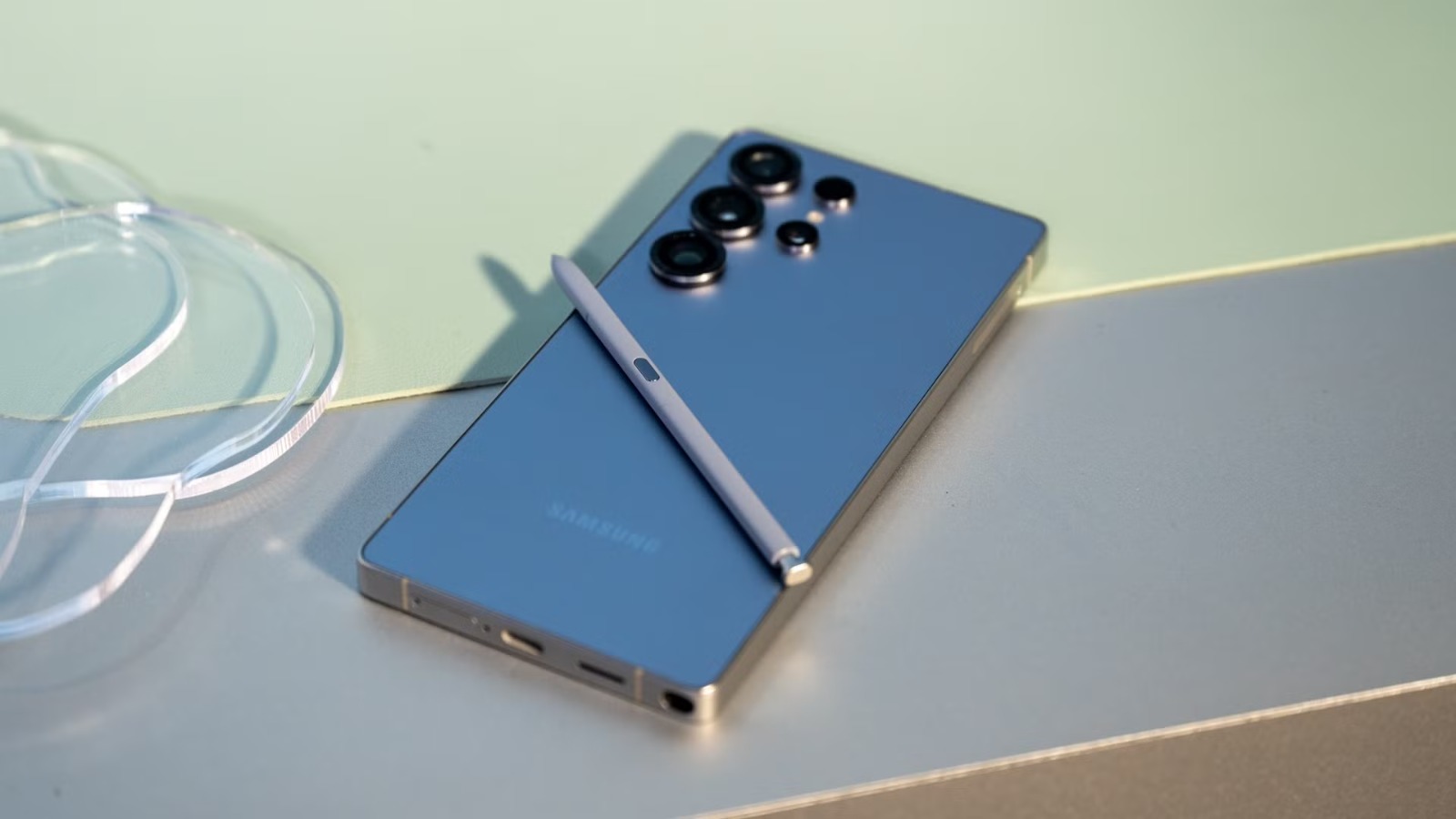
Samsung Galaxy S25 and S25 FE See Significant Price Cuts
Samsung's Galaxy S25 and Galaxy S25 FE smartphones are currently available at notably reduced prices, with the S25 FE dropping $201 (33%) to $449 on Woot for a limited time. The price reductions come amid a competitive smartphone market and ahead of anticipated future Samsung releases. The discounts make previously premium-priced devices more accessible to budget-conscious consumers.

Anthropic Disables Fable 5 and Mythos 5 AI Models Globally After US Government Export Control Order
Anthropic has suspended all public access to its two most advanced AI models, Fable 5 and Mythos 5, after the US Commerce Department issued an export control directive ordering the company to block foreign nationals from accessing them on national security grounds. The order came just three days after Fable 5's public launch and reportedly stems from government concerns about a potential jailbreak that could enable the models to assist with cyberattacks, though Anthropic says it received only verbal evidence of a narrow, non-universal vulnerability. The shutdown affects all customers globally — including enterprise users and Anthropic employees — and marks a significant escalation of US efforts to restrict foreign access to advanced AI models themselves, rather than just the chips that power them.

Xbox Free Play Days Offers Three Games Free to Play June 11–14
Microsoft's Xbox Free Play Days program is offering Hell Let Loose, State of Decay 2: Juggernaut Edition, and Blasphemous 2 at no cost from June 11 to June 14. Hell Let Loose requires an Xbox Game Pass Ultimate, Premium, or Essential membership, while State of Decay 2 and Blasphemous 2 (via a five-hour timed trial) are accessible to all Xbox console owners. Players who wish to keep any of the games can purchase them at a limited-time discount and retain any achievements earned during the free period.