Study Links Childhood Smacking to Lower GCSE Grades and Risky Behavior

A University College London study of 19,000 UK children found that those who were smacked in early childhood were 5.7 percentage points more likely to fail GCSE exams and 33% more likely to engage in risky behaviors at age 14. The research has prompted renewed calls for England and Northern Ireland to ban physical punishment, following Scotland (2020) and Wales (2022). The findings matter because they contribute to the evidence base on child discipline methods, though experts debate whether correlation proves causation and whether legal bans are the appropriate policy response.
Researchers from University College London analyzed data on 19,000 children born between 2000 and 2002, examining the effects of physical punishment at ages three, five, and seven. The study tracked 7,559 of these children through their GCSE exams and found that those who had experienced smacking showed a 5.7 percentage point increase in the likelihood of failing to achieve five pass grades (A*-C) in core subjects. Additionally, 14-year-olds with early childhood experience of physical punishment were 33% more likely to engage in risky behaviors including bullying. Lead researcher Anja Heilmann stated the research found smacking "does not help children and all the effects that we did find were in the direction of a harmful outcome." However, the study was observational rather than experimental, meaning researchers could not definitively prove causation, as other factors over the research period may have influenced outcomes. The findings have prompted campaigners to call for legal bans in England and Northern Ireland, aligning with existing bans in Scotland and Wales.
What's missing
The study's observational design is acknowledged but the specific mechanisms by which smacking might affect academic performance or behavior are not explored. Additionally, the article does not discuss potential confounding variables (such as socioeconomic status, parental stress, or other disciplinary practices) that may correlate with both smacking and outcomes, though the researchers' inability to control for these is noted as a limitation of the observational approach.
What different sources said
- BBC Top StoriesCenter
Smacking children could lead to lower GCSE grades, study suggests
Related
Study Reveals Persistent Tissue Changes in Ulcerative Colitis Despite Clinical Healing
Researchers analyzing tissue samples from 89 ulcerative colitis patients found that mucosal healing—the standard treatment goal—does not represent complete tissue recovery, with persistent abnormal changes in supporting cells remaining even during clinical remission. The study used advanced imaging and genetic analysis to identify three types of stromal cell changes that persist after healing appears complete. These findings suggest that current treatment endpoints may be insufficient and that identifying these cellular signatures could help predict which patients will relapse or fail to respond to therapy.
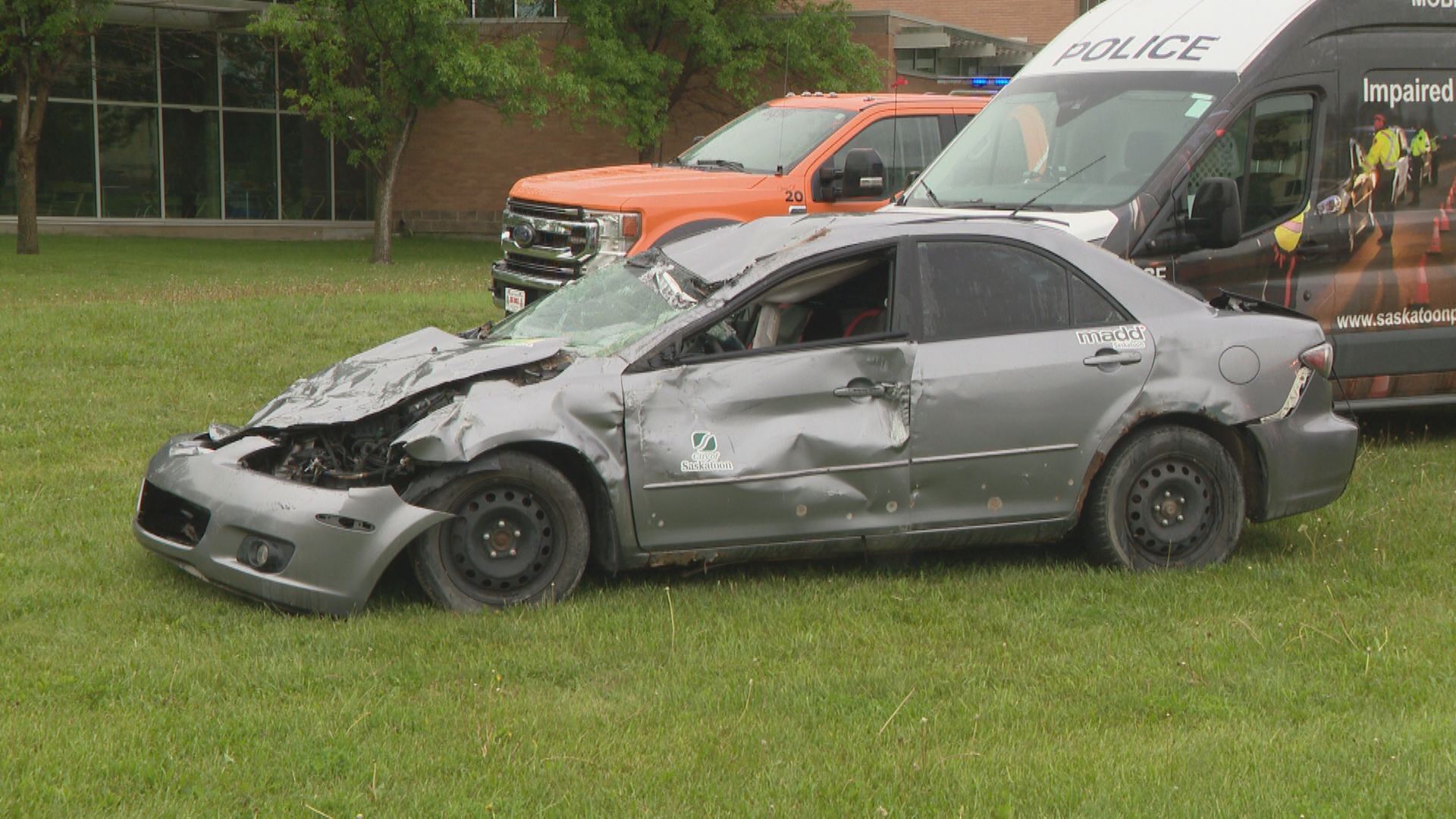
MADD Saskatoon Launches Crashed Car Awareness Campaign to Combat Impaired Driving
Mothers Against Drunk Driving (MADD) Saskatoon is displaying a smashed vehicle at five high-visibility locations across the city from June through September to raise awareness about the dangers of impaired driving. Saskatchewan averages 30 deaths per year from impaired driving, and police report increasing numbers of impaired drivers on roads. The campaign aims to encourage personal responsibility and prompt drivers to plan safe transportation alternatives.
Queensland Palliative Care Facility Avoids Closure After $360,000 in Last-Minute Donations
Fraser Coast Hospice, a regional Queensland end-of-life care facility facing voluntary administration, has been saved after receiving $360,000 in donations from two sources. The six-bed facility, which serves as the only free palliative care provider in the region, requires $720,000 annually to operate. While the immediate crisis has been averted, board leadership and community members emphasize the need for sustained long-term funding to ensure the hospice's viability.