Study finds daily mobility patterns amplify heat exposure inequalities in cities
A new preprint study using mobile phone data from 23 Spanish cities finds that low-income groups consistently experience higher heat exposure than high-income groups due to their daily movement patterns, with disparities intensifying during commutes. The research, validated against commuting data from 30 major US cities, shows these inequalities arise from the interplay between where different socioeconomic groups live, work, and travel within uneven urban heat landscapes. Meanwhile, cities worldwide are actively developing adaptation strategies — from green roofs and urban forests to solar-powered cooling — as climate change makes urban heat waves more frequent and deadly.
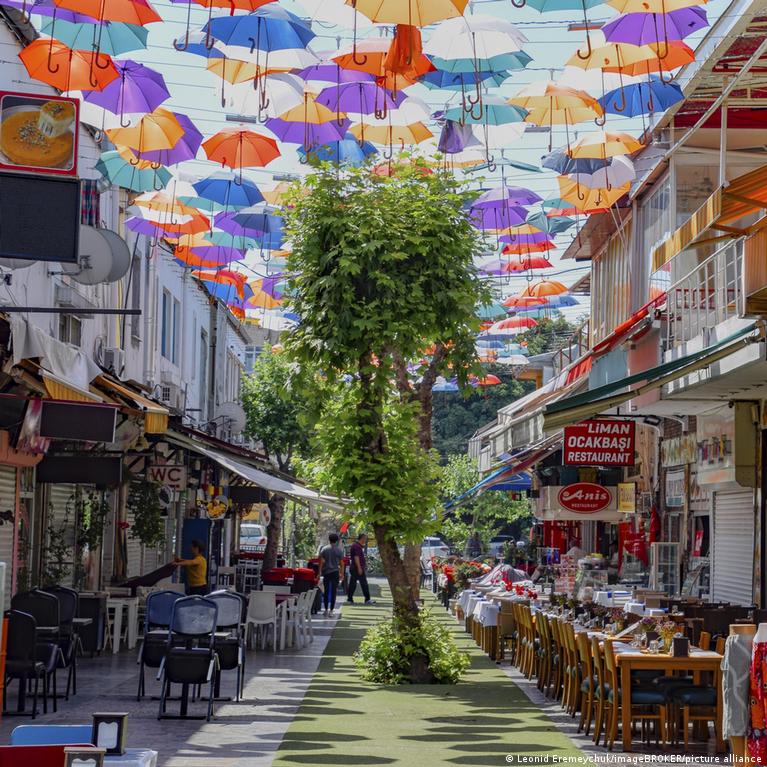
A preprint study published on arXiv developed a network-based framework using mobile phone mobility records and urban temperature data across 23 Spanish cities to quantify how sociodemographic groups experience heat through daily movement. The findings show systematic income-related heat exposure inequalities, with low-income residents facing consistently higher exposure, while age-related disparities were smaller in magnitude; commuting trips were identified as a key amplifier of these inequalities. The study was externally validated using tract-level commuting networks in 30 major US cities, yielding comparable patterns. Separately, a Deutsche Welle report highlights how cities from Antalya, Turkey, to Teresina and Fortaleza in Brazil, to Kilifi County in Kenya are grappling with intensifying urban heat, noting that structural inequality — poor ventilation, inadequate roofing, and limited green space in peripheral neighborhoods — compounds health risks for vulnerable populations. Cities are deploying a range of interventions including real-time heat monitoring networks, solar-powered air conditioning in schools, urban reforestation, and decentralized renewable energy microgrids. The WHO has emphasized that heat is a 'silent killer' but not an inevitable one, urging broader adoption of existing protective tools. Together, the research and reporting underscore that urban heat is simultaneously a climate, public health, and social equity challenge requiring coordinated planning responses.
What's missing
The arXiv study is a preprint and has not yet undergone formal peer review, so its findings should be treated as preliminary. The study relies on mobile phone records, which may underrepresent the elderly, very low-income individuals, and others with limited phone access — precisely the groups most vulnerable to heat. The framework also does not yet account for indoor heat exposure, nighttime temperatures, or adaptive behaviors such as seeking air-conditioned public spaces, all of which could meaningfully alter measured inequalities.
How coverage differed
The arXiv preprint frames urban heat inequality primarily as a quantifiable, systems-level phenomenon driven by mobility and spatial structure, emphasizing modeling and generalizability. Deutsche Welle takes a solutions-oriented, human-interest approach, centering city officials and community voices from the Global South, which foregrounds lived experience and policy action over analytical frameworks.
What different sources said
- arXiv physicsCenter
Mobility shapes heat exposure inequalities in cities
- Deutsche WelleCenter
As the world heats up, cities work to cool down
Related
Gut Bacteria Enzyme Found to Break Down Heat-Processed Food Compounds, Producing Novel Biogenic Amines
Researchers have discovered that an enzyme in common gut bacteria can degrade N-epsilon-carboxymethyllysine (CML), a compound formed during thermal food processing, producing previously unknown biogenic amines. The enzyme, ornithine decarboxylase SpeC from enterobacteria, acts on CML and related modified lysine derivatives through a low-level 'underground' catalytic activity. This finding suggests a previously unrecognized communication axis between thermally processed dietary compounds and gut microbial physiology, with potential implications for host health.
Full-Length Gene Sequencing Reveals Two Distinct Bacterial Communities in Black-Legged Ticks Expanding Into Canada
Researchers used Oxford Nanopore full-length 16S rRNA gene sequencing to characterize the microbiome of Ixodes scapularis black-legged ticks collected in Nova Scotia, Canada, distinguishing between tick-adapted bacteria and environmentally acquired bacteria. The study comes as I. scapularis — the primary vector of Lyme disease — is rapidly expanding northward into Canada due to climate change. The findings suggest that environmentally derived bacteria in tick microbiomes are not mere contamination, which has implications for how tick microbiome data is collected and interpreted across surveillance studies.
Study Identifies Metabolic Link Between Cell Envelope Stress and Biofilm Formation in Bacteria
Researchers have discovered that the metabolite acetyl-CoA directly inhibits enzymes that degrade the bacterial signaling molecule c-di-GMP, connecting cell envelope biosynthesis stress to biofilm formation in Pseudomonas aeruginosa. The study found that sub-inhibitory concentrations of antibiotics targeting early peptidoglycan biosynthesis — but not other antibiotic classes — elevate c-di-GMP levels by reducing phosphodiesterase activity, with acetyl-CoA competing for the enzyme active site. Because the relevant enzyme domain is broadly conserved across bacterial species, this checkpoint mechanism may be widespread and could have implications for understanding antibiotic-induced biofilm responses.