Smartphone Predictive Text Quality Declining, Users Report; AI Integration Cited as Likely Cause
Smartphone users are reporting widespread complaints about declining predictive text and autocorrect quality, with issues including nonsensical suggestions, repeated errors, and incorrect capitalisation. The decline appears to coincide with tech companies' shift from rule-based systems to AI-driven language models starting in 2023, particularly Apple's adoption of transformer models similar to ChatGPT. Experts note this reflects a trade-off where AI systems gain contextual flexibility but produce more variable and sometimes counterintuitive outputs.
Smartphone users across platforms including Apple and Samsung have documented numerous complaints about deteriorating predictive text performance in recent years, ranging from autocorrecting correct words to incorrect ones, failing to learn from corrections, and inserting nonsensical character sequences. A PhD candidate studying generative AI's impact on writing notes a "demonstrable decline" coinciding with 2023 updates when Apple introduced on-device machine-learning transformer models to replace its deterministic system used since 2007, with Samsung following a similar pattern. While a University of Queensland expert acknowledges "considerable anecdotal evidence" of perceived decline, he cautions that objective deterioration is difficult to establish given systems have become more sophisticated overall. The shift from dictionary-based and statistical approaches to neural language models designed to infer context and user intent represents a fundamental trade-off: modern systems gain flexibility and contextual understanding but produce more variable outputs that can appear less intuitive to users, with errors becoming more noticeable.
What's missing
The article relies primarily on anecdotal evidence and user complaints without presenting quantitative data on error rates before and after the AI integration. No direct statements from Apple or Samsung engineers explaining the design decisions or trade-offs are included. The specific technical differences between the old deterministic models and new transformer-based approaches could be explained in more detail for general readers.
What different sources said
- ABC AustraliaCenter
Is predictive text giving you mistakes and 'hallucinations'? You're not alone
Related
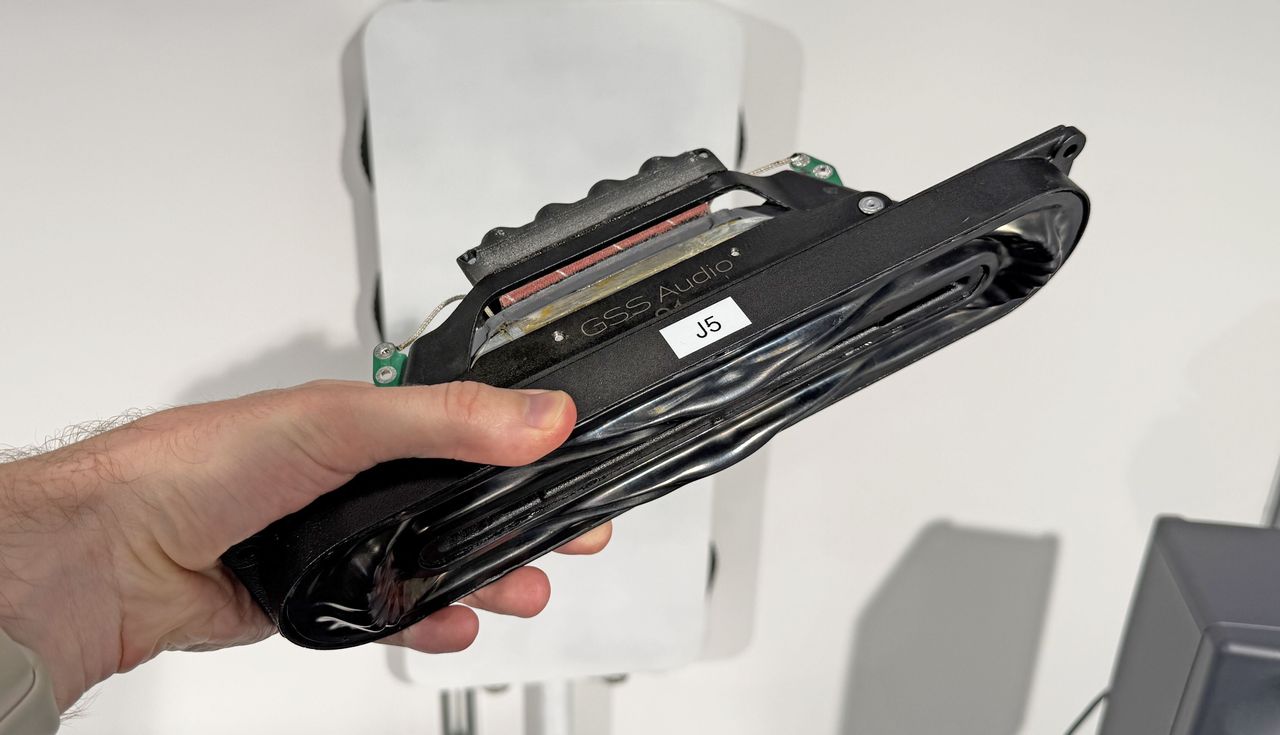
GSS Audio Unveils Compact Subwoofer Driver Delivering Bass of Much Larger Units
GSS Audio demonstrated a new bass driver called the Model S1 at the High End Show in Vienna that measures just 62.5mm tall and operates in a 1.75-liter box while delivering bass equivalent to a subwoofer six times its size. The driver achieves this through extreme excursion capability (17mm in each direction) and an elaborate diaphragm design with ridges and spirals. The technology could enable space-efficient bass integration in soundbars, wall-mounted speakers, and compact home theater systems.

Elon Musk on Technology as Magic: A 15-Year-Old Vision Comes to Life
Elon Musk has reiterated a quote from his 2012 Caltech commencement speech comparing advanced technology to magic, drawing on Arthur C. Clarke's famous observation that sufficiently advanced technology is indistinguishable from magic. The quote reflects Musk's philosophy that has guided his work across PayPal, Tesla, and SpaceX over the past two decades. The statement has renewed relevance as Neuralink's brain-computer interface technology has recently enabled paralyzed patients to control devices with their thoughts, with users describing the experience as "magical."

AI Self-Correction Capabilities Remain Key Challenge, Says Raindrop Founder
Ben Hylak, founder and CTO of AI monitoring company Raindrop, identified AI's ability to fix its own mistakes as a critical remaining problem for the technology sector. Hylak is a former engineer at SpaceX and Apple who now leads efforts to help companies improve baseline AI model performance. The advancement of AI self-correction capabilities is considered essential for broader AI deployment and reliability.