Scientists Genetically Modify Hookworms to Produce Antitoxin Inside Living Hosts
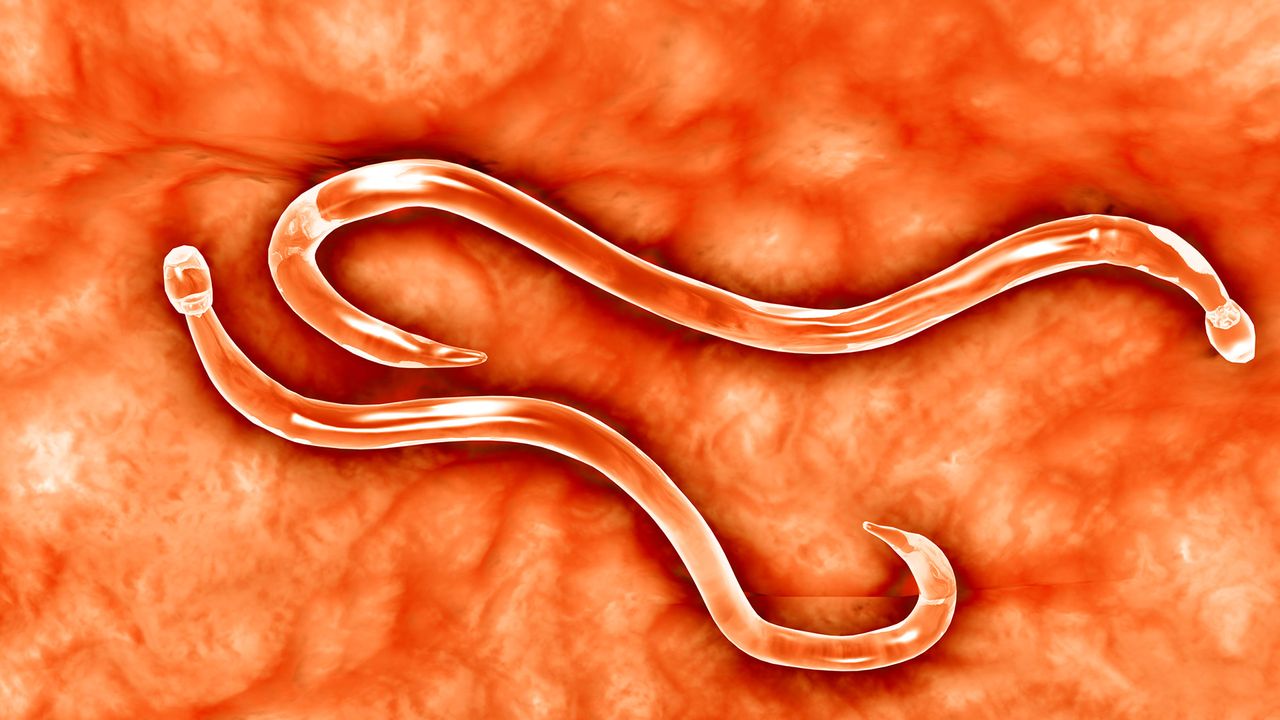
Researchers have genetically engineered the hookworm Ancylostoma ceylanicum to produce antibodies that neutralize tetrodotoxin, a potent pufferfish poison, from within a living host's body. This represents a first-of-its-kind application of using parasitic organisms as biological drug delivery systems. The approach could potentially open new avenues for treating poisonings and other conditions by leveraging organisms that naturally inhabit the body.
In a novel proof-of-concept study, scientists have genetically modified a parasitic hookworm to manufacture therapeutic antibodies inside a living host. The modified hookworm Ancylostoma ceylanicum was engineered to produce antibodies capable of partially neutralizing tetrodotoxin, the deadly neurotoxin found in pufferfish. This research marks the first demonstration of using a genetically altered parasite as an in vivo drug production and delivery system. The approach leverages the natural ability of hookworms to establish themselves within a host organism, repurposing this parasitic relationship for therapeutic purposes. While the study focuses on tetrodotoxin neutralization as a proof of concept, the underlying technology could potentially be adapted to treat various poisonings or other medical conditions.
Limitations & open questions
The article does not specify the journal or publication venue for this study, the names of the research institutions involved, the timeline for the research, or details about the methodology used to engineer the worms. Additionally, no information is provided about safety testing, potential risks of using modified parasites in humans, regulatory pathway considerations, or whether this has been tested in animal models or is purely theoretical.
What different sources said
- Live ScienceCenter
Genetically modified worms can now produce and deliver drugs inside a living body, scientists say
Related
Study reveals IDH1 enzyme's role in cardiac metabolic adaptation during cancer-related stress
Researchers discovered that isocitrate dehydrogenase 1 (IDH1) helps the heart adapt to metabolic stress caused by cancer-related mutations through a previously unknown reductive metabolic pathway. The study used stable isotope tracing and genetic knockout models in rat and mouse heart tissue to show that when mitochondrial metabolism is impaired, IDH1 redirects carbon flux toward glutamine-derived citrate formation. This finding expands understanding of how cardiac metabolism responds to oncometabolic stress and may have implications for managing cardiovascular complications in cancer patients.
AI Framework Reveals How β-Arrestin 1 Protein Changes Shape During Activation
Researchers used a transformer-based artificial intelligence model to analyze how the β-arrestin 1 protein's tail region reorganizes when activated by cell surface receptors. The study examined molecular dynamics simulations comparing the protein in resting and active states, uncovering previously unknown conformational changes. This work could improve understanding of how cells regulate signaling pathways involved in numerous physiological and disease processes.
Study Links Pancreatic Cancer Tissue Stiffness to Tumor Progression and Patient Survival
Researchers combined imaging scans and laboratory tissue analysis to show that pancreatic cancer tumors with greater stiffness—driven by dense collagen buildup—correlate with worse patient survival outcomes. The study of nine patients found that magnetic resonance elastography, a non-invasive imaging technique, can detect mechanical properties that reflect underlying tumor biology. These findings suggest that measuring tissue stiffness through imaging could help doctors better characterize pancreatic cancer and guide treatment decisions.