Pokémon Go Location Data Used to Train AI for Military Drone Navigation

Niantic Spatial, spun off from Pokémon Go developer Niantic, used approximately 30 billion real-world location scans collected from game players to train an AI visual positioning system, which is now being integrated with defense contractor Vantor's drone navigation technology. The partnership, announced in December 2025, aims to help military drones and ground vehicles navigate in GPS-denied environments such as active war zones where satellite signals are jammed or spoofed. The case raises significant questions about informed consent, as most players who opted into scanning features were unlikely aware their data could eventually support military applications.
Niantic Spatial, a company spun out of Pokémon Go developer Niantic in May 2025, trained a large geospatial AI model on roughly 30 billion images captured by millions of players who scanned real-world locations—streets, statues, fountains, and parks—in exchange for in-game rewards introduced in 2021. The resulting visual positioning system (VPS) can determine a device's location and orientation by matching live camera feeds against detailed 3D maps, offering a resilient alternative to GPS in environments where satellite signals are jammed, spoofed, or otherwise unavailable. In December 2025, Niantic Spatial announced a partnership with Vantor—formerly Maxar Intelligence—a defense firm holding contracts with the US Army, the National Geospatial-Intelligence Agency, and the Department of Homeland Security, to integrate the VPS with Vantor's existing GPS-denied positioning capabilities for drones and ground vehicles. Early testing presented at a February 2026 defense conference reportedly achieved a 70 percent reduction in positioning error, with accuracy to within 1.5 meters. Both companies stress that raw Pokémon Go scan data was not shared with Vantor; only the trained AI model is involved in the partnership. Nevertheless, digital rights advocates and ethics scholars argue that consent given for a mobile game cannot reasonably be interpreted as consent for military use, and that terms-of-service agreements are an inadequate mechanism for informing ordinary users of such downstream applications. Vantor separately announced a US Army training software contract worth up to $217 million in February 2026.
What's missing
It remains unclear whether Niantic's terms of service at the time players opted into scanning explicitly disclosed the possibility of military or defense applications, or whether any regulatory body in the US, EU, or Australia has opened an inquiry into the data's use. It is also not confirmed how central the Niantic Spatial VPS is to the Vantor–US Army contract.
How coverage differed
The Guardian and UNITED24 Media frame the story with greater emphasis on potential exploitation of users and the troubling nature of civilian data flowing into military systems, quoting digital rights critics prominently. Ars Technica provides a more balanced treatment, including a counterpoint from an ethics professor who notes the technology could support legitimate defensive uses—such as Ukraine's resistance to GPS jamming—while still acknowledging player discomfort.
What different sources said
Pokémon Go data trained AI that could assist military drones in war zones
- Ars TechnicaCenter
Pokémon Go players unwittingly contributed to tech with military drone uses
- UNITED24 MediaCenter
How 30 Billion Pokémon Go Scans Became a Military AI Tool for Drone Warfare
Related
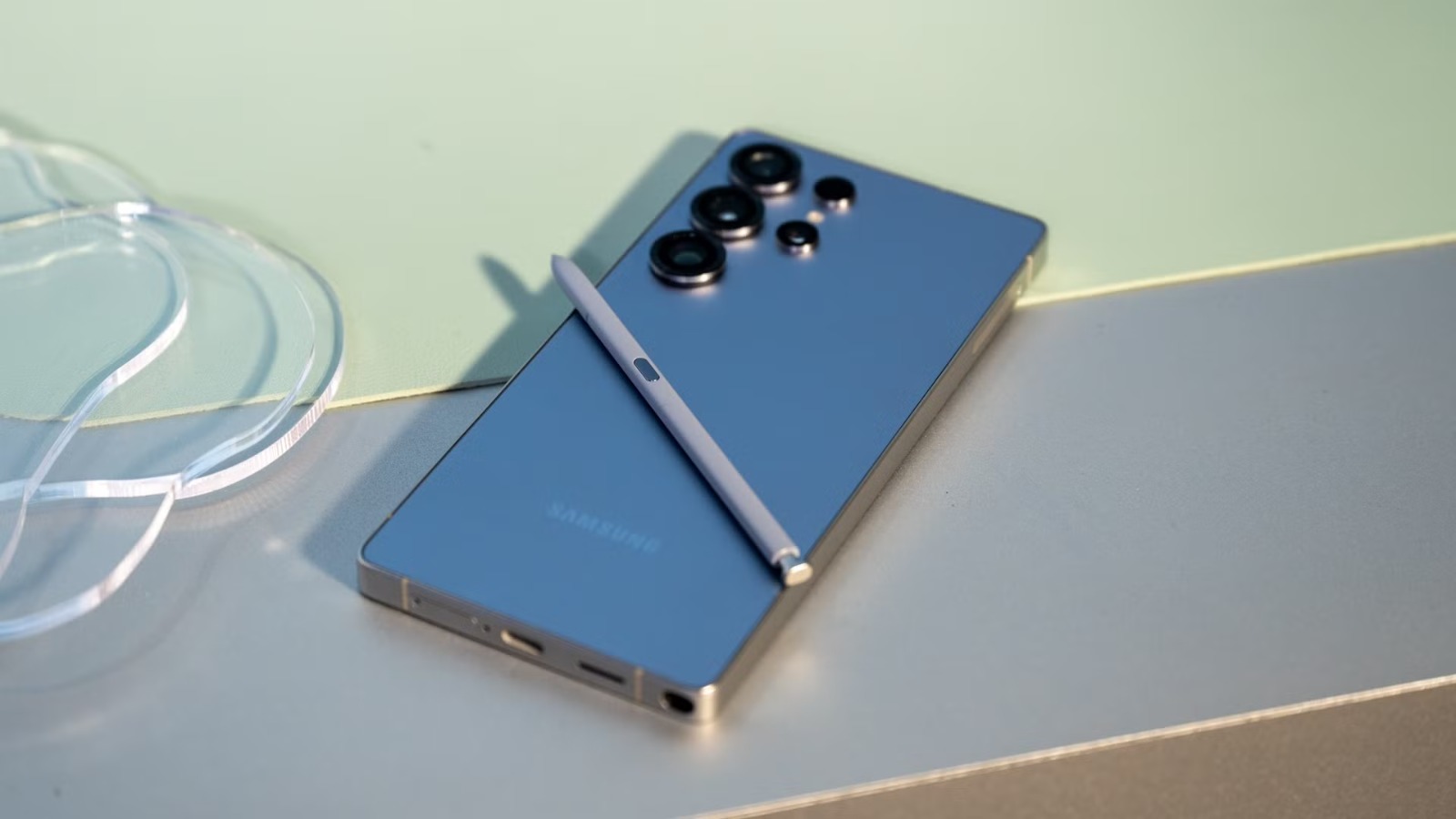
Samsung Galaxy S25 and S25 FE See Significant Price Cuts
Samsung's Galaxy S25 and Galaxy S25 FE smartphones are currently available at notably reduced prices, with the S25 FE dropping $201 (33%) to $449 on Woot for a limited time. The price reductions come amid a competitive smartphone market and ahead of anticipated future Samsung releases. The discounts make previously premium-priced devices more accessible to budget-conscious consumers.

Anthropic Disables Fable 5 and Mythos 5 AI Models Globally After US Government Export Control Order
Anthropic has suspended all public access to its two most advanced AI models, Fable 5 and Mythos 5, after the US Commerce Department issued an export control directive ordering the company to block foreign nationals from accessing them on national security grounds. The order came just three days after Fable 5's public launch and reportedly stems from government concerns about a potential jailbreak that could enable the models to assist with cyberattacks, though Anthropic says it received only verbal evidence of a narrow, non-universal vulnerability. The shutdown affects all customers globally — including enterprise users and Anthropic employees — and marks a significant escalation of US efforts to restrict foreign access to advanced AI models themselves, rather than just the chips that power them.

Xbox Free Play Days Offers Three Games Free to Play June 11–14
Microsoft's Xbox Free Play Days program is offering Hell Let Loose, State of Decay 2: Juggernaut Edition, and Blasphemous 2 at no cost from June 11 to June 14. Hell Let Loose requires an Xbox Game Pass Ultimate, Premium, or Essential membership, while State of Decay 2 and Blasphemous 2 (via a five-hour timed trial) are accessible to all Xbox console owners. Players who wish to keep any of the games can purchase them at a limited-time discount and retain any achievements earned during the free period.