Outlast: The Jungle Brings Netflix Reality Competition to Panama for Season 3

Netflix's Outlast reality competition series moves to a tropical rainforest in Panama for its third season, where 16 contestants must survive for 45 days in teams to win $1 million. Unlike the first two seasons set in Alaska's freezing conditions, this season features tropical heat, humidity, and moisture-related challenges like trenchfoot. The format introduces new dynamics with three teams instead of four and different survival tools allocated to each camp.
Outlast: The Jungle marks a significant shift for the Netflix reality competition series, relocating from Alaska's harsh cold to Panama's tropical rainforest environment. Sixteen contestants are divided into three teams of up to five members, with one contestant initially left out and forced to join a team after a vote. Each team receives different survival resources: Alpha camp gets hunting weapons, Bravo camp gets fire-starting materials, and Charlie camp gets shelter-building supplies. The 45-day competition maintains the show's core rule that only a team can win the $1 million prize, encouraging both cooperation and strategic gameplay. The tropical setting introduces distinct challenges including extreme daytime heat, nighttime hypothermia from daily rainfall, and trenchfoot from constant moisture exposure, which the article suggests creates tension and conflict among team members more quickly than previous seasons.
What different sources said
- New York PostRight
Stream It Or Skip It: ‘Outlast: The Jungle’ On Netflix, Where Outdoorsy Contestants Have To Survive As A Team In A Tropical Rainforest
Related

Documentary 'Hollywood Does Abortion' Claims Entertainment Industry Stigmatized Abortion Through Misleading Portrayals
A new documentary premiered at the Tribeca Film Festival arguing that Hollywood films and television shows have historically depicted abortion in a stigmatized and inaccurate manner, from the 1970s to recent years. The filmmakers contend that portrayals often featured false medical complications, miscarriages that prevented characters from making abortion decisions, or exaggerated post-abortion regret. The documentary's claims have drawn responses from both abortion-rights and pro-life advocates, with disagreement over the accuracy of abortion's depiction in media and its real-world consequences.

Richmond's 2009 Exhaustive Coaching Search: A Model for AFL Recruitment
An opinion piece examines Richmond's comprehensive two-stage coaching search process in 2009 that ultimately selected Damien Hardwick, who led the club to three premierships in four years. The process involved eight initial candidates and a rigorous evaluation of coaching philosophies, tactical knowledge, and team-building approaches. The article argues the process succeeded not only in selecting the right coach but in identifying a strong pool of candidates who collectively became successful AFL coaches.
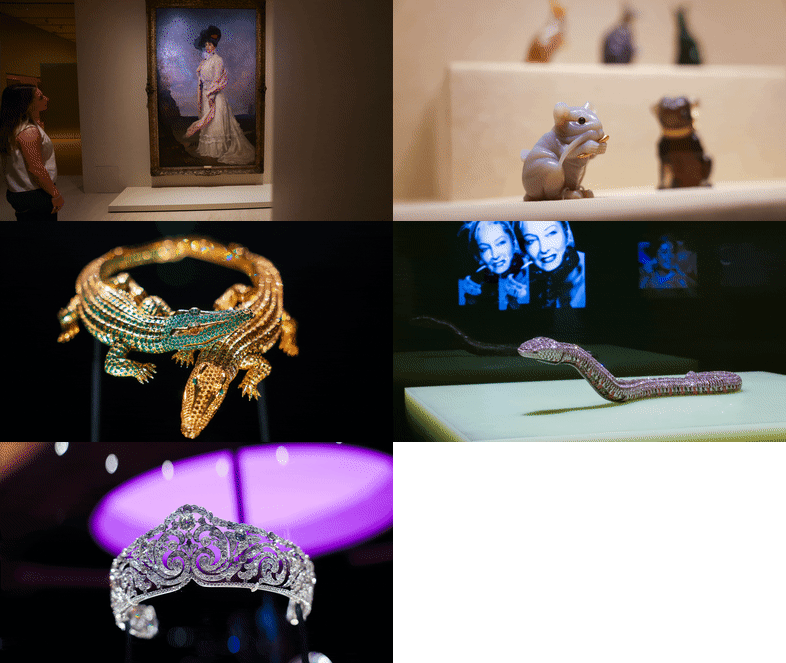
NGV's Cartier Exhibition Showcases Luxury Craftsmanship Amid Questions About Brand-Focused Museum Programming
The National Gallery of Victoria has opened a major Cartier jewelry exhibition featuring hundreds of pieces spanning over a century, originated from London's Victoria & Albert Museum. The show displays exceptional craftsmanship and historical context tracing the brand's evolution from a family business founded in 1847 through its association with royalty, industrialists, and celebrities. The exhibition raises ongoing questions about whether major cultural institutions should dedicate significant space to luxury brand showcases rather than art-focused programming.