National Redistricting Battle Expands Beyond Congress to State and Local Levels Following Supreme Court Ruling
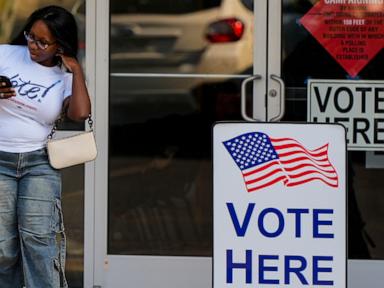
Following a Supreme Court decision weakening minority voting protections, states including Georgia are preparing to redraw electoral districts at multiple levels—congressional, state legislative, and potentially local—ahead of upcoming elections. The redistricting wave, triggered by the court's ruling against a majority-Black Louisiana congressional district, could affect representation on issues ranging from taxes to education to local infrastructure. Voting rights advocates warn the changes could eliminate hundreds of Democratic-held seats with minority majorities, fundamentally altering political representation across the country.
A new phase of partisan redistricting is underway following a late April Supreme Court ruling that struck down a majority-Black congressional district in Louisiana as an illegal racial gerrymander. Georgia's Republican-led Legislature has called a special session for June 17 to redraw districts for Congress, state House and Senate, and potentially the state utility regulatory commission—marking the first major redistricting effort by a state legislature since the Supreme Court weakened federal Voting Rights Act protections for minorities. Mississippi Republicans and New York Democrats are also considering legislative redistricting before their 2027 and 2028 elections. A report by voting rights organizations forecast that Republicans in 10 Southern states could eliminate 191 Democratic-held legislative seats, including 140 districts with Black or Hispanic majorities, if federal protections were gutted. While some analysts expect fewer changes than predicted, experts anticipate the Supreme Court's decision will trigger redistricting efforts at every level, potentially affecting representation on consequential local issues including tax rates, education funding, housing regulations, and infrastructure.
What different sources said
- ABC News PoliticsCenter
First came Congress. Now a national redistricting battle may turn to statehouses and city councils
Related

Halfway Through 2026 Primary Season: Six Key Takeaways from Congressional Races
Four more states held primaries this week, bringing the total to 26 states that have completed regular congressional primaries in the 2026 midterm cycle. Key patterns emerging include front-runners not always winning, House members struggling to advance to statewide office, and President Trump's endorsement record remaining largely successful despite low approval ratings. These trends are shaping the competitive landscape for the general election.

Congress Struggles to Build Support for $9 Billion Rayburn House Office Building Renovation
The Architect of the Capitol is pushing for a major renovation of the Rayburn House Office Building, which could cost $9 billion and last until 2045, but lawmakers remain hesitant to commit to the project. The building, constructed in 1965, is experiencing serious deterioration including 16 major leaks in the past year alone and risks of catastrophic system failure. The challenge reflects a broader political difficulty: Congress has historically been reluctant to fund its own infrastructure, with legislative branch spending averaging just 0.15 percent of total budget authority since 1976.

Study Finds College Faculty Lean Significantly Left, Raising Questions About Campus Ideological Diversity
A study commissioned by the Foundation for Individual Rights and Expression found that college faculty donors have an average ideology score of -1.02, comparable to Senator Bernie Sanders's -1.14, indicating strong leftward lean among faculty. The research cross-referenced over 100,000 faculty members with campaign contribution data, and separate surveys found only 20% of faculty believed a conservative scholar would be welcome in their department. The findings raise concerns about ideological diversity in higher education and its potential influence on student political attitudes.