NASA Astronaut Captures Spectacular Southern Lights Display from Space
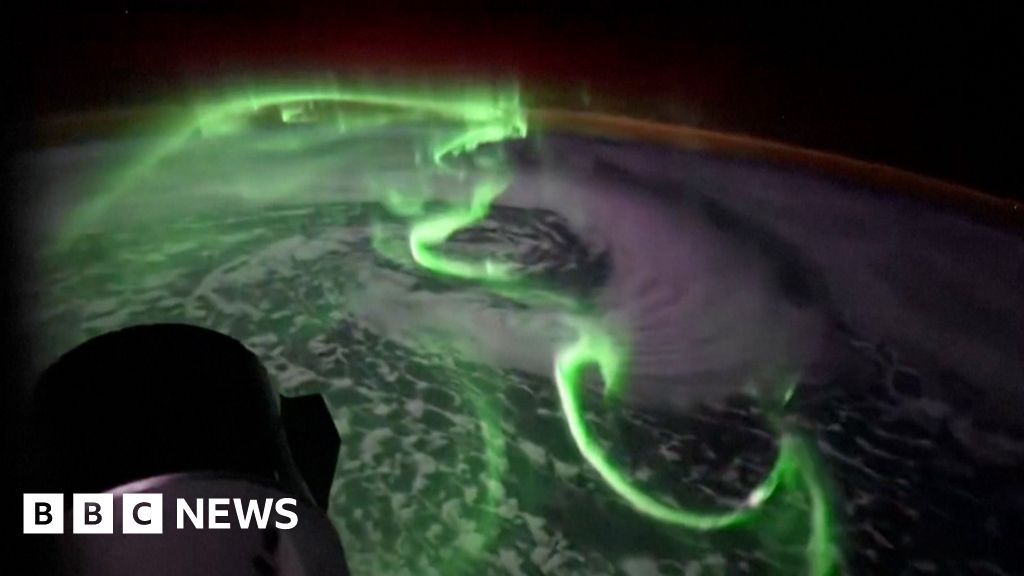
NASA astronaut Jessica Meir filmed a timelapse of the Southern Lights from aboard the SpaceX Dragon shuttle in space. The Southern Lights occur as frequently as the Northern Lights but are less well-known because fewer people live near the South Pole. The lights result from Earth's magnetic field channeling charged particles from the Sun toward polar regions, where they collide with the atmosphere to create colorful displays.
NASA astronaut Jessica Meir captured a spectacular timelapse of the Southern Lights from the SpaceX Dragon shuttle orbiting Earth. The Southern Lights, also known as the aurora australis, are created when charged particles from the Sun are channeled by Earth's magnetic field toward the polar regions, where they collide with atmospheric gases and produce shimmering waves of color. Despite occurring as regularly as the Northern Lights and taking place over Antarctica, the Southern Lights remain less famous than their northern counterpart primarily because relatively few people inhabit latitudes close to the South Pole. The footage provides a rare perspective of this natural phenomenon from space, highlighting the beauty of Earth's magnetic interactions with solar radiation.
What different sources said
- BBCCenter
Watch: Southern Lights timelapse filmed from space
Related
Researchers Identify D-Retro-Inverso Peptide Candidates for Treating Cardiac Amyloidosis
Researchers have designed and computationally evaluated four peptide candidates made from D-amino acids that may inhibit the formation of Serum Amyloid A (SAA) fibrils associated with cardiac complications following heart attacks. The study builds on mouse model evidence suggesting SAA aggregates contribute to long-term myocardial infarction complications and may operate similarly in humans. Two candidates, DRI-R5S and DRI-H6A, were identified as particularly promising for potential drug development.
Study Identifies D-Retro-Inverso Peptides as Potential Treatments for Cardiac Amyloidosis
Researchers designed four peptide candidates using D-amino acids to inhibit Serum Amyloid A (SAA) fibril formation, which may contribute to complications following heart attacks. The study, conducted using molecular dynamics simulations in a mouse model, identified two peptides—DRI-R5S and DRI-H6A—as promising drug candidates. This work could lead to new therapeutic approaches for cardiac amyloidosis, a serious post-infarction complication.
Scientists Discover Previously Unknown Branch of Tryptophan Metabolism in Humans
Researchers identified a new enzymatic step in human tryptophan catabolism, showing that the protein ASPDH acts as a 2-aminomuconate reductase to produce a previously unknown amino acid. This discovery fills a gap in the kynurenine pathway, one of the body's major metabolic routes for processing the amino acid tryptophan. The finding expands understanding of human metabolism and may have implications for understanding NAD cofactor production and related metabolic diseases.