NASA Administrator Defends All-Male Artemis III Crew Selection
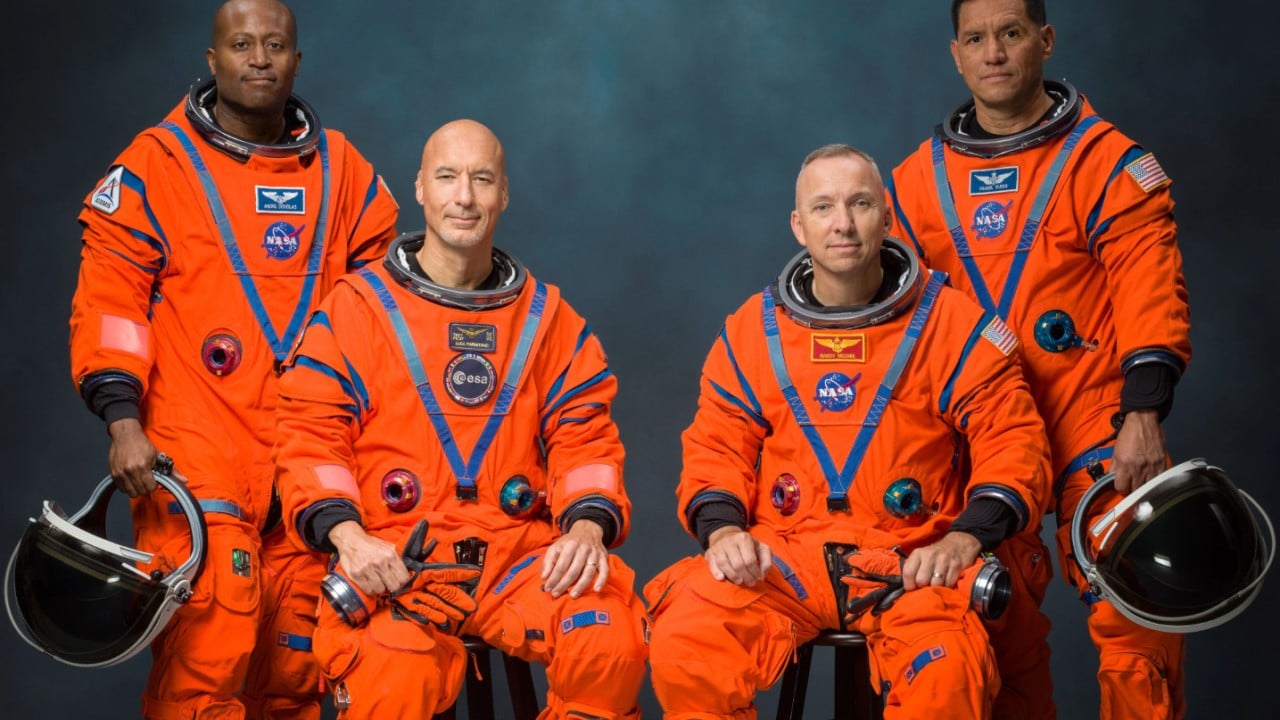
NASA Administrator Jared Isaacman defended the agency's selection of an all-male crew for the Artemis III mission, stating the astronauts were chosen based on experience, skill sets, and availability rather than political considerations. The announcement drew criticism amid questions about whether the selection aligned with the Trump administration's direction to eliminate diversity initiatives. The mission, scheduled for next year, will test rendezvous and docking procedures in low-Earth orbit and does not include a lunar landing.
NASA Administrator Jared Isaacman responded to criticism over the all-male composition of the Artemis III crew by emphasizing that selections are based solely on professional qualifications and mission requirements. The four-person crew includes commander Randy Bresnik, pilot Luca Parmitano (ESA), and astronauts Andre Douglas and Frank Rubio. Isaacman highlighted his personal experience with gender-balanced crews and noted that NASA's latest astronaut candidate class was majority female. Mission commander Bresnik stated the all-male selection was "certainly not intentional" and pointed to the diversity within NASA's broader astronaut office. The Artemis III mission will conduct spacecraft testing and docking procedures in low-Earth orbit with lunar landers from SpaceX and Blue Origin, rather than attempting a moon landing. NASA previously committed to placing both a woman and a person of color on the lunar surface in future missions.
What different sources said
- South China Morning PostCenter
Nasa chief defends choice of all-male Artemis III crew
- CBS NewsCenter
NASA chief defends choice of all-male crew for Artemis III mission
- Space.comCenter
NASA chief defends all-male Artemis 3 astronaut crew amid backlash: 'I don't think anyone should be reading into this'
- NBC NewsLeft
NASA addresses criticism over all-male crew selected for Artemis III test mission
Related
Study reveals IDH1 enzyme's role in cardiac metabolic adaptation during cancer-related stress
Researchers discovered that isocitrate dehydrogenase 1 (IDH1) helps the heart adapt to metabolic stress caused by cancer-related mutations through a previously unknown reductive metabolic pathway. The study used stable isotope tracing and genetic knockout models in rat and mouse heart tissue to show that when mitochondrial metabolism is impaired, IDH1 redirects carbon flux toward glutamine-derived citrate formation. This finding expands understanding of how cardiac metabolism responds to oncometabolic stress and may have implications for managing cardiovascular complications in cancer patients.
AI Framework Reveals How β-Arrestin 1 Protein Changes Shape During Activation
Researchers used a transformer-based artificial intelligence model to analyze how the β-arrestin 1 protein's tail region reorganizes when activated by cell surface receptors. The study examined molecular dynamics simulations comparing the protein in resting and active states, uncovering previously unknown conformational changes. This work could improve understanding of how cells regulate signaling pathways involved in numerous physiological and disease processes.
Study Links Pancreatic Cancer Tissue Stiffness to Tumor Progression and Patient Survival
Researchers combined imaging scans and laboratory tissue analysis to show that pancreatic cancer tumors with greater stiffness—driven by dense collagen buildup—correlate with worse patient survival outcomes. The study of nine patients found that magnetic resonance elastography, a non-invasive imaging technique, can detect mechanical properties that reflect underlying tumor biology. These findings suggest that measuring tissue stiffness through imaging could help doctors better characterize pancreatic cancer and guide treatment decisions.