Molecular glue degraders targeting HuR show promise against BRAF-mutant colorectal cancer
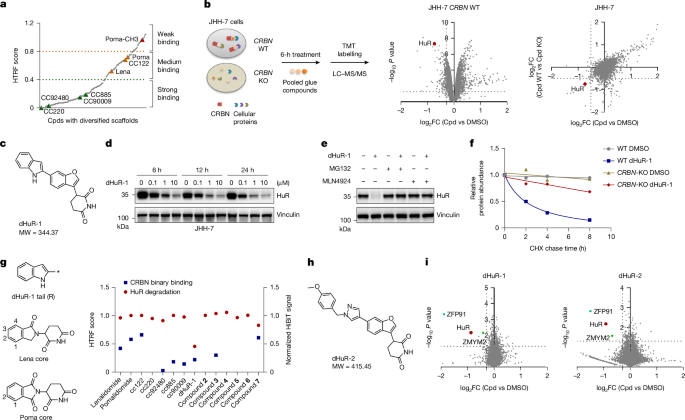
Researchers have identified molecular glue degraders (MGDs) that can degrade HuR, an RNA-binding protein frequently overexpressed in cancer cells, as a potential treatment for BRAF-mutant colorectal cancer. BRAF-mutant CRC represents approximately 10% of cases with median survival under 12 months and resistance to current therapies including FDA-approved BRAF inhibitor combinations. This approach addresses a critical therapeutic gap, as over 75% of BRAF-mutant CRC patients currently lack durable treatment options.
BRAF-mutant colorectal cancer is one of the most aggressive CRC subtypes, accounting for roughly 10% of cases with a median survival of less than 12 months under current treatment. Unlike BRAF-mutant melanoma, which responds well to BRAF inhibitors, BRAF-mutant CRC exhibits intrinsic resistance due to EGFR-dependent feedback reactivation of the MAPK pathway. Even the FDA-approved combination of encorafenib and cetuximab only achieves response rates of 20-26%, with most responders relapsing within 4-6 months. The human RNA-binding protein HuR, encoded by ELAVL1, is frequently overexpressed in cancer cells and promotes tumor growth, invasion, angiogenesis, and therapeutic resistance by regulating mRNA stability and translation. Molecular glue degraders represent a novel class of compounds that chemically induce ternary complex formation between target proteins and ubiquitin E3 ligases, triggering protein degradation. Recent advances in MGD development, including cryo-EM structural studies of cereblon-based complexes, have expanded the potential target landscape beyond traditional immunomodulatory drugs to include kinases and scaffold proteins.
Limitations & open questions
The article excerpt appears incomplete (ends mid-sentence with 'Serendi'), so it does not provide experimental results, efficacy data, or clinical development status of the HuR-targeting MGDs described. The full study's findings, methodology, and conclusions are not available in the provided text.
What different sources said
- Nature NewsCenter
Molecular glue degraders of HuR suppress BRAF-mutant colorectal cancer
Related
Study reveals IDH1 enzyme's role in cardiac metabolic adaptation during cancer-related stress
Researchers discovered that isocitrate dehydrogenase 1 (IDH1) helps the heart adapt to metabolic stress caused by cancer-related mutations through a previously unknown reductive metabolic pathway. The study used stable isotope tracing and genetic knockout models in rat and mouse heart tissue to show that when mitochondrial metabolism is impaired, IDH1 redirects carbon flux toward glutamine-derived citrate formation. This finding expands understanding of how cardiac metabolism responds to oncometabolic stress and may have implications for managing cardiovascular complications in cancer patients.
AI Framework Reveals How β-Arrestin 1 Protein Changes Shape During Activation
Researchers used a transformer-based artificial intelligence model to analyze how the β-arrestin 1 protein's tail region reorganizes when activated by cell surface receptors. The study examined molecular dynamics simulations comparing the protein in resting and active states, uncovering previously unknown conformational changes. This work could improve understanding of how cells regulate signaling pathways involved in numerous physiological and disease processes.
Study Links Pancreatic Cancer Tissue Stiffness to Tumor Progression and Patient Survival
Researchers combined imaging scans and laboratory tissue analysis to show that pancreatic cancer tumors with greater stiffness—driven by dense collagen buildup—correlate with worse patient survival outcomes. The study of nine patients found that magnetic resonance elastography, a non-invasive imaging technique, can detect mechanical properties that reflect underlying tumor biology. These findings suggest that measuring tissue stiffness through imaging could help doctors better characterize pancreatic cancer and guide treatment decisions.