Maine Democrat Graham Platner Wins Primary Despite Scandals, Faces General Election Challenge

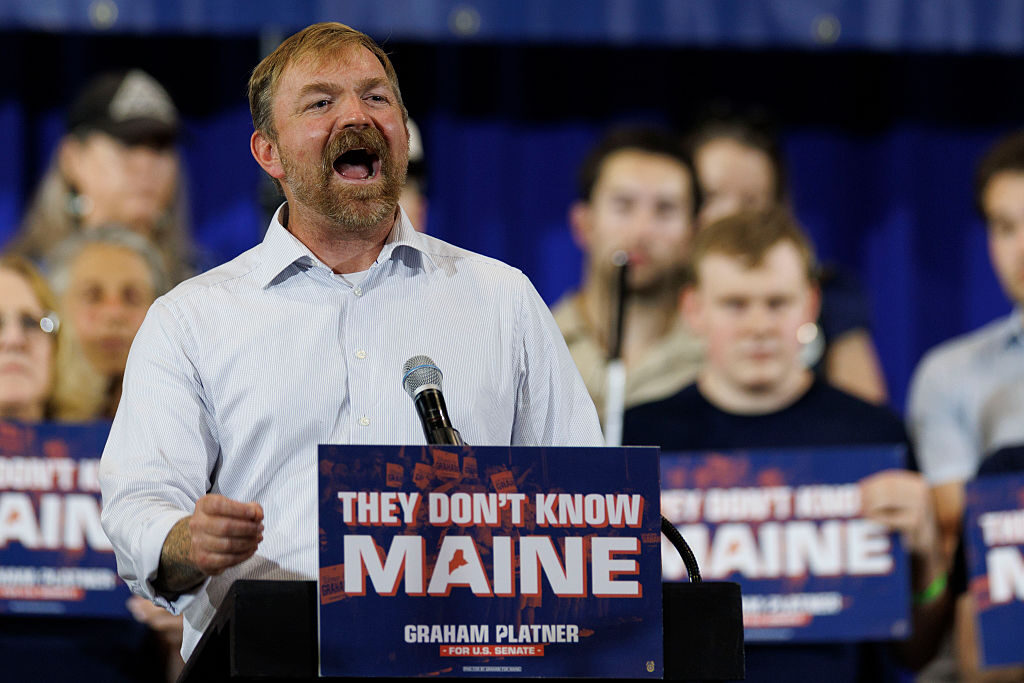
Graham Platner, a political newcomer, won Maine's Democratic Senate primary on Tuesday despite facing multiple damaging revelations including reports about a Nazi-like tattoo, dismissive comments about rape, and infidelity allegations. Platner's unconventional campaign defeated the party establishment's preferred candidate, Maine Governor Janet Mills, by conducting extensive grassroots outreach including 83 town halls. His victory reflects deep partisan divisions where voters overlook scandals to pursue larger political goals, though he now faces an uphill general election battle against incumbent Republican Susan Collins.
Graham Platner, a political novice, secured the Democratic nomination for Maine's U.S. Senate seat after winning the primary on Tuesday, despite a tumultuous campaign marked by multiple scandals. In the days before the election, major national media outlets published investigations into his background, including reports of a chest tattoo resembling a Nazi symbol, online comments dismissing rape, and allegations of infidelity. Despite these revelations, Platner's supporters remained steadfast, viewing him as an anti-establishment candidate unbeholden to special interests. His campaign success stems from over a year of intensive grassroots organizing, including 83 town halls across Maine, which resonated with rank-and-file Democratic voters frustrated with traditional politics. Maine's small population of 1.4 million and northeastern location have historically favored face-to-face politics and nonconformist candidates. Platner now faces incumbent Republican Susan Collins in the general election, a three-decade political veteran who has never lost a race in a state that hasn't voted Republican for president since 1988.
What different sources said
- BBC US & CanadaCenter
Will this scandal-plagued outsider help save or sink the Democrats?
Related
Halfway Through 2026 Primary Season: Six Key Takeaways from Congressional Races
Four more states held primaries this week, bringing the total to 26 states that have completed regular congressional primaries in the 2026 midterm cycle. Key patterns emerging include front-runners not always winning, House members struggling to advance to statewide office, and President Trump's endorsement record remaining largely successful despite low approval ratings. These trends are shaping the competitive landscape for the general election.

Congress Struggles to Build Support for $9 Billion Rayburn House Office Building Renovation
The Architect of the Capitol is pushing for a major renovation of the Rayburn House Office Building, which could cost $9 billion and last until 2045, but lawmakers remain hesitant to commit to the project. The building, constructed in 1965, is experiencing serious deterioration including 16 major leaks in the past year alone and risks of catastrophic system failure. The challenge reflects a broader political difficulty: Congress has historically been reluctant to fund its own infrastructure, with legislative branch spending averaging just 0.15 percent of total budget authority since 1976.

Study Finds College Faculty Lean Significantly Left, Raising Questions About Campus Ideological Diversity
A study commissioned by the Foundation for Individual Rights and Expression found that college faculty donors have an average ideology score of -1.02, comparable to Senator Bernie Sanders's -1.14, indicating strong leftward lean among faculty. The research cross-referenced over 100,000 faculty members with campaign contribution data, and separate surveys found only 20% of faculty believed a conservative scholar would be welcome in their department. The findings raise concerns about ideological diversity in higher education and its potential influence on student political attitudes.