Mabel Li on Playing Aunt Vidala in The Testaments: Building a Complex Character
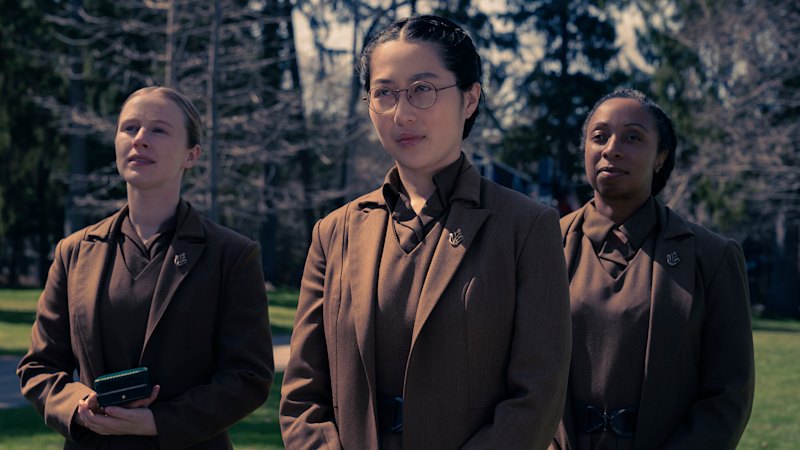
Australian actress Mabel Li discusses her role as Aunt Vidala in The Testaments, the sequel to The Handmaid's Tale, in an interview with the Sydney Morning Herald. Li, a 28-year-old NIDA graduate previously nominated for a Logie, was cast after auditioning for the character and impressing producers with her personal approach to the role. The interview explores how she developed the character by reading Margaret Atwood's source material and discovering Vidala's backstory through flashback scenes.
Mabel Li, an Australian actress known for her role in the SBS drama New Gold Mountain, has taken on the character of Aunt Vidala in The Testaments, marking her first major international television production. In an interview with the Sydney Morning Herald, Li describes how she was cast after her American managers sent her an embargoed audition for the role, initially codename "Sister Vera." She explains that producers, particularly executive producer Mike Barker, were drawn to what she describes as a "personal" quality in her audition tape that made the regime feel deeply personal rather than distant. Li prepared for the role by reading both The Handmaid's Tale and The Testaments twice, taking detailed notes, and then allowing herself to discover the character through the scripts and filming process. She notes that a flashback episode set in pre-Gilead times was particularly helpful in informing her portrayal and understanding Vidala's dynamic with Aunt Lydia, and that discussions with director Mike Barker about a traumatic event in the character's past shaped her performance throughout the series.
What different sources said
- Sydney Morning HeraldCenter
‘It’s a gun, and it’s five centimetres from my face’: Mabel Li on the terror and pleasure of The Testaments
Related

Documentary 'Hollywood Does Abortion' Claims Entertainment Industry Stigmatized Abortion Through Misleading Portrayals
A new documentary premiered at the Tribeca Film Festival arguing that Hollywood films and television shows have historically depicted abortion in a stigmatized and inaccurate manner, from the 1970s to recent years. The filmmakers contend that portrayals often featured false medical complications, miscarriages that prevented characters from making abortion decisions, or exaggerated post-abortion regret. The documentary's claims have drawn responses from both abortion-rights and pro-life advocates, with disagreement over the accuracy of abortion's depiction in media and its real-world consequences.

Richmond's 2009 Exhaustive Coaching Search: A Model for AFL Recruitment
An opinion piece examines Richmond's comprehensive two-stage coaching search process in 2009 that ultimately selected Damien Hardwick, who led the club to three premierships in four years. The process involved eight initial candidates and a rigorous evaluation of coaching philosophies, tactical knowledge, and team-building approaches. The article argues the process succeeded not only in selecting the right coach but in identifying a strong pool of candidates who collectively became successful AFL coaches.
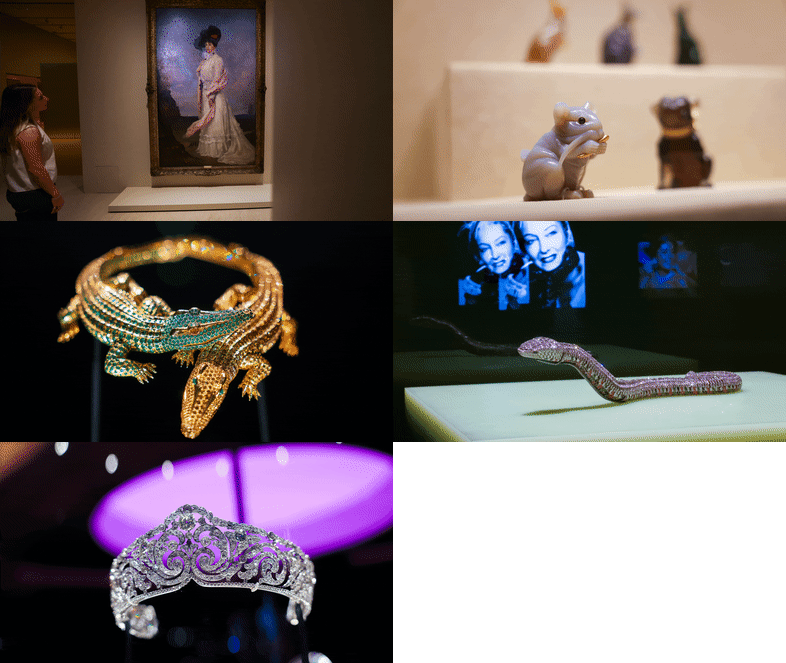
NGV's Cartier Exhibition Showcases Luxury Craftsmanship Amid Questions About Brand-Focused Museum Programming
The National Gallery of Victoria has opened a major Cartier jewelry exhibition featuring hundreds of pieces spanning over a century, originated from London's Victoria & Albert Museum. The show displays exceptional craftsmanship and historical context tracing the brand's evolution from a family business founded in 1847 through its association with royalty, industrialists, and celebrities. The exhibition raises ongoing questions about whether major cultural institutions should dedicate significant space to luxury brand showcases rather than art-focused programming.