Linux Lite 8.0 Released with Ubuntu 26.04 Base, Drops Chrome for Firefox
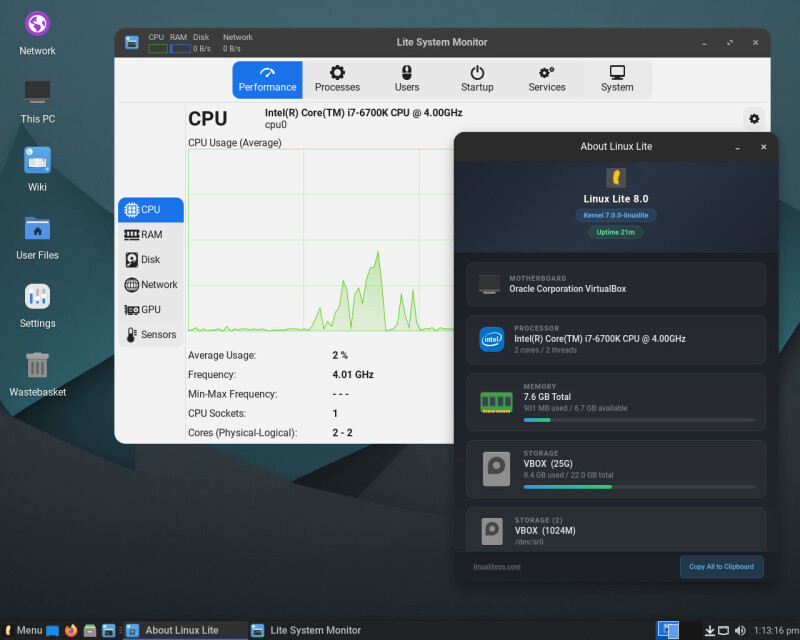
Linux Lite 8.0 is now available, based on Ubuntu 26.04 and featuring a redesigned suite of GTK4 applications alongside a smaller download size of 410 MB less than its predecessor. The release replaces Google Chrome with Mozilla Firefox as the default browser and removes Snap and Flatpak support to maintain the distribution's lightweight philosophy. The update represents the project's continued maturity at 14 years old, with a consistent two-year release cycle matching its LTS-based update strategy.
Linux Lite 8.0 has been released as a lightweight Linux distribution built on Ubuntu 26.04 LTS, continuing the project's 14-year history with a predictable two-year release cycle. The new version features 15 rewritten helper applications built on GTK4 instead of the previous toolkit, and maintains the Xfce 4.20 desktop environment as its default. A significant change is the replacement of Google Chrome with Mozilla Firefox as the default web browser, while the distribution continues to exclude Snap and Flatpak to keep the system slim. The download size has been reduced by 410 MB compared to version 7. However, the GTK4 migration introduces some UI inconsistencies with traditional Xfce conventions, including hamburger menus and title bar buttons instead of traditional menu bars, which some users may find less intuitive or keyboard-accessible.
What's missing
The article does not specify the exact release date of Linux Lite 8.0 or provide system requirements (RAM, storage, processor specifications) for installation.
What different sources said
- The RegisterCenter
Linux Lite 8.0 sheds Chrome, slims down, and finds its name fits better than ever
Related

Potensic Atom 3 Drone Offers DJI Alternative for Global Markets, But Faces US Import Ban
Potensic has released the Atom 3, an upgraded beginner drone featuring a larger sensor, 4K 60fps video, improved battery life, and AI tracking capabilities at competitive pricing ($429.99-$549.99). The drone competes directly with DJI's Lito X1 but faces the same regulatory barriers as DJI in the US market due to a ban on foreign-made drones. The availability restrictions highlight ongoing US trade restrictions on Chinese drone manufacturers and limit consumer choice in the American market.

Wing and Walmart Expand Drone Delivery to Seven Additional U.S. Cities
Alphabet-owned Wing and Walmart are expanding their drone delivery partnership to seven new U.S. cities including Memphis, New Orleans, Philadelphia, Phoenix, San Diego, the San Francisco Bay Area, and Salt Lake City. The expansion is part of a plan to reach over 270 Walmart locations by next year, building on successful deployments in Atlanta, Dallas-Fort Worth, and Houston. The move signals that drone delivery is transitioning from a novelty service to a mainstream logistics option, with Wing having completed over 1 million commercial deliveries.

Anthropic CEO Calls for FAA-Style Regulation of Powerful AI Models
Anthropic CEO Dario Amodei published an essay calling for government regulation of powerful AI models, comparing the approach to FAA oversight of commercial aviation. The proposal includes mandatory third-party testing for frontier models and potential government authority to block or delay their deployment if they pose safety risks. The call comes as Anthropic released Claude Fable 5 and an updated Claude Mythos 5 model with advanced cybersecurity capabilities.