JUNO Experiment Reports First Measurement of Reactor Neutrino Oscillation
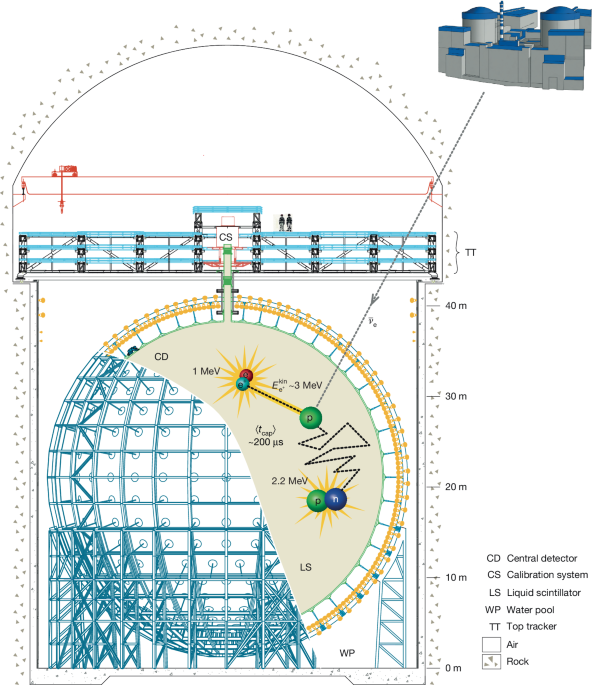
The JUNO collaboration has published the first measurement of reactor neutrino oscillation using data from their detector, advancing understanding of how neutrinos change flavor. This builds on decades of neutrino physics research, including Nobel Prize-winning discoveries of atmospheric and solar neutrino oscillations. The result contributes to fundamental physics by testing neutrino oscillation theory and potentially constraining the neutrino mass hierarchy.
The JUNO (Jiangmen Underground Neutrino Observatory) collaboration has released findings from their measurement of reactor antineutrino oscillation, marking a significant milestone in neutrino physics research. The work extends a research program spanning multiple decades, building on foundational discoveries by previous experiments including Super-Kamiokande, the Sudbury Neutrino Observatory, KamLAND, MINOS, and Daya Bay. JUNO's detector is designed to achieve sub-percent precision in measuring neutrino oscillation parameters and potentially determine the neutrino mass ordering—a key open question in particle physics. The collaboration has provided source data for key figures and offers access to analysis methods through direct inquiry, though the full raw dataset and simulation code remain within the collaboration due to their complexity and volume. This measurement represents progress toward JUNO's broader physics goals in understanding fundamental neutrino properties.
Limitations & open questions
The specific numerical results of the oscillation measurement (oscillation parameters, precision achieved, or comparison to theoretical predictions) are not provided in the source material. Additionally, the timeline for when this data was collected and the expected sensitivity improvements over previous experiments are not detailed.
What different sources said
- Nature NewsCenter
Measurement of reactor neutrino oscillation with the first JUNO data
Related
Study reveals IDH1 enzyme's role in cardiac metabolic adaptation during cancer-related stress
Researchers discovered that isocitrate dehydrogenase 1 (IDH1) helps the heart adapt to metabolic stress caused by cancer-related mutations through a previously unknown reductive metabolic pathway. The study used stable isotope tracing and genetic knockout models in rat and mouse heart tissue to show that when mitochondrial metabolism is impaired, IDH1 redirects carbon flux toward glutamine-derived citrate formation. This finding expands understanding of how cardiac metabolism responds to oncometabolic stress and may have implications for managing cardiovascular complications in cancer patients.
AI Framework Reveals How β-Arrestin 1 Protein Changes Shape During Activation
Researchers used a transformer-based artificial intelligence model to analyze how the β-arrestin 1 protein's tail region reorganizes when activated by cell surface receptors. The study examined molecular dynamics simulations comparing the protein in resting and active states, uncovering previously unknown conformational changes. This work could improve understanding of how cells regulate signaling pathways involved in numerous physiological and disease processes.
Study Links Pancreatic Cancer Tissue Stiffness to Tumor Progression and Patient Survival
Researchers combined imaging scans and laboratory tissue analysis to show that pancreatic cancer tumors with greater stiffness—driven by dense collagen buildup—correlate with worse patient survival outcomes. The study of nine patients found that magnetic resonance elastography, a non-invasive imaging technique, can detect mechanical properties that reflect underlying tumor biology. These findings suggest that measuring tissue stiffness through imaging could help doctors better characterize pancreatic cancer and guide treatment decisions.