Investigation into Ebola Outbreak Origins Focuses on Pastor's Funeral as Possible Super-Spreader Event
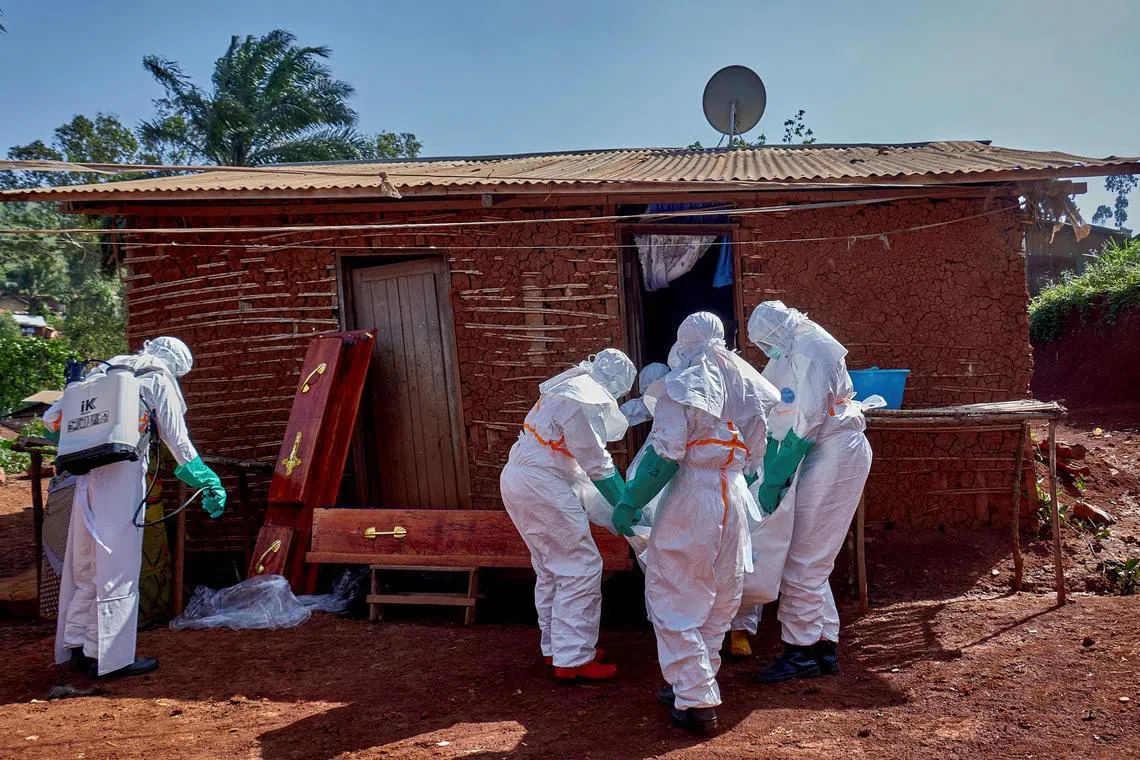
Investigators probing the Democratic Republic of Congo's Ebola outbreak are examining the February 4 funeral of Pastor Paluku Makundi Denis in Mongbwalu as a likely early super-spreader event, after a cracked coffin led mourners to handle the body before burial. The Bundibugyo strain of Ebola, which has no vaccine or cure and kills 30–50% of those infected, had likely been circulating for four to six months before Congo officially confirmed the outbreak on May 15, with at least 635 confirmed infections and 127 deaths recorded. The case illustrates how misinformation, cultural burial practices, and community mistrust of health workers can accelerate a deadly outbreak in a conflict-affected region.
Epidemiologists investigating the origins of an Ebola outbreak in eastern Democratic Republic of Congo are focusing on the funeral of 44-year-old Pastor Paluku Makundi Denis, whose coffin cracked during a rough three-hour road journey from Bunia to Mongbwalu in Ituri province on February 4. Upon arrival, residents transferred the body into a new casket, potentially exposing mourners to the highly infectious remains before more than 80 people gathered at the cemetery for the burial. Within two weeks, nearly 50 deaths were recorded in Mongbwalu, including two of the pastor's brothers, with victims presenting classic Ebola symptoms such as fever, vomiting, and hemorrhaging. A surveillance epidemiologist on the inquiry estimated the Bundibugyo strain had been circulating for four to six months before the outbreak was officially confirmed on May 15, 2025, with at least 108 deaths recorded in Mongbwalu between April and May alone. The original cracked coffin was subsequently set ablaze under unclear circumstances, fueling rumors of an ancestral curse that spread virally on TikTok and deepened community hostility toward health workers — including a May 22 attack on a response team and arson at an isolation tent. Pastor Makundi was never tested for Ebola, and investigators stress more work is needed to confirm whether he was infected and to definitively identify the outbreak's origin. The WHO and Congo's health ministry have declined to comment specifically on Makundi's case, with WHO chief Tedros Adhanom Ghebreyesus noting that multiple outbreak scenarios are under investigation.
What's missing
The article does not clarify the current containment status of the outbreak or what international response resources have been deployed beyond local health ministry efforts. Additionally, the specific mechanism by which the Bundibugyo strain reached Mongbwalu — including any potential animal reservoir or cross-border transmission — remains unaddressed.
What different sources said
- ReutersCenter
A cracked coffin, a funeral and the hunt for Ebola's patient zero
- The Straits TimesCenter
A cracked coffin, a funeral and the hunt for Ebola's patient zero
- The Japan TimesCenter
A cracked coffin, a funeral and the hunt for Ebola’s patient zero
Related

Chicago Woman's Five-Year Symptom Journey Leads to Rare Brain Tumor Diagnosis
Melony Aponte, 26, was diagnosed with a 4.5-centimeter acoustic neuroma after five years of symptoms she attributed to stress, COVID-19, and aging. The rare, noncancerous tumor—affecting roughly one in 100,000 people—had grown large enough to compress her hearing and balance nerve before it was identified via MRI in March 2025. Her case highlights how acoustic neuroma symptoms can mimic common conditions, potentially delaying diagnosis for years.

Study Finds Aging Shifts Walking Strategy Toward Stability at the Cost of Efficiency
A new study from Flinders University and the University of Canberra found that as people age, their bodies adopt a 'safety-first' walking pattern that prioritizes balance over efficient movement. Researchers analyzed gait data from 107 healthy adults aged 26 to 86, identifying increased ankle muscle co-contraction and reduced push-off power as key age-related changes. The findings suggest that fall prevention programs should target balance and coordination, not just muscle strength.

Tick Populations Surge in Urban Areas Across Northeast
Experts across the northeastern United States and Canada are warning of an unusually early and widespread tick season, with disease-carrying ticks increasingly found in urban parks and green spaces. Lyme disease cases in Canada reached a record 7,105 in 2025, up from 5,809 the previous year, while U.S. cities including Philadelphia, Pittsburgh, Washington D.C., and New York are reporting rising tick activity. The expansion poses a public health challenge because urban residents are less likely to take tick-bite precautions than those in rural areas.