INDIA Opposition Alliance Must Embrace Federalism as Core Principle, Says MP

At a June 8, 2026 meeting of the INDIA bloc opposition alliance, Jammu and Kashmir Chief Minister Omar Abdullah argued that the Congress party should serve as the coalition's unifying force due to its pan-India presence. However, MP D. Ravikumar counters that shared opposition to the BJP and fear of its authoritarian conduct, rather than Congress leadership, currently binds the alliance together. Ravikumar argues that federalism and constitutional principles—not just anti-BJP sentiment—must become the alliance's foundational "glue" for long-term coherence and to distinguish it from the ruling party.
At a June 2026 INDIA bloc meeting, Omar Abdullah suggested Congress should formally serve as the alliance's unifying force given its presence across all Indian states, while other parties operate regionally. The article acknowledges that all alliance constituents recognize Congress's pivotal role, though some partners have criticized it for ineffective electoral coordination and campaigning that contradicts allies' principles. However, the author argues that the true current basis of unity is shared fear of the BJP's authoritarian governance and threats to constitutional democracy, secularism, and federalism. While this fear-based coalition successfully brought diverse parties together, the article contends it cannot sustain long-term coherence. Instead, Ravikumar proposes that explicit commitment to federalism and state rights—particularly among national parties like Congress—must become the alliance's organizing principle. He warns that if Congress continues to marginalize federalism while emphasizing secularism alone, regional parties may view it as merely an alternative to the BJP rather than a fundamentally different political force.
What different sources said
- The HinduCenter
Protecting federalism must be the INDIA bloc’s ‘glue’
Related
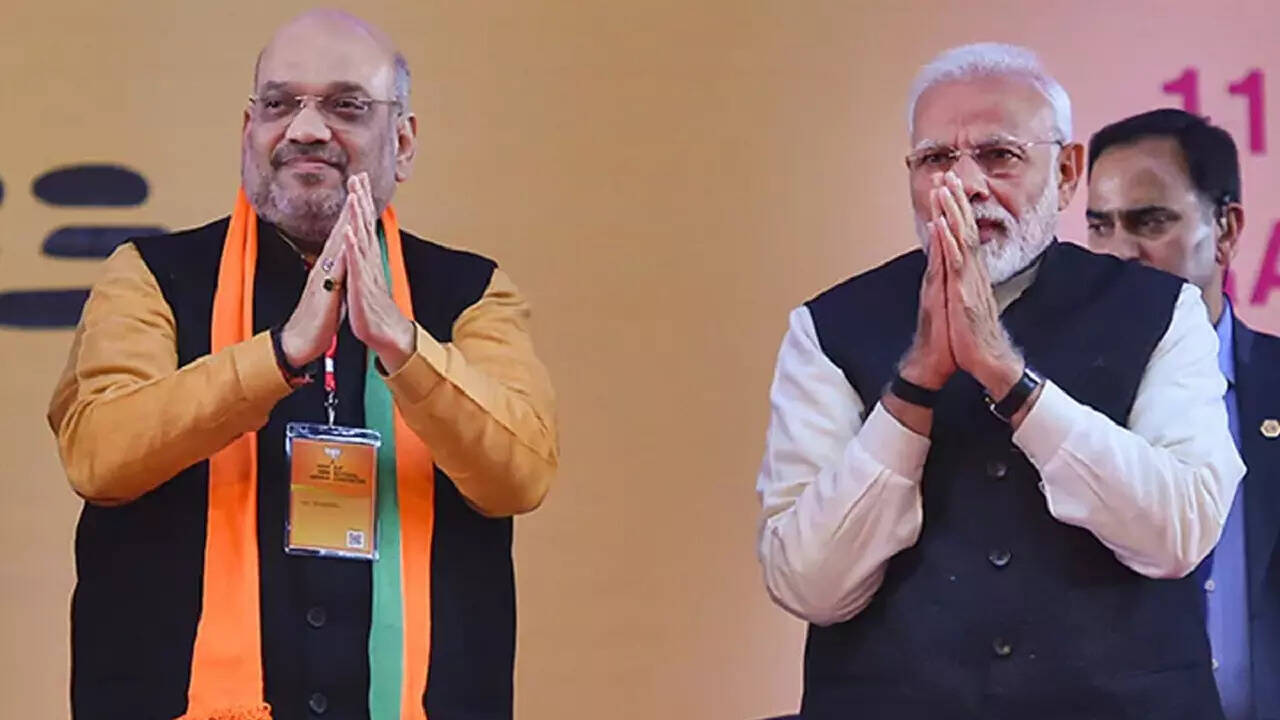
Indian Government Officials Praise Modi's 12-Year Tenure as He Surpasses Nehru's Term
Prime Minister Narendra Modi has completed 12 years in office, surpassing Jawaharlal Nehru's tenure as an elected head of government, prompting celebrations by senior Indian government officials. Home Minister Amit Shah and other cabinet members marked the milestone by praising Modi's leadership for restoring national pride, cultural renaissance, and strong governance. The occasion highlights a significant political milestone in independent India's history, with the ruling BJP framing Modi's tenure as transformative for the nation's development and global standing.

Debate Over Election Integrity Claims in California
A New York Post opinion piece criticizes California Democratic leaders for dismissing questions about recent election results while previously claiming the 2016 election was compromised by Russian interference. The article argues this represents hypocrisy, noting that investigations found no evidence of Russian collusion with the Trump campaign. The piece highlights California's election procedures, including mail-in voting and ballot harvesting, as potential vulnerabilities.
Texas Governor Abbott Proposes Stricter Data Center Regulations to Protect Residential Electricity Costs
Texas Gov. Greg Abbott proposed new regulations requiring data centers to pay for their own electric infrastructure, use water-efficient technology, and lose sales tax exemptions. The proposal reflects growing backlash against data centers across the US due to concerns about energy consumption, water usage, and rising utility costs for residents. The shift is significant because Texas has historically courted data centers with tax breaks and is now moving toward stricter oversight despite the state's pro-business stance.