Hubble Space Telescope Captures Detailed Image of Spiral Galaxy M88
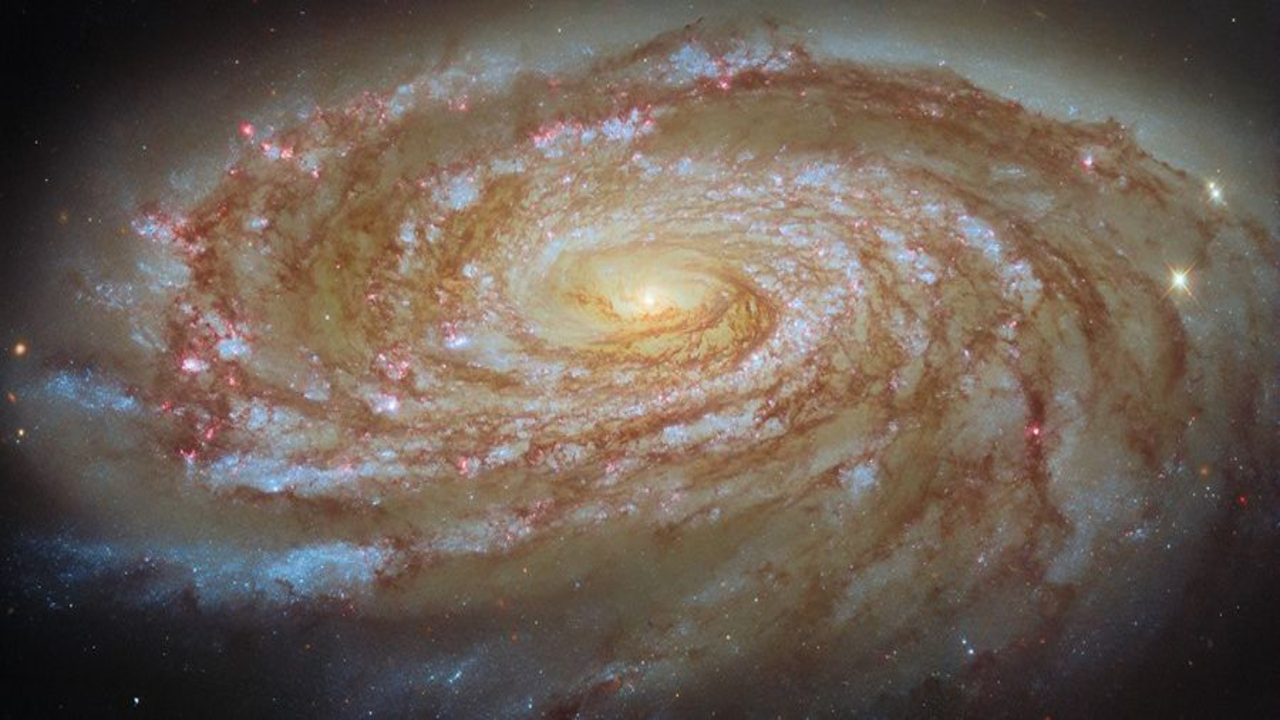
The Hubble Space Telescope has captured a new image of M88 (NGC 4501), an active spiral galaxy located approximately 63 million light-years away in the constellation Coma Berenices. M88 is an active galaxy with a supermassive black hole at its center and is part of the Virgo Cluster containing over 1,000 galaxies. The observation was conducted as part of a broader investigation into how spiral galaxies operate in different environments.
Astronomers using the Hubble Space Telescope's Wide Field Camera 3 have obtained a detailed image of M88, also known as NGC 4501, revealing the galaxy's distinctive spiral structure. M88 is classified as an active galaxy, meaning it contains a supermassive black hole at its center whose gravity pulls in substantial amounts of surrounding gas and dust. The galaxy is a member of the Virgo Cluster and is situated approximately 63 million light-years from Earth in the constellation Coma Berenices. The observation was conducted as part of a larger scientific investigation into spiral galaxy structure and behavior across different cosmic environments. The Hubble Space Telescope, which has been operational since 1990, continues to provide detailed observations of distant cosmic objects despite the deployment of newer instruments like the James Webb Space Telescope.
What different sources said
- Space.comCenter
Swirling spiral galaxy will hypnotize you | Space photo of the day for June 10, 2026
Related
Profilin-1 Deficiency Activates Immune Response Against Breast Cancer in Preclinical Study
Researchers found that removing the Profilin-1 protein from breast cancer cells triggers DNA damage and activates an immune pathway called STING, which recruits cancer-fighting T cells and causes tumor regression in mice. The study used CRISPR gene-editing technology to deplete Profilin-1 and observed that the resulting genomic instability paradoxically strengthens anti-tumor immunity. The findings suggest targeting Profilin-1 could be a new strategy to enhance immunotherapy effectiveness in breast cancer.
Computational Study Explores How Magnetic Fields May Affect Tomato Plant Ion Channels
Researchers used molecular dynamics simulations to investigate how static magnetic fields affect the CNGC6 ion channel in tomato plants, finding that magnetic fields may alter the channel's structure in specific ways. The study was motivated by observations that magnetic treatment of tomato seeds appears to speed germination and improve plant development, though the underlying cellular mechanisms remain unclear. The findings provide a computational foundation for future experimental work, though the authors emphasize this is a preliminary exploratory study requiring validation.
New Algorithm Simplifies Evolutionary Network Reconstruction for Hybridized Species
Researchers developed NetCS, a fast algorithm for reconstructing evolutionary networks in hybridized species that avoids expensive computational bottlenecks. The method works well when given accurate intermediate data but reveals that the real challenge in network inference lies in an earlier reconstruction step. This finding could enable phylogenetic analyses of larger datasets while identifying where future improvements are needed.