House Passes Labor Negotiations Bill With 20 Republican Defections
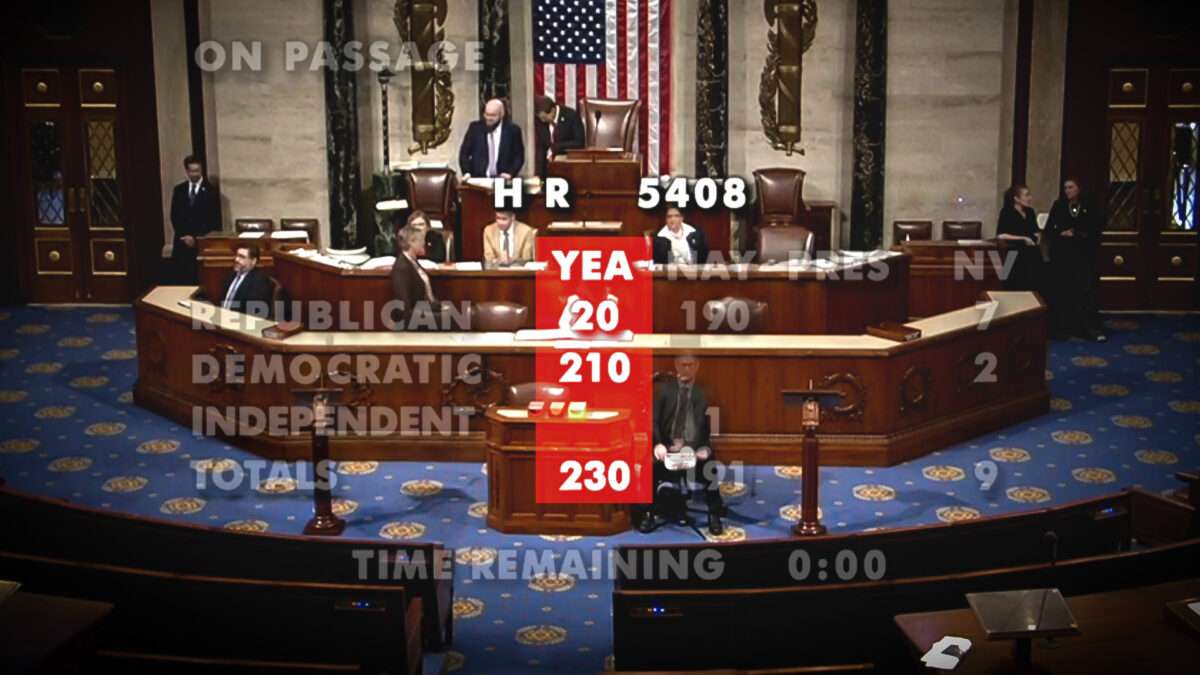
The House approved the Faster Labor Contracts Act on Tuesday by a vote of 230 to 191, with 20 Republicans joining Democrats to pass legislation that would impose deadlines on first-contract negotiations between newly certified unions and employers. The bill reached the floor via a discharge petition — a procedural maneuver that bypasses House leadership — after seven Republicans signed on to force the vote. The passage marks another sign of Speaker Mike Johnson's tenuous grip on his narrow majority, though the bill faces long odds in the Senate and a likely presidential veto.
The House passed the Faster Labor Contracts Act on June 9, 2026, by a 230-to-191 vote, with 20 Republicans crossing party lines and one Democrat voting against. The bill, sponsored by Rep. Donald Norcross (D-NJ), would require employers to begin contract negotiations within 10 days of a union's written request, allow either party to invoke federal mediation after 90 days without a deal, and — if no agreement is reached after a further 30 days — submit the dispute to a binding three-member arbitration panel whose decision would stand for two years. Proponents, including Teamsters General President Sean O'Brien and Republican Sen. Josh Hawley, who sponsors the Senate companion bill, argue the measure addresses a documented problem: Bloomberg Law data cited in the legislation found the average time to a first contract is 465 days, and some unions — including Starbucks workers in Buffalo and Amazon workers on Staten Island — still lack contracts years after their elections. Opponents, including the CHRO Association representing 350 large corporations and groups like Americans for Prosperity, called the bill 'draconian,' arguing the compressed timeline is unrealistic for complex negotiations and that government arbitrators lack the on-the-ground knowledge to impose fair terms. Critics on the right, including Reason and the New York Post, further argued that binding arbitration removes workers' ability to ratify or reject a contract, effectively handing that power to union officials and federal bureaucrats. The bill's path in the Senate is uncertain; while Hawley's companion bill has two Republican and 13 Democratic cosponsors, Senate HELP Committee Chair Bill Cassidy has criticized it, and President Trump would be expected to veto it.
Data: C-SPAN / House floor scoreboard
What's missing
No source addresses whether the Senate Republican leadership has committed to scheduling a floor vote.
How coverage differed
Left-leaning and centrist outlets (NPR, CBS, NYT) framed the vote primarily as a labor victory and a sign of Speaker Johnson's weakening authority, emphasizing workers' long waits for contracts and union support. Right-leaning outlets (Reason, New York Post, Washington Examiner) focused on the bill as government overreach, stressing that binding arbitration strips individual workers of the right to vote on their own contracts and that the measure could raise prices and harm employers.
What different sources said
- Washington ExaminerRight
20 Republicans buck leadership to pass labor regulations bill
- Yahoo FinanceCenter
The House Just Passed a 'Pro-Worker' Bill That Takes Power Away From Workers
- ReasonRight
The House Just Passed a 'Pro-Worker' Bill That Takes Power Away From Workers
- CBS NewsCenter
House passes pro-union bill after 20 Republicans defy party
- NYT USLeft
House defies Johnson and passes Democratic-led labor bill
- NPR NewsLeft
House approves labor-friendly bill with support from 20 Republicans
- The HillCenter
Faster Labor Contracts Act passes House after GOP rebels join Democrats
- PoliticoLeft
20 House Republicans cross party lines to pass pro-union bill - Live Updates
- New York PostRight
Why are some Republicans pushing price-hiking, pro-union bills in Congress?
Related

Workers Begin Removing Trump's Name from Kennedy Center Facade After Court-Ordered Deadline
Workers started stripping President Trump's name from the exterior of the Kennedy Center in Washington overnight Friday into Saturday, hours past a court-ordered deadline of 11:59 p.m. Friday. The delay was attributed to nearby thunderstorms, and the Kennedy Center's board sought a 12-hour extension, which U.S. District Judge Christopher Cooper had already denied after rejecting the board's last-minute attempt to halt the order. The removal marks a significant legal rebuke of the Trump administration's effort to rename the historic performing arts venue, with a court ruling that only Congress has the authority to change the Kennedy Center's name.

Hasan Piker Campaigns for DSA-Backed NYC Candidates, Sparking Debate Over Democratic Party Direction
Twitch streamer Hasan Piker rallied in Brooklyn for two Democratic Socialist of America-endorsed congressional candidates ahead of New York's June 23 primary, declaring the country is 'closer than ever' to socialism. The appearances come amid a broader debate within the Democratic Party over whether to embrace or distance itself from Piker, whose pro-Palestinian views and provocative statements have made him a polarizing figure. The controversy highlights a growing tension between the party's centrist establishment and its increasingly left-leaning base, particularly on foreign policy.

Fire Rescue Victoria Has Missed Emergency Response Targets Every Year Since 2020, With Outer Suburbs Worst Affected
Fire Rescue Victoria (FRV) has failed to meet its target of responding to 90 per cent of structural fires within seven minutes and 42 seconds in every year since its formation in 2020, with outer suburban areas recording the worst performance. The shortfall has come into sharp focus following the death of three-year-old Jordan Dashwood in a Werribee house fire this month, where the nearest FRV truck was committed to another incident and the first responders arrived well outside the benchmark time. The findings raise serious questions about whether the 2020 fire services restructure has been adequately resourced to protect Melbourne's rapidly growing outer suburbs.